
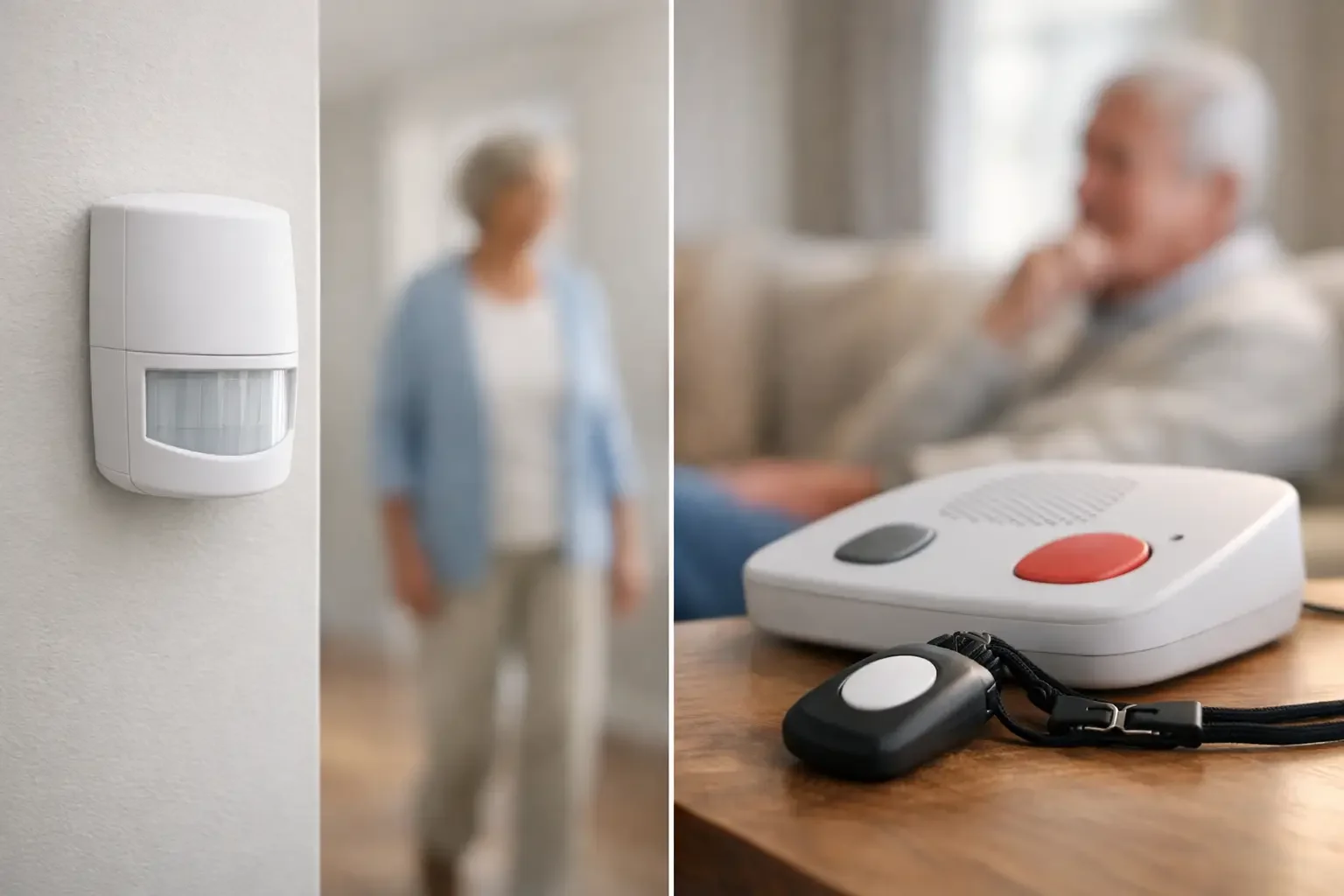
Motion Sensors Versus Medical Alert Systems

At 9:30 p.m., your mom usually turns off the kitchen light, heads to the bedroom, and settles in for the night. When that routine suddenly changes, most families feel it before they can explain it. That is where the question of motion sensors versus medical alert systems becomes very real. You are not just comparing devices. You are trying to figure out what kind of help will actually protect someone you love while preserving their independence.

For many families, both options sound reassuring at first. A medical alert system promises fast help in an emergency. Motion sensors promise visibility into what is happening at home. The challenge is that they solve different problems, and choosing between them depends on the kind of risk you are trying to reduce.

Motion sensors versus medical alert systems: the core difference

A medical alert system is built around a direct call for help. In most cases, the older adult wears a pendant or wrist button and presses it when they need assistance. Some systems also include automatic fall detection, but the main idea is still the same: the person at home has to wear the device and, often, activate it.

Motion sensors work differently. They are placed around the home and track movement patterns passively. Instead of waiting for someone to push a button, they notice activity - or the lack of it. That could mean recognizing that your dad never got out of bed at his usual time, that he has been making more frequent bathroom trips overnight, or that there has been no movement in the kitchen all morning.

This is why the comparison can feel confusing. Medical alert systems are event-based. Motion sensors are pattern-based. One is designed for a moment of crisis. The other is designed to catch the early signs that something may be off before a crisis happens.

Where medical alert systems work well

There is a reason medical alert systems have been around for so long. In the right situation, they are straightforward and useful. If an older adult falls, feels chest pain, or becomes dizzy and can still press a button, they can quickly connect with emergency support or a caregiver.

That simplicity matters. Some seniors like knowing they have a clear, immediate way to call for help. Families often find comfort in that too, especially when a parent lives alone.

Medical alert systems can be a strong fit for seniors who are cognitively sharp, willing to wear the device consistently, and likely to remember to use it under stress. They can also make sense for someone who wants a visible, familiar safety tool and is comfortable with the idea of asking for help in the moment.

But there are trade-offs. A wearable only works if it is being worn. A button only helps if the person can reach it, remembers it, and is physically able to press it. That sounds obvious, but it is the gap many families discover too late. After a fall or medical event, a loved one may be disoriented, unconscious, or simply embarrassed and hesitant to call.

Where motion sensors work well

Motion sensors are often a better fit when the family’s biggest concern is uncertainty. You may not be worried about one dramatic event as much as a slow change you cannot see from across town. Maybe your mom is recovering from a hospitalization. Maybe your dad has Parkinson’s. Maybe your parent insists they are fine, but your gut tells you something is changing.

Passive monitoring helps in those situations because it does not depend on memory, behavior, or compliance. The system quietly learns what is normal and flags meaningful changes. That could include less movement during the day, more time in the bathroom, missed meals, disrupted sleep, or an unusual stretch of inactivity.

For caregivers, this kind of information can reduce the hardest part of supporting an aging parent: not knowing. Instead of wondering whether no news is good news, you get signals that help you decide when to check in.

Just as important, motion sensors are usually more privacy-friendly than cameras or microphones. They do not record conversations or video. For seniors who value dignity and do not want to feel watched, that can make a big difference in whether they accept help at all.

The limits of each system

Neither option is perfect, and that matters.

A medical alert system does not tell you much about everyday well-being. If your parent is moving less, sleeping poorly, skipping meals, or starting to struggle with normal routines, the device may never flag it. It may sit quietly until there is a major event.

Motion sensors, on the other hand, are not a replacement for emergency response in every situation. They can identify unusual inactivity or a pattern shift, but they do not always provide the same direct, one-button connection to urgent help that a traditional medical alert system offers.

This is why families sometimes ask the wrong question. It is not always which system is better. It is which problem are you trying to solve first.

If your main worry is, "What if she falls and can still call for help?" a medical alert system may cover that need. If your bigger worry is, "What if something starts changing and no one notices for days or weeks?" motion sensors may be the stronger choice.

When motion sensors versus medical alert systems is not either-or

For some households, the best answer is both.

That is especially true when an older adult has multiple risks. Someone with mobility issues may benefit from a wearable alert button for emergencies, while passive motion monitoring helps the family watch for changes in recovery, sleep, or daily routines. The two systems can support different layers of care.

Still, many families prefer to start with the option that places less burden on the senior. That is one reason passive monitoring has gained attention. It works in the background. There is nothing to charge, remember, or press. For older adults who resist "looking frail" or dislike wearing devices, that can remove a major barrier.

In real life, adoption matters as much as features. A perfect system that your parent refuses to use is not perfect at all.

What family caregivers should ask before choosing

Before you compare brands or pricing, take a step back and think about your loved one’s daily life.

Are they likely to wear a pendant every day, including in the shower or at night? If not, a medical alert system may leave important gaps. Are they dealing with memory issues, balance changes, or a condition that can affect judgment or reaction time? If so, relying on them to call for help may not be enough.

Then ask what kind of visibility would actually bring you peace of mind. Some caregivers want a direct emergency tool. Others want reassurance that a parent is up, moving, sleeping, and following familiar routines. If you are constantly texting, calling neighbors, or wondering whether you should intervene, passive monitoring may solve the deeper problem.

It is also worth considering your loved one’s personality. Many seniors reject anything that feels stigmatizing or invasive. A discreet in-home system can feel more respectful than a camera in the living room or a device they are expected to wear like a warning label.

A more realistic way to think about safety at home

Safety is not only about what happens during an emergency. It is also about the small warning signs beforehand.

A parent may not press a button because they do not think the situation is serious enough. They may not want to bother anyone. They may be asleep, confused, or unable to respond. On the other side, a passive system may show that something has been changing for days: later wake times, less kitchen activity, restless nights, or more bathroom visits. Those details can help families step in earlier, before a bad day becomes a crisis.

That is where newer approaches to in-home monitoring can be especially helpful. Systems like StackCare build on simple motion sensors by adding behavioral intelligence, so families are not left interpreting raw activity on their own. Instead, they receive clearer alerts and summaries that make the information usable.

For caregivers already carrying work, parenting, and the emotional weight of supporting an aging parent, that clarity matters. You do not need more data. You need to know when something changed and whether it is time to pay attention.

The best technology is the one that fits your loved one’s habits, respects their dignity, and helps your family act sooner with less guesswork. If you are weighing motion sensors versus medical alert systems, start there. The right choice is not the one with the longest feature list. It is the one your family will trust, your loved one will accept, and your daily life will feel lighter using.
Privacy Focused Elder Monitoring That Works

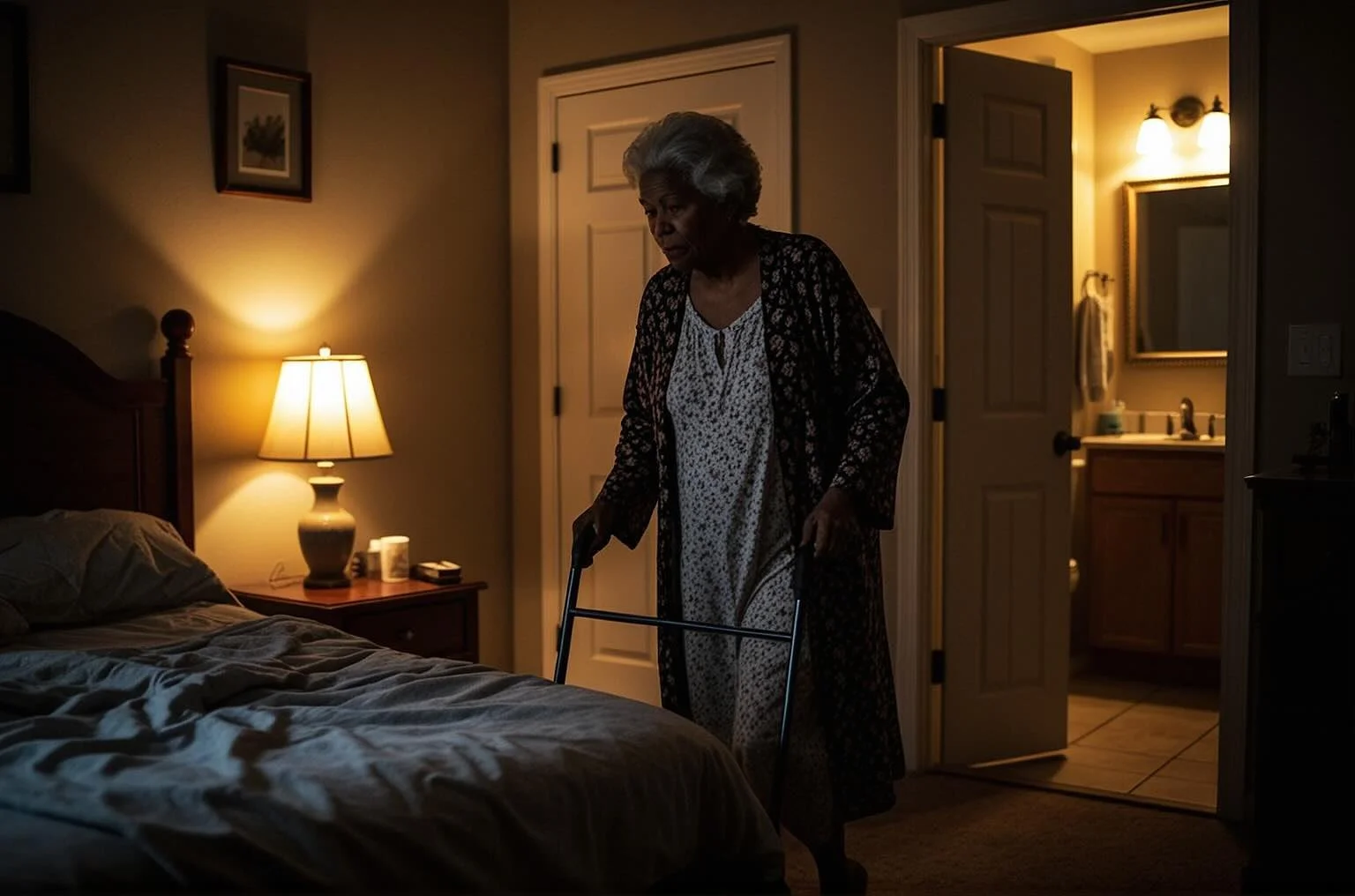
If you have ever hesitated before calling your mom for the third time in one day, you already understand the tension behind privacy focused elder monitoring. You want to know she is okay. You do not want to make her feel watched, managed, or treated like she has lost control of her own life. That is the real challenge for many families - finding a way to stay informed without crossing a line.

For adult children, this problem rarely shows up all at once. It starts with small questions. Did Dad get out of bed this morning? Is Aunt Linda moving around less than usual? Did your parent make it safely back from the bathroom at night? When you live across town or across the country, uncertainty can be exhausting. But for many older adults, the answer is not a camera in the living room or a wearable they forget to charge.

What privacy focused elder monitoring really means

At its best, privacy focused elder monitoring is not just about removing cameras. It is about preserving dignity while still giving families meaningful insight into daily wellbeing. That means collecting only the information needed to notice changes in routine, possible safety issues, or signs that more support may be needed.

In practical terms, this usually looks like passive in-home monitoring that tracks patterns rather than recording private moments. Instead of showing video footage, it can identify that someone got up later than usual, made fewer trips through the kitchen, or was in the bathroom far more often overnight. Those are the kinds of signals families actually need.

That distinction matters. Many caregivers do not want more raw data. They want fewer unknowns. A privacy-first system should help answer simple questions: Is my parent following their normal routine? Has something changed? Do I need to check in now?

Why families are moving away from cameras and wearables

On paper, cameras seem like the most direct way to monitor safety. In real life, they often create new problems. Older adults may feel uncomfortable being visible in their own home, especially in bedrooms, hallways, or near bathrooms. Family caregivers can also feel uneasy about reviewing footage, even when their intentions are loving.

Wearables have a different issue. Many seniors stop wearing them, forget to charge them, or take them off at the exact moment they are needed. A device can only help if it is on, charged, and used correctly. That is a big ask for someone dealing with memory changes, limited dexterity, poor sleep, or a strong dislike of gadgets.

Passive monitoring offers a middle ground. It works quietly in the background and does not require the older adult to remember, press, charge, or learn anything new. For families trying to reduce friction, that simplicity is often the difference between a system that sounds good and one that gets used every day.

How privacy focused elder monitoring supports independence

Most seniors do not want to be monitored. What they do want is to stay in their own home, maintain familiar routines, and avoid unnecessary disruption. Privacy-focused systems can support that goal because they are built around observation of activity patterns, not surveillance.

When a system notices that someone is moving normally, sleeping on schedule, and using the home as expected, that reassurance can prevent overreacting. Family members may feel less pressure to call constantly, show up unannounced, or push for a move before it is truly necessary.

That is one of the less obvious benefits. Better monitoring can actually create more freedom. When families have trusted insight, they can step back from anxious guesswork. The older adult keeps more space, and the caregiver carries less mental load.

For families managing Parkinson's disease, fall risk, recovery after hospitalization, or general frailty, this can be especially valuable. A change in activity may show up before a full crisis does. Less motion during the day, restless nights, or unusual bathroom patterns can signal that something is off, even if no one has said it out loud yet.

What to look for in a privacy-first system

Not every monitoring solution that claims to respect privacy does so in a meaningful way. Some simply avoid cameras while still overwhelming families with confusing data or unclear alerts. The best systems do more than stay discreet. They make the information useful.

A strong privacy-first solution should be passive, which means it works without relying on the older adult to take action. It should focus on patterns and changes in routine, not constant live observation. It should also turn those patterns into understandable alerts and summaries, so caregivers know when something may need attention.

Clarity is essential here. If a tool sends nonstop notifications for every small movement, families will tune it out. If it sends almost nothing, it defeats the purpose. Good monitoring finds the middle ground: enough insight to act when needed, without turning caregiving into a full-time monitoring job.

This is where behavioral analysis becomes useful. Instead of asking a daughter to interpret scattered motion events on her own, the system can identify that her father is rising later, spending more time inactive, or waking repeatedly overnight. That is the difference between data and insight.

Privacy focused elder monitoring and the trust factor

Trust is not only about technology. It is also about how the older adult feels living with it.

Many families make the mistake of introducing monitoring as a safety measure for emergencies only. While that is understandable, it can make the conversation feel dramatic or controlling. A more honest approach is to frame it around support, independence, and reducing unnecessary check-ins. You are not trying to spy. You are trying to notice meaningful changes early and help your loved one stay at home longer.

Older adults are often more open to monitoring when they understand what is not being collected. No camera footage. No audio recordings. No need to wear a device all day. No one watching them in real time. Those details matter because they protect dignity, and dignity is often what people fear losing most.

It also helps to be clear about who receives information and what kind of information is shared. A simple explanation can go a long way: the system notices routine changes and sends alerts if something seems unusual. For many families, that feels far more respectful than surveillance-based tools.

Where privacy-first monitoring works best

Privacy-focused monitoring is especially useful in the situations many caregivers know well but struggle to manage from a distance. A parent lives alone and insists they are fine, but you have noticed subtle changes. A loved one is recovering from a fall or hospital stay, and you want reassurance without moving them into a more restrictive setting. A family member has mobility issues or mild cognitive decline, and daily routines now tell you more than occasional phone calls do.

This approach can also work well when siblings share caregiving responsibilities. Instead of one person carrying all the worry, everyone can have a clearer picture of changes over time. That can reduce family tension, because conversations become less about hunches and more about patterns.

For professional care teams, the value is similar. Quiet, passive insight can help staff identify who may need added support before a problem escalates. But even in those settings, privacy still matters. Older adults deserve care that feels respectful, not intrusive.

The trade-offs to understand

Privacy focused elder monitoring is not a magic fix, and it is worth being honest about that. It does not replace human contact. It will not tell you everything about mood, pain, or whether your parent is eating well unless those issues begin to affect routine in visible ways.

It is also not the right fit for every situation. If someone needs continuous medical supervision, wanders outside the home, or requires hands-on care throughout the day, passive home monitoring may need to be part of a broader support plan rather than the whole solution.

Still, for many families, that is exactly the point. They are not looking for full clinical oversight. They are looking for a respectful way to reduce uncertainty and catch changes sooner.

That is why solutions like StackCare resonate with families who want insight without intrusion. The goal is not to watch a loved one more closely. The goal is to worry less while caring better.

The best technology in this space does something very human: it gives families a little more calm. When privacy is protected and changes are easier to spot, support becomes gentler, faster, and more thoughtful. For many older adults, that can mean staying safely at home without feeling like home has stopped being their own.

What a Caregiver Notification System Should Do

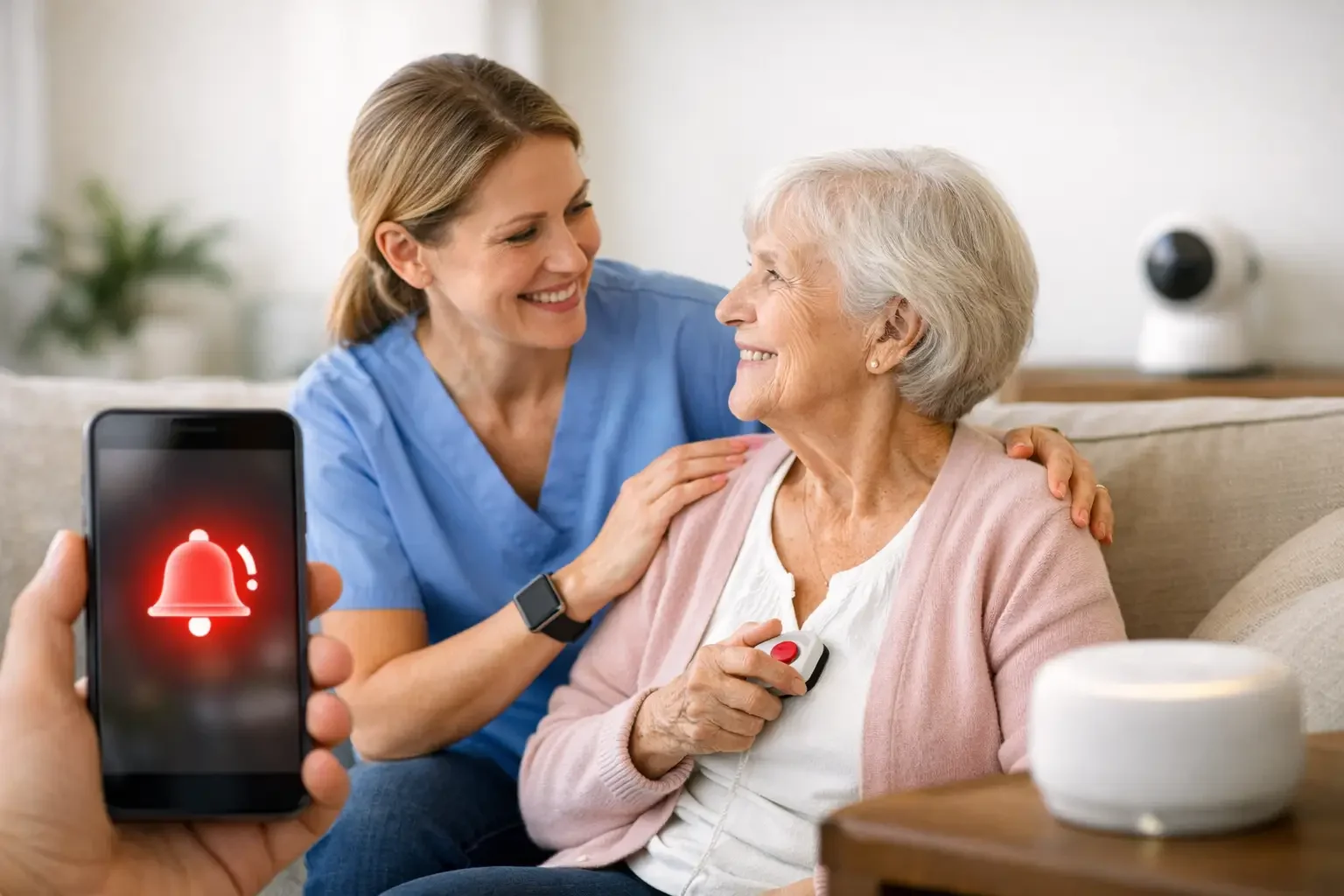
You can usually feel the problem before you can name it. Your mom says she is fine. Your dad insists he does not need help. But when a call goes unanswered, or a routine feels off, your mind starts filling in the blanks. A caregiver notification system exists for that exact space - the gap between wanting to respect a loved one’s independence and needing to know when something may be wrong.

For many families, that gap is where the stress lives. You are trying to work, manage your own household, and be present for someone who wants to stay at home. You do not necessarily need a stream of data or a camera in every room. You need timely, meaningful updates that tell you when daily life looks normal and when it does not.

Why a caregiver notification system matters

The hardest part of caregiving is often uncertainty. If your parent lives alone, you are left piecing together clues from phone calls, text messages, and occasional visits. That may work for a while, but it can break down quickly if routines change slowly or a problem develops between check-ins.

A good caregiver notification system helps families catch those shifts earlier. Instead of relying on a loved one to remember every detail or admit when something feels wrong, the system watches for patterns in daily activity. That could mean noticing someone is sleeping much later than usual, moving less throughout the day, or making unusually frequent bathroom trips overnight.

Those details matter because they can point to real issues. A change in movement may suggest fatigue, pain, or a mobility problem. Restless nights may signal discomfort, medication changes, or illness. More bathroom activity might be nothing serious, but it might also be the first sign of a urinary issue or another health concern. The value is not in replacing human judgment. It is in giving families a clearer picture, sooner.

What a caregiver notification system should actually tell you

Not every alert is useful. If a system sends constant notifications about minor, expected movement, most caregivers will eventually tune it out. That defeats the purpose.

The best systems focus on changes that are meaningful in the context of a person’s normal routine. That means they learn habits over time and notify caregivers when something falls outside the usual pattern. A late wake-up might not matter for one person, but it might be a real concern for someone who is always active by 7 a.m. A missed kitchen visit could be significant for a parent who never skips breakfast.

This is where context makes all the difference. Families do not need raw sensor events. They need simple updates they can understand at a glance. Is your loved one following their normal routine today? Did anything unusual happen overnight? Does this pattern suggest a one-time blip or a developing trend?

That kind of communication lowers stress because it removes some of the guesswork. Instead of wondering whether to call three times in a row, you have a better sense of when to check in and why.

Privacy is not a side issue

For many older adults, monitoring can feel like a loss of dignity. That is why some families postpone getting support until after a fall, a hospitalization, or a crisis. They do not want to install cameras or ask a parent to wear something that feels medical or easy to forget.

A caregiver notification system should not force a choice between safety and privacy. In many cases, the strongest solution is passive monitoring that works in the background without recording conversations or video. It can track whether someone is up, moving around, using the kitchen, or going to the bathroom, while still respecting the fact that home should feel like home.

That privacy piece is not just about comfort. It affects adoption. If your loved one resents the system, they may try to disable it or refuse to live with it. If it feels discreet and nonintrusive, families are far more likely to use it consistently over time.

What families often get wrong when choosing a system

The first mistake is assuming more technology means better care. In reality, more devices often create more work. Wearables need charging. Panic buttons must be kept nearby. Cameras can raise tensions and still leave caregivers to interpret what they are seeing.

The second mistake is focusing only on emergencies. Emergency response matters, but many caregiving problems build gradually. A parent may not have a dramatic fall or obvious incident. They may just start eating less, sleeping poorly, or moving differently for several days. If your system only helps after something serious happens, it misses much of what families are actually worried about.

The third mistake is underestimating caregiver fatigue. If a solution requires you to review dashboards, compare daily data, or manually monitor activity, it adds another task to a schedule that is already full. Most families need a system that does the watching for them and surfaces what matters.

How the best caregiver notification system supports independence

This is the part many people overlook. A caregiver notification system is not just about protecting an older adult. It is also about helping them stay in control of their life.

When families feel more confident that they will be alerted to meaningful changes, they are often less likely to push for disruptive alternatives too soon. That can mean fewer unwanted check-in calls, less pressure to move, and more room for an older adult to continue living on their own terms.

That dynamic matters emotionally. Many seniors do not want to be watched. They want to be trusted. A well-designed system supports that trust by creating quiet visibility rather than constant oversight.

For adult children, that can ease a different kind of burden. You may still worry, because caregiving always carries some worry. But there is relief in knowing you do not have to guess every day. You can step out of the role of detective and into the role of informed, responsive support.

Where AI can help and where it should stay in the background

Artificial intelligence can sound abstract, but in this context its job is simple. It should help sort normal from unusual.

That means recognizing patterns over time and flagging changes that deserve attention. It should not overwhelm you with technical language or make you feel like you need training to understand what is happening. The smartest systems use AI quietly, translating behavior patterns into plain updates a family can act on.

It also helps reduce false alarms. If a home monitoring system reacts the same way to every small change, caregivers quickly lose confidence. Better analysis can distinguish between ordinary variation and a more meaningful deviation from routine.

Still, technology has limits. No caregiver notification system can diagnose illness or replace medical care. It can tell you that something changed. It cannot always tell you why. That is why the most useful systems support conversations and decisions, rather than pretending to replace them.

Who benefits most from a caregiver notification system

This kind of support can be especially helpful when a loved one lives alone, has mobility concerns, is recovering from illness or injury, or is managing a condition that affects routine and stability. It is also valuable for long-distance caregivers who cannot stop by easily and for families sharing responsibilities across siblings.

In those situations, even a simple daily picture can make a major difference. If everyone knows what is normal, they are better prepared to spot what is not. If one family member is carrying most of the mental load, a clear alert system can spread that burden more fairly.

That is one reason solutions like StackCare resonate with families. They are built around a very human need: reassurance without intrusion. The technology matters, but what people are really buying is a little less uncertainty and a little more confidence.

Choosing a system that helps instead of adding noise

If you are evaluating options, pay close attention to how the system communicates. Does it send useful alerts based on changes in routine, or just report activity? Does it protect privacy in a way your loved one can accept? Does it reduce your workload, or quietly add to it?

The right fit often comes down to a simple question. When something changes in your parent’s day, will you know soon enough to respond calmly and appropriately?

That is what families are really looking for. Not surveillance. Not endless data. Just a trustworthy way to stay connected to a loved one’s wellbeing while giving them the dignity of living at home.

If you are carrying that low-grade worry every day, the right support will not make you care less. It will help you breathe a little easier while caring well.