
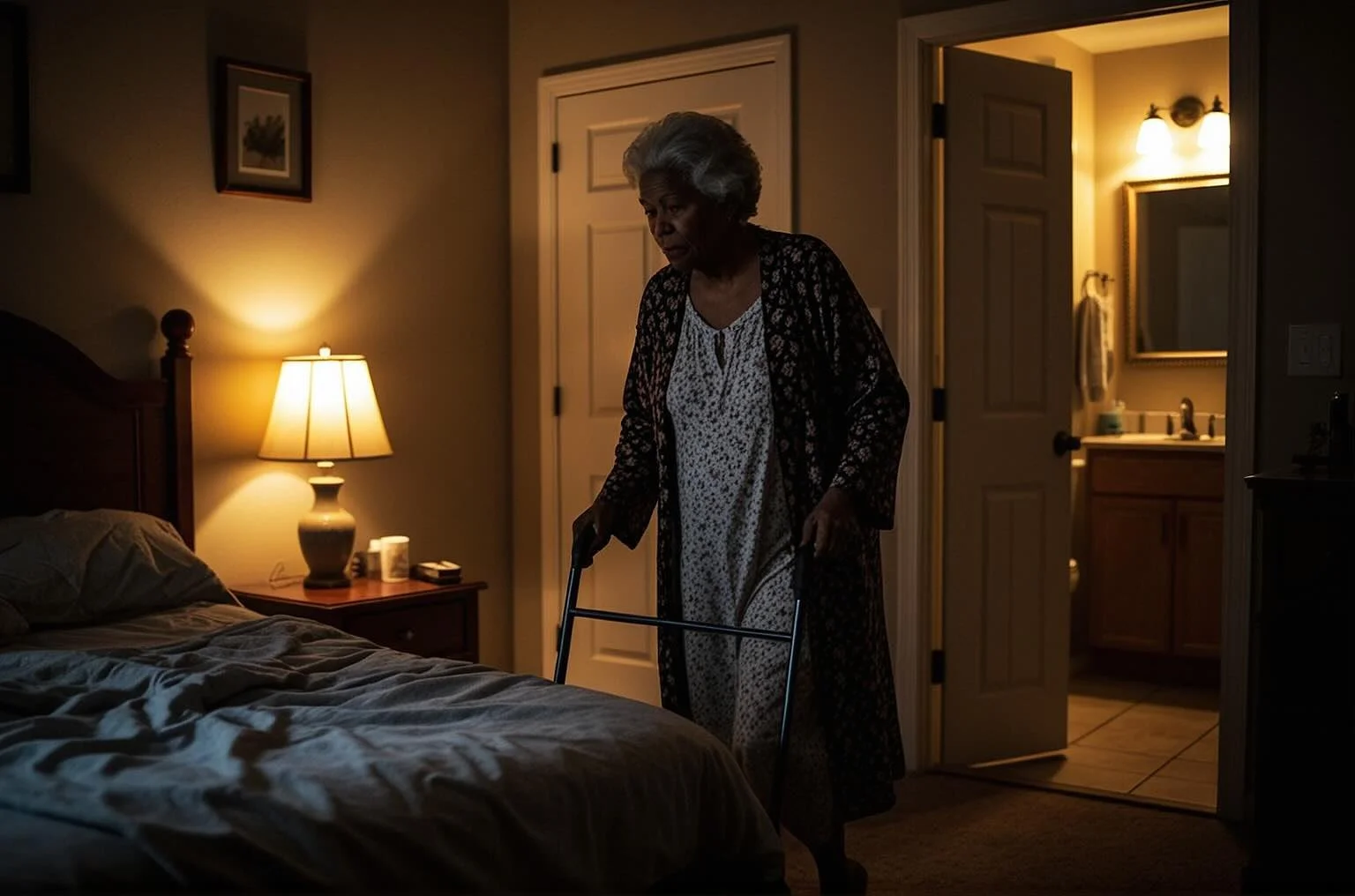
For adult children, this problem rarely shows up all at once. It starts with small questions. Did Dad get out of bed this morning? Is Aunt Linda moving around less than usual? Did your parent make it safely back from the bathroom at night? When you live across town or across the country, uncertainty can be exhausting. But for many older adults, the answer is not a camera in the living room or a wearable they forget to charge.
What privacy focused elder monitoring really means
At its best, privacy focused elder monitoring is not just about removing cameras. It is about preserving dignity while still giving families meaningful insight into daily wellbeing. That means collecting only the information needed to notice changes in routine, possible safety issues, or signs that more support may be needed.
In practical terms, this usually looks like passive in-home monitoring that tracks patterns rather than recording private moments. Instead of showing video footage, it can identify that someone got up later than usual, made fewer trips through the kitchen, or was in the bathroom far more often overnight. Those are the kinds of signals families actually need.
That distinction matters. Many caregivers do not want more raw data. They want fewer unknowns. A privacy-first system should help answer simple questions: Is my parent following their normal routine? Has something changed? Do I need to check in now?
Why families are moving away from cameras and wearables
On paper, cameras seem like the most direct way to monitor safety. In real life, they often create new problems. Older adults may feel uncomfortable being visible in their own home, especially in bedrooms, hallways, or near bathrooms. Family caregivers can also feel uneasy about reviewing footage, even when their intentions are loving.
Wearables have a different issue. Many seniors stop wearing them, forget to charge them, or take them off at the exact moment they are needed. A device can only help if it is on, charged, and used correctly. That is a big ask for someone dealing with memory changes, limited dexterity, poor sleep, or a strong dislike of gadgets.
Passive monitoring offers a middle ground. It works quietly in the background and does not require the older adult to remember, press, charge, or learn anything new. For families trying to reduce friction, that simplicity is often the difference between a system that sounds good and one that gets used every day.
How privacy focused elder monitoring supports independence
Most seniors do not want to be monitored. What they do want is to stay in their own home, maintain familiar routines, and avoid unnecessary disruption. Privacy-focused systems can support that goal because they are built around observation of activity patterns, not surveillance.
When a system notices that someone is moving normally, sleeping on schedule, and using the home as expected, that reassurance can prevent overreacting. Family members may feel less pressure to call constantly, show up unannounced, or push for a move before it is truly necessary.
That is one of the less obvious benefits. Better monitoring can actually create more freedom. When families have trusted insight, they can step back from anxious guesswork. The older adult keeps more space, and the caregiver carries less mental load.
For families managing Parkinson's disease, fall risk, recovery after hospitalization, or general frailty, this can be especially valuable. A change in activity may show up before a full crisis does. Less motion during the day, restless nights, or unusual bathroom patterns can signal that something is off, even if no one has said it out loud yet.
What to look for in a privacy-first system
Not every monitoring solution that claims to respect privacy does so in a meaningful way. Some simply avoid cameras while still overwhelming families with confusing data or unclear alerts. The best systems do more than stay discreet. They make the information useful.
A strong privacy-first solution should be passive, which means it works without relying on the older adult to take action. It should focus on patterns and changes in routine, not constant live observation. It should also turn those patterns into understandable alerts and summaries, so caregivers know when something may need attention.
Clarity is essential here. If a tool sends nonstop notifications for every small movement, families will tune it out. If it sends almost nothing, it defeats the purpose. Good monitoring finds the middle ground: enough insight to act when needed, without turning caregiving into a full-time monitoring job.
This is where behavioral analysis becomes useful. Instead of asking a daughter to interpret scattered motion events on her own, the system can identify that her father is rising later, spending more time inactive, or waking repeatedly overnight. That is the difference between data and insight.
Privacy focused elder monitoring and the trust factor
Trust is not only about technology. It is also about how the older adult feels living with it.
Many families make the mistake of introducing monitoring as a safety measure for emergencies only. While that is understandable, it can make the conversation feel dramatic or controlling. A more honest approach is to frame it around support, independence, and reducing unnecessary check-ins. You are not trying to spy. You are trying to notice meaningful changes early and help your loved one stay at home longer.
Older adults are often more open to monitoring when they understand what is not being collected. No camera footage. No audio recordings. No need to wear a device all day. No one watching them in real time. Those details matter because they protect dignity, and dignity is often what people fear losing most.
It also helps to be clear about who receives information and what kind of information is shared. A simple explanation can go a long way: the system notices routine changes and sends alerts if something seems unusual. For many families, that feels far more respectful than surveillance-based tools.
Where privacy-first monitoring works best
Privacy-focused monitoring is especially useful in the situations many caregivers know well but struggle to manage from a distance. A parent lives alone and insists they are fine, but you have noticed subtle changes. A loved one is recovering from a fall or hospital stay, and you want reassurance without moving them into a more restrictive setting. A family member has mobility issues or mild cognitive decline, and daily routines now tell you more than occasional phone calls do.
This approach can also work well when siblings share caregiving responsibilities. Instead of one person carrying all the worry, everyone can have a clearer picture of changes over time. That can reduce family tension, because conversations become less about hunches and more about patterns.
For professional care teams, the value is similar. Quiet, passive insight can help staff identify who may need added support before a problem escalates. But even in those settings, privacy still matters. Older adults deserve care that feels respectful, not intrusive.
The trade-offs to understand
Privacy focused elder monitoring is not a magic fix, and it is worth being honest about that. It does not replace human contact. It will not tell you everything about mood, pain, or whether your parent is eating well unless those issues begin to affect routine in visible ways.
It is also not the right fit for every situation. If someone needs continuous medical supervision, wanders outside the home, or requires hands-on care throughout the day, passive home monitoring may need to be part of a broader support plan rather than the whole solution.
Still, for many families, that is exactly the point. They are not looking for full clinical oversight. They are looking for a respectful way to reduce uncertainty and catch changes sooner.
That is why solutions like StackCare resonate with families who want insight without intrusion. The goal is not to watch a loved one more closely. The goal is to worry less while caring better.
The best technology in this space does something very human: it gives families a little more calm. When privacy is protected and changes are easier to spot, support becomes gentler, faster, and more thoughtful. For many older adults, that can mean staying safely at home without feeling like home has stopped being their own.