
For families supporting an older adult who lives alone, the hard part is rarely love or intention. It is the gap between wanting to help and actually knowing what is happening day to day. A parent may sound fine on the phone, but be sleeping poorly, moving less, skipping meals, or getting up far more often at night. Small changes like these often show up before a crisis, yet they are easy to miss when you are juggling work, kids, and your own household.
What a non invasive senior monitoring system actually does
A non invasive senior monitoring system uses passive in-home sensors to understand daily patterns without recording private moments. Instead of video footage or audio, it tracks activity such as motion in key areas of the home, overnight movement, bathroom visits, and whether a normal routine appears to be changing.
The point is not constant surveillance. The point is meaningful visibility. If your father usually starts his day in the kitchen by 8:00 a.m. and that pattern suddenly stops, the system can flag it. If your mother is spending far more time restless at night, that may also stand out. Rather than making you interpret raw information on your own, better systems translate these changes into alerts and simple updates you can actually use.
This matters because caregiving decisions are often made in uncertainty. Families are left wondering whether they are overreacting, underreacting, or missing something important. A system that notices deviations from routine can reduce that uncertainty without taking away independence.
Why families are moving away from cameras and wearables
When people first look for ways to keep an aging parent safe, they often consider emergency pendants, smartwatches, or cameras. Each can help in specific situations, but each also comes with trade-offs.
Wearables depend on compliance. A parent has to remember to put the device on, keep it charged, and wear it consistently. That sounds simple until real life gets involved. Devices get left on a nightstand, taken off for a shower, or rejected because they feel medical or stigmatizing.
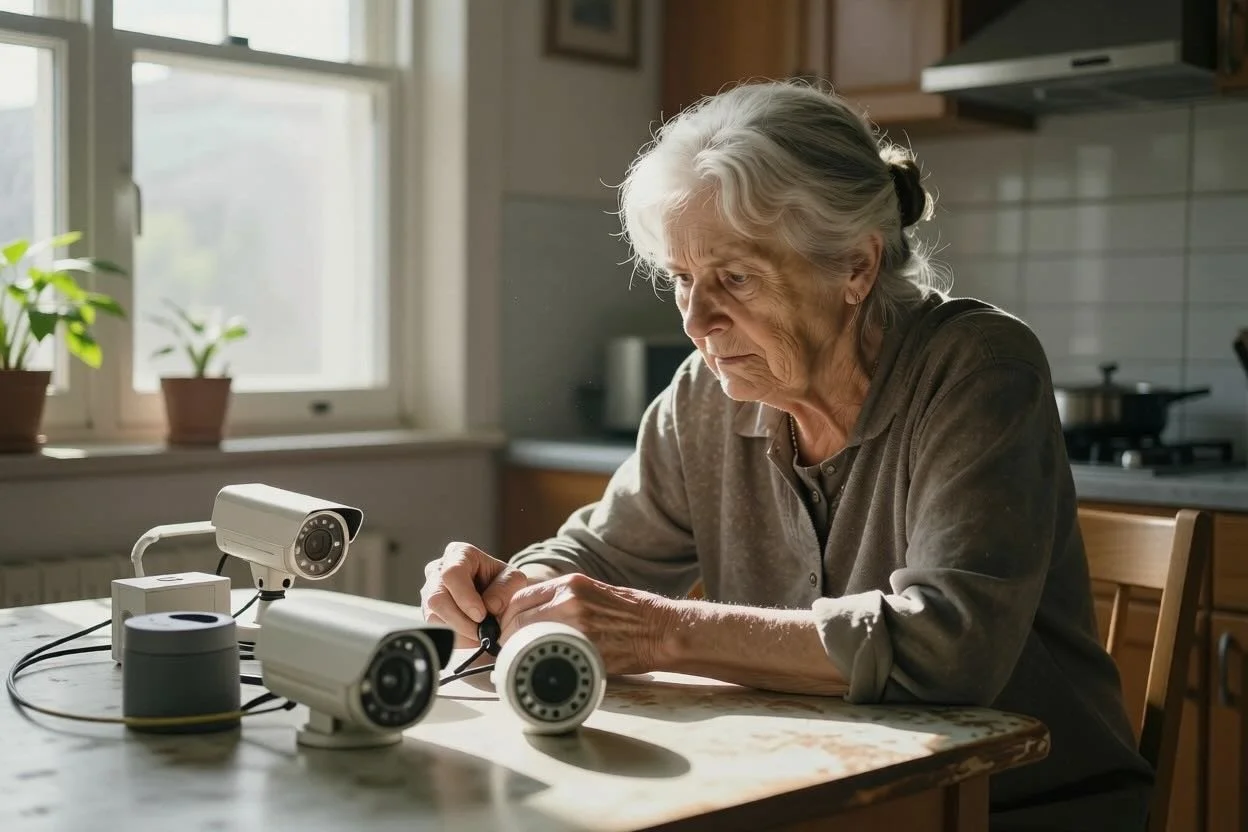
Cameras create a different problem. They may offer visual confirmation, but many older adults find them intrusive, especially in bedrooms, bathrooms, and other private spaces. Adult children often feel uneasy too. Most people do not want to monitor a loved one by watching clips of their daily life.
A non invasive senior monitoring system fits the middle ground many families are looking for. It can provide reassurance without asking seniors to change habits and without turning the home into a place of surveillance. That balance is a big reason these systems are gaining attention.
How non-invasive monitoring supports independence
Most older adults want the same thing their families want - to stay safe while continuing to live life on their own terms. The trouble starts when safety and autonomy are treated like opposites.
In reality, the right kind of monitoring can support both. Passive sensors do not interrupt a routine. They do not ask a senior to learn a new app, wear a pendant, or check in multiple times a day. The technology works quietly in the background, which means the older adult can keep living at home with less friction and more dignity.
That dignity piece matters more than many families expect. Seniors are often open to support when it does not feel like control. A discreet monitoring approach can feel less like being watched and more like having a safety net. That shift in perception can make adoption much easier.
What changes these systems can help families notice
The value of a non invasive senior monitoring system is not just in detecting emergencies. It is often most helpful in spotting subtle changes early.
A parent who is walking less from room to room may be dealing with pain, fatigue, weakness, or depression. More bathroom activity overnight can signal medication effects, sleep issues, or other health concerns. Less kitchen activity may suggest appetite changes or difficulty preparing meals. A sudden disruption in a long-standing routine can be one of the earliest signs that something is off.
These changes do not always mean there is a serious problem. Sometimes the explanation is simple. But patterns matter, especially when they shift over days or weeks. Families are in a much stronger position when they can notice those shifts early and decide whether to call, visit, or involve a doctor.
What to look for in a non invasive senior monitoring system
Not every system delivers the same level of usefulness. Some collect data but leave families to figure out what it means. Others are better at turning patterns into clear, timely insight.
Look for a system that focuses on behavior changes, not just motion detection. Motion alone can tell you someone passed through a room. Behavior analysis can tell you whether their normal rhythm is changing. That is a much more helpful signal for real caregiving decisions.
Alerts should also be easy to understand. If you are already stretched thin, you do not need a complicated dashboard. You need concise notifications that tell you what changed and whether it may need attention.
Privacy is another major factor. Families should understand exactly what is and is not being collected. For many households, the appeal of this category is that it avoids cameras, microphones, and invasive recording. If that boundary matters to your family, it is worth confirming from the start.
Finally, consider setup and day-to-day effort. The best systems are simple enough that they do not become another project to manage. Monitoring should lower your mental load, not add to it.
Who benefits most from this kind of monitoring
This approach is especially helpful for adult children supporting a parent who lives alone, whether nearby or across the country. It can also be valuable after a hospital discharge, during recovery from illness or injury, or when a family is noticing early signs that a loved one may need more support.
It is often a strong fit for seniors with mobility changes, fall risk, Parkinson’s disease, mild cognitive decline, or general frailty. In these situations, the challenge is not always one dramatic event. It is the accumulation of small shifts in sleep, movement, and routine that tell the bigger story.
That said, it is not a perfect fit for every need. If a senior needs direct medical monitoring or hands-on personal care, passive home monitoring is only one piece of the picture. It can complement care, but it does not replace human support, medical advice, or emergency response services.
The emotional benefit is real too
Caregiver stress is not only about tasks. It is about uncertainty. It is lying awake wondering if your mom got out of bed this morning. It is trying not to overcall because you want to respect her independence, while also worrying that silence might mean something is wrong.
A thoughtful system can ease that daily strain. It gives families a way to stay connected to wellbeing without constant checking. That alone can change the tone of caregiving. Conversations become less about proving everything is fine and more about responding when support is actually needed.
For many families, that is the real promise here. Not perfect control. Not total certainty. Just a more humane way to care from a distance, with better information and more respect.
If you are trying to help someone stay safely at home, a non invasive senior monitoring system is worth considering not because it watches more, but because it helps you worry less while honoring the life your loved one still wants to live.