
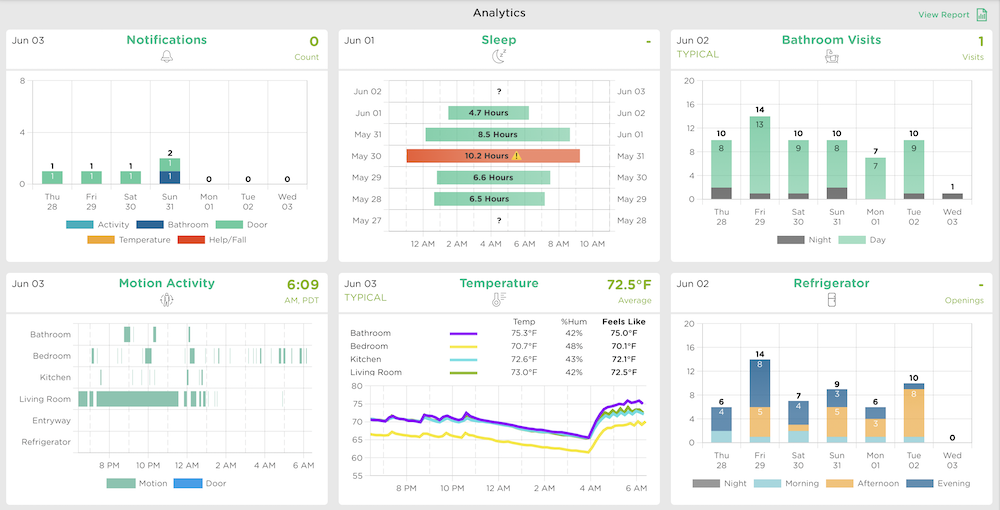
For many families, that balance is hard to find. Daily phone calls can help, but they do not tell you much about what happened between breakfast and bedtime. Cameras can feel invasive. Wearables are easy to forget, remove, or stop charging. Home activity monitoring takes a different approach. It looks at patterns of movement in the home and turns those patterns into useful insight.
How home activity monitoring works
At its core, home activity monitoring uses small motion sensors placed in key areas of the home, such as the bedroom, bathroom, kitchen, and main living spaces. These sensors do not record video or audio. They simply detect movement and note when activity happens.
Over time, the system learns a person’s usual routine. It may notice when they typically get out of bed, how often they use the bathroom overnight, whether they are spending time in the kitchen around mealtimes, or if they are moving through the home less than usual. That matters because routine is often one of the clearest signals of well-being, especially for older adults living alone.
The technology is not just collecting motion events. It is looking for patterns. A single late morning might mean nothing. But several days of sleeping in longer, skipping the kitchen, or making more frequent bathroom trips at night can point to a change worth noticing. Instead of expecting family members to interpret raw data themselves, newer systems use analytics to flag meaningful shifts and send simple updates or alerts.
That is what makes this category different from basic alarm systems. The goal is not only to detect emergencies after they happen. It is to help families notice changes early, when there may still be time to check in, adjust care, or schedule a doctor’s visit.
What the sensors actually detect
The word monitoring can sound more intrusive than it really is. In most home activity monitoring systems, the sensors are passive. They detect motion in a room, not exactly what someone is doing. If a sensor in the kitchen is active at 8:00 a.m., the system can infer that someone is up and moving through their usual morning routine. It cannot see whether they made oatmeal or poured coffee.
That level of detail is intentional. Families usually do not need constant surveillance. They need reassurance. Is Dad getting out of bed? Is Mom following her normal routine? Has there been an unusual stretch of inactivity? Is something different happening at night?
A well-designed setup usually includes a few carefully chosen sensor locations rather than trying to cover every inch of the home. More sensors are not always better. The point is to create a reliable picture of daily life without making the home feel clinical.
How the system learns routines over time
This is where home activity monitoring becomes more useful than a simple motion detector. During the first days and weeks, the system starts building a baseline of normal activity. That baseline is personal. One older adult may wake at 5:30 a.m., spend a lot of time in the kitchen, and nap in the afternoon. Another may sleep later, move less often because of mobility limitations, and wake several times overnight.
There is no single healthy routine that fits everyone. Good monitoring systems are built around that reality. They learn the individual household instead of forcing everyone into the same standard.
Once a baseline is established, the software can compare current behavior against what is typical for that person. If activity in the bathroom increases sharply overnight, or there is much less movement in the kitchen for several days, the system may identify that as a meaningful change. Some platforms send real-time alerts for urgent concerns and daily summaries for lower-level changes, so caregivers are informed without being overwhelmed.
This is especially helpful for families who live at a distance. You may not be there to notice small shifts in energy, sleep, or movement. Pattern-based monitoring fills in some of that gap.
Why behavior changes matter
Aging often brings gradual change, and gradual change is easy to miss. A parent may sound fine on the phone while quietly becoming less active, sleeping poorly, or spending more time in the bathroom. Those signs do not always mean something serious, but they can be early clues.
Reduced kitchen activity might suggest skipped meals, low energy, or trouble preparing food. Less movement around the home could point to pain, fatigue, depression, or mobility issues. More nighttime bathroom visits may be related to medication changes, dehydration, urinary issues, or blood sugar changes. Longer periods in bed can signal illness or recovery needs.
None of these patterns tells the whole story on its own. That is the trade-off. Home activity monitoring is useful because it highlights changes, but it does not diagnose the reason behind them. It gives families a reason to pay attention and ask better questions.
For many caregivers, that is exactly what they need. Not a flood of data, and not a false promise that technology can replace human judgment. Just an earlier heads-up when something seems off.
How alerts and summaries help caregivers
The best systems do not expect you to watch a dashboard all day. They do the watching for you and communicate only what is useful. That might mean a real-time alert if there is an unusual period of inactivity during the day, or a morning summary that shows whether your loved one followed their typical routine overnight.
This matters when you are balancing work, kids, and your own household. Most family caregivers are not looking for another screen to manage. They want fewer unknowns. A simple notification that says activity was lower than usual, or that the morning routine started much later than normal, can help you decide whether to call, text, or stop by.
The strongest systems also reduce false alarms by focusing on patterns rather than isolated moments. If your dad naps longer one afternoon, that may not trigger concern. If his activity drops significantly for three straight days, that is more likely to prompt an alert. That distinction helps caregivers stay engaged instead of becoming numb to constant notifications.
Privacy is a major reason families choose it
Many older adults strongly resist anything that feels like surveillance, and that concern is valid. Cameras in private spaces can feel humiliating. Microphones raise obvious concerns. Even wearables can feel burdensome or stigmatizing.
That is why passive, camera-free monitoring appeals to so many families. It provides visibility into daily well-being without recording private moments. Seniors can move through their home naturally. They do not have to press a button, remember a device, or explain why there is a camera in the hallway.
This privacy-first approach can also make adoption easier. When an older parent hears that the system does not listen, watch, or interfere with daily life, they are often more open to the conversation. Independence is not just about staying at home. It is also about preserving dignity while they do.
It works best as part of a broader care picture
Home activity monitoring is helpful, but it is not magic. It does not replace medical care, in-person visits, or honest conversations about safety. It works best as one layer of support.
For some families, that layer is enough to ease everyday worry. For others, it becomes part of a broader plan that may include home care visits, medication management, fall prevention steps, or regular appointments. The value depends on the situation. Someone recovering from surgery may need closer short-term monitoring. Someone with mild mobility changes may benefit more from long-term trend tracking.
That flexibility is part of the appeal. A good system meets families where they are. It helps when concerns are still early and can continue to provide reassurance as needs change.
StackCare follows this privacy-first model by turning in-home activity into clear, meaningful alerts for families, without cameras or wearables. For caregivers who are carrying a lot already, that kind of simplicity matters.
If you are trying to support an older parent from across town or across the country, understanding how home activity monitoring works can make the choice feel less intimidating. At its best, it does not replace care. It makes care more informed, more timely, and a little less heavy to carry alone.