
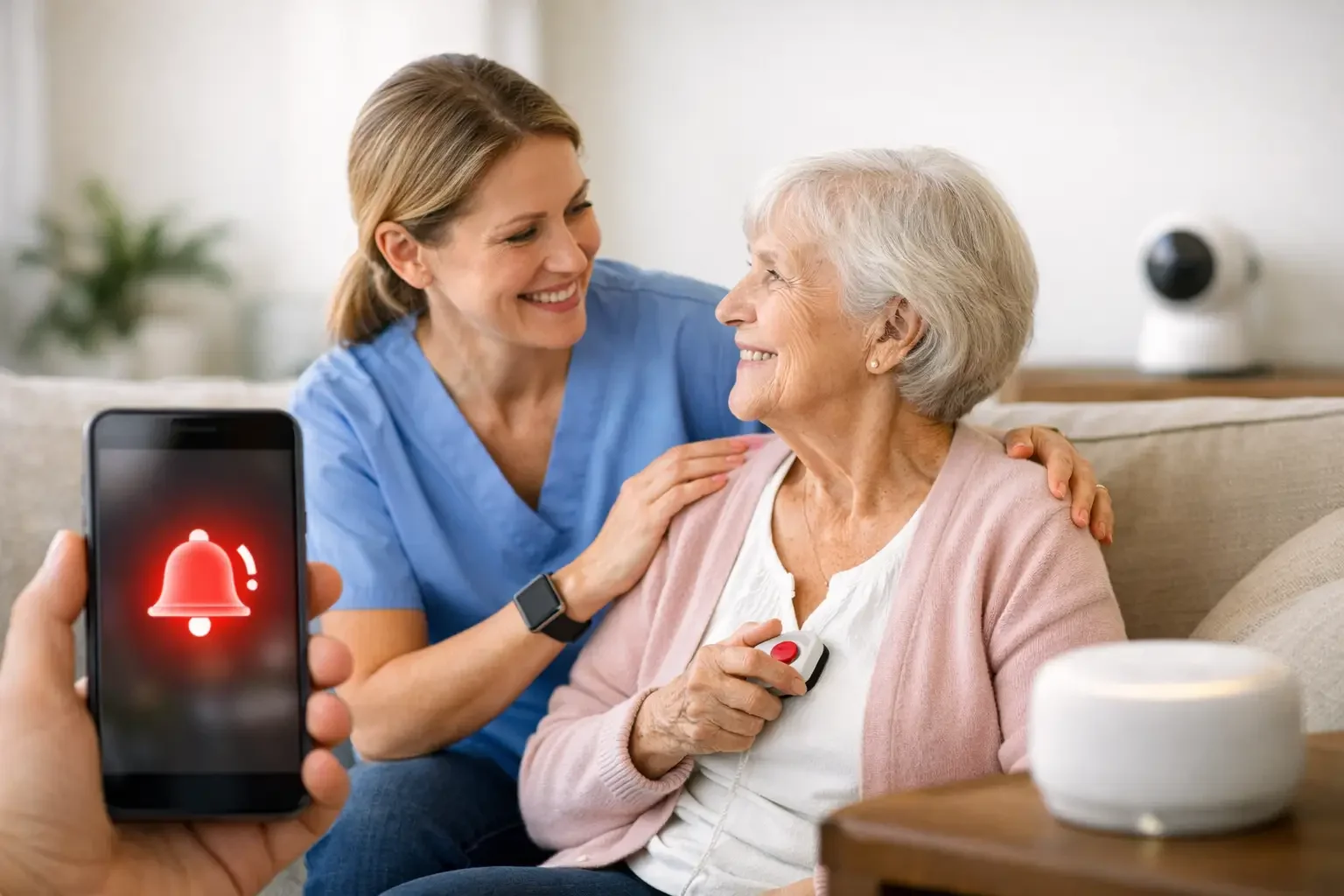
For many families, that gap is where the stress lives. You are trying to work, manage your own household, and be present for someone who wants to stay at home. You do not necessarily need a stream of data or a camera in every room. You need timely, meaningful updates that tell you when daily life looks normal and when it does not.
Why a caregiver notification system matters
The hardest part of caregiving is often uncertainty. If your parent lives alone, you are left piecing together clues from phone calls, text messages, and occasional visits. That may work for a while, but it can break down quickly if routines change slowly or a problem develops between check-ins.
A good caregiver notification system helps families catch those shifts earlier. Instead of relying on a loved one to remember every detail or admit when something feels wrong, the system watches for patterns in daily activity. That could mean noticing someone is sleeping much later than usual, moving less throughout the day, or making unusually frequent bathroom trips overnight.
Those details matter because they can point to real issues. A change in movement may suggest fatigue, pain, or a mobility problem. Restless nights may signal discomfort, medication changes, or illness. More bathroom activity might be nothing serious, but it might also be the first sign of a urinary issue or another health concern. The value is not in replacing human judgment. It is in giving families a clearer picture, sooner.
What a caregiver notification system should actually tell you
Not every alert is useful. If a system sends constant notifications about minor, expected movement, most caregivers will eventually tune it out. That defeats the purpose.
The best systems focus on changes that are meaningful in the context of a person’s normal routine. That means they learn habits over time and notify caregivers when something falls outside the usual pattern. A late wake-up might not matter for one person, but it might be a real concern for someone who is always active by 7 a.m. A missed kitchen visit could be significant for a parent who never skips breakfast.
This is where context makes all the difference. Families do not need raw sensor events. They need simple updates they can understand at a glance. Is your loved one following their normal routine today? Did anything unusual happen overnight? Does this pattern suggest a one-time blip or a developing trend?
That kind of communication lowers stress because it removes some of the guesswork. Instead of wondering whether to call three times in a row, you have a better sense of when to check in and why.
Privacy is not a side issue
For many older adults, monitoring can feel like a loss of dignity. That is why some families postpone getting support until after a fall, a hospitalization, or a crisis. They do not want to install cameras or ask a parent to wear something that feels medical or easy to forget.
A caregiver notification system should not force a choice between safety and privacy. In many cases, the strongest solution is passive monitoring that works in the background without recording conversations or video. It can track whether someone is up, moving around, using the kitchen, or going to the bathroom, while still respecting the fact that home should feel like home.
That privacy piece is not just about comfort. It affects adoption. If your loved one resents the system, they may try to disable it or refuse to live with it. If it feels discreet and nonintrusive, families are far more likely to use it consistently over time.
What families often get wrong when choosing a system
The first mistake is assuming more technology means better care. In reality, more devices often create more work. Wearables need charging. Panic buttons must be kept nearby. Cameras can raise tensions and still leave caregivers to interpret what they are seeing.
The second mistake is focusing only on emergencies. Emergency response matters, but many caregiving problems build gradually. A parent may not have a dramatic fall or obvious incident. They may just start eating less, sleeping poorly, or moving differently for several days. If your system only helps after something serious happens, it misses much of what families are actually worried about.
The third mistake is underestimating caregiver fatigue. If a solution requires you to review dashboards, compare daily data, or manually monitor activity, it adds another task to a schedule that is already full. Most families need a system that does the watching for them and surfaces what matters.
How the best caregiver notification system supports independence
This is the part many people overlook. A caregiver notification system is not just about protecting an older adult. It is also about helping them stay in control of their life.
When families feel more confident that they will be alerted to meaningful changes, they are often less likely to push for disruptive alternatives too soon. That can mean fewer unwanted check-in calls, less pressure to move, and more room for an older adult to continue living on their own terms.
That dynamic matters emotionally. Many seniors do not want to be watched. They want to be trusted. A well-designed system supports that trust by creating quiet visibility rather than constant oversight.
For adult children, that can ease a different kind of burden. You may still worry, because caregiving always carries some worry. But there is relief in knowing you do not have to guess every day. You can step out of the role of detective and into the role of informed, responsive support.
Where AI can help and where it should stay in the background
Artificial intelligence can sound abstract, but in this context its job is simple. It should help sort normal from unusual.
That means recognizing patterns over time and flagging changes that deserve attention. It should not overwhelm you with technical language or make you feel like you need training to understand what is happening. The smartest systems use AI quietly, translating behavior patterns into plain updates a family can act on.
It also helps reduce false alarms. If a home monitoring system reacts the same way to every small change, caregivers quickly lose confidence. Better analysis can distinguish between ordinary variation and a more meaningful deviation from routine.
Still, technology has limits. No caregiver notification system can diagnose illness or replace medical care. It can tell you that something changed. It cannot always tell you why. That is why the most useful systems support conversations and decisions, rather than pretending to replace them.
Who benefits most from a caregiver notification system
This kind of support can be especially helpful when a loved one lives alone, has mobility concerns, is recovering from illness or injury, or is managing a condition that affects routine and stability. It is also valuable for long-distance caregivers who cannot stop by easily and for families sharing responsibilities across siblings.
In those situations, even a simple daily picture can make a major difference. If everyone knows what is normal, they are better prepared to spot what is not. If one family member is carrying most of the mental load, a clear alert system can spread that burden more fairly.
That is one reason solutions like StackCare resonate with families. They are built around a very human need: reassurance without intrusion. The technology matters, but what people are really buying is a little less uncertainty and a little more confidence.
Choosing a system that helps instead of adding noise
If you are evaluating options, pay close attention to how the system communicates. Does it send useful alerts based on changes in routine, or just report activity? Does it protect privacy in a way your loved one can accept? Does it reduce your workload, or quietly add to it?
The right fit often comes down to a simple question. When something changes in your parent’s day, will you know soon enough to respond calmly and appropriately?
That is what families are really looking for. Not surveillance. Not endless data. Just a trustworthy way to stay connected to a loved one’s wellbeing while giving them the dignity of living at home.
If you are carrying that low-grade worry every day, the right support will not make you care less. It will help you breathe a little easier while caring well.