
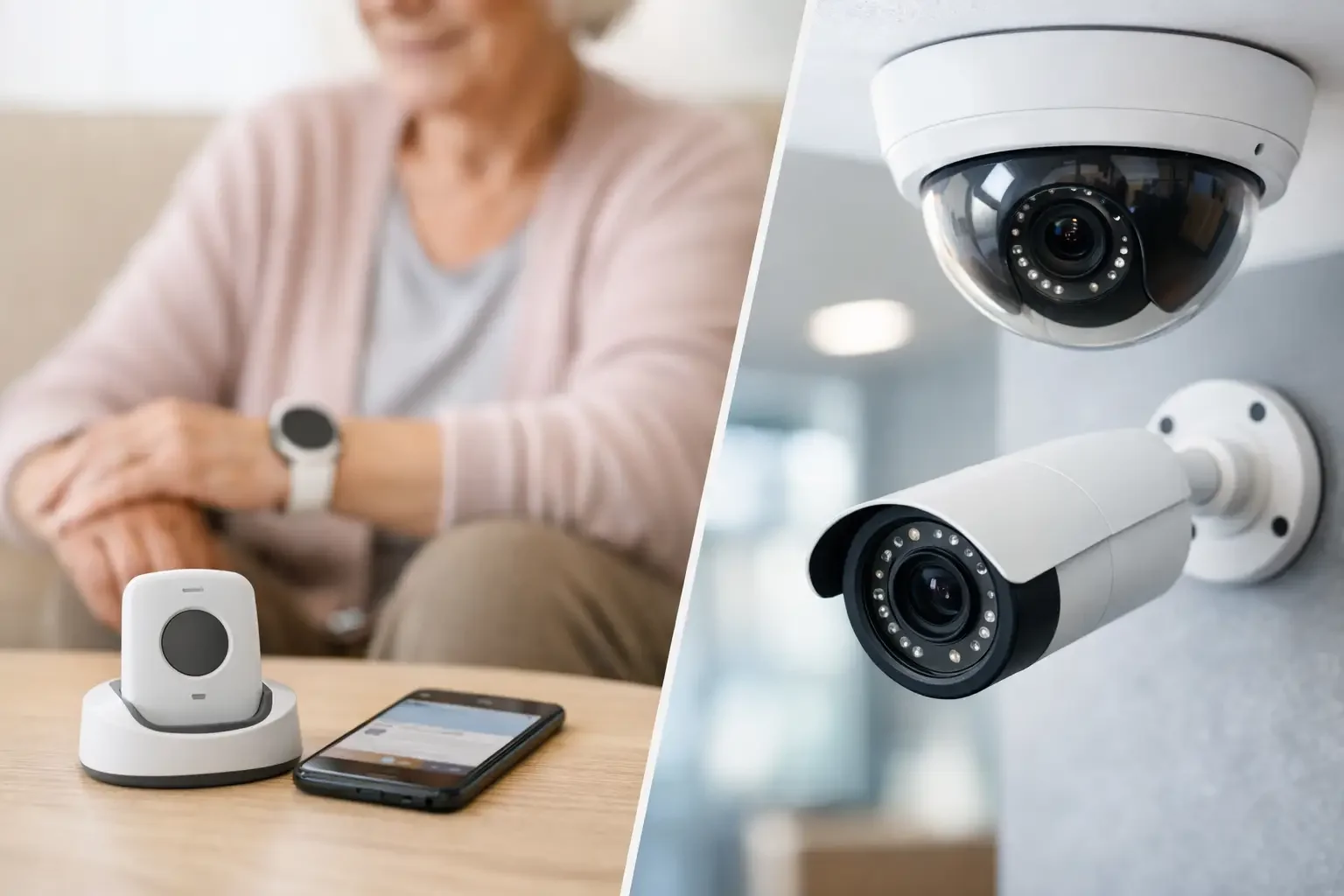
For many families, cameras seem like the obvious first step. They are familiar, easy to picture, and widely available. But once the conversation turns from security to caregiving, the trade-offs become much more personal. A solution that works for a front porch package delivery does not always work well in a bedroom, hallway, or bathroom when the person being monitored is your parent.
Senior monitoring vs cameras: the real difference
The biggest difference between senior monitoring and cameras is what kind of information each system gives you, and what your loved one has to give up in return.
Cameras show you video. That can be useful in certain moments, especially if there is an emergency and you need to visually confirm what is happening. But video also creates a constant record of private life. Even when families have the best intentions, many older adults feel uncomfortable knowing a device could capture them getting dressed, waking up in the middle of the night, or simply spending time alone.
Senior monitoring systems built around motion sensors and behavior patterns work differently. Instead of showing you footage, they track daily activity in a discreet way. You are not watching a person. You are being notified when something in their routine changes - like no morning kitchen activity, more frequent bathroom visits, restless overnight movement, or a long period of inactivity during the day.
That difference matters because caregiving is rarely about seeing everything. More often, it is about knowing when something is off.
Why cameras can create new stress for caregivers
Families often assume cameras will reduce worry. Sometimes they do. But they can also create a new kind of burden.
Video gives raw information, not always clear answers. If you get an alert from a camera, you may need to open the app, review footage, and decide whether what you are seeing is normal or concerning. That puts the interpretation back on the caregiver, often in the middle of a workday, a child pickup, or at 2 a.m.
There is also the emotional weight of watching a parent too closely. Many adult children do not want to become a remote observer of every nap, meal, or hallway shuffle. They want reassurance, not surveillance. When the tool asks you to monitor constantly, it can make caregiving feel even heavier.
This is where passive senior monitoring often feels more supportive. Instead of handing you hours of footage or requiring frequent check-ins, it highlights meaningful changes and sends alerts when attention may be needed. That shift can lower stress because you are not responsible for watching all day. You are informed when it counts.
Privacy is not a side issue
When families compare senior monitoring vs cameras, privacy can sound like a soft concern next to safety. In practice, it is central to whether a solution will actually work.
Many older adults want help, but they do not want to feel controlled. If a monitoring setup feels invasive, they may resist it, unplug it, avoid certain rooms, or agree to it resentfully. That tension can strain family relationships at the exact moment everyone is trying to build trust.
Discreet sensor-based monitoring tends to be easier to accept because it respects the line between support and observation. It allows a person to keep living their normal life without feeling like someone might be watching from a screen. For seniors who value independence deeply, that distinction is often the difference between cooperation and conflict.
This matters even more in private spaces. Cameras in common areas may feel manageable to some families, but bedrooms and bathrooms raise obvious concerns. Yet those are often the very places where important changes happen, such as disrupted sleep, nighttime wandering, or increased bathroom use. A non-camera system can provide insight into those patterns without crossing a line most families would rather not cross.
When cameras do make sense
There are situations where cameras can play a useful role. If an older adult has advanced dementia, frequent falls, or a home entry security concern, visual confirmation may be appropriate in limited areas. Some families also use doorbell or exterior cameras to monitor visitors, deliveries, or whether a loved one has left the house unexpectedly.
So this is not a simple case of cameras being bad and sensor-based systems being good. It depends on the person, the living situation, and the goal.
If your main concern is home security, cameras may be part of the answer. If your main concern is daily wellbeing, routine changes, and reducing the uncertainty of caregiving, cameras often solve the wrong problem. They show moments. They do not always help you understand patterns.
Senior monitoring vs cameras for daily wellbeing
Most family caregivers are not trying to investigate isolated incidents. They are trying to answer quieter questions.
Did Dad get up this morning?
Is Mom sleeping worse than usual?
Has he been in the kitchen today?
Is she moving less this week than last week?
Those are not camera questions as much as behavior questions. And behavior changes are often the earliest sign that something needs attention. A parent recovering from illness may start moving less. Someone developing a urinary issue may begin making more bathroom trips overnight. A person with Parkinson's may take longer to start their day or spend more time inactive after dinner.
This is where AI-powered senior monitoring has an advantage. It does not just detect movement. It learns what is typical in the home and flags what has changed. That gives caregivers something more useful than a live feed - context.
Context helps you respond sooner and more calmly. Instead of guessing whether a loved one is okay, you have a clearer picture of their routine and whether it is shifting.
Dignity matters more than many families expect
One of the hardest parts of caregiving is balancing help with respect. Adult children want to protect a parent, but they also want to preserve the parent-child relationship. No one wants every interaction to feel like supervision.
Camera-based monitoring can unintentionally change the emotional tone of care. Even if footage is rarely checked, the presence of a camera can make a home feel less private and less personal. Some older adults describe it as being treated like a patient rather than a person.
Passive monitoring supports a different experience. It is quieter. Less performative. It does not ask your loved one to remember a wearable, push a button, or accept constant visual oversight. That can make support feel lighter and more respectful, especially for seniors who are still doing well but need an extra layer of protection.
For many families, that is the whole point. They are not trying to take over. They are trying to help someone stay independent longer.
What to ask before choosing a system
A better decision usually starts with a few honest questions. What are you actually worried about - break-ins, falls, wandering, missed meals, or subtle changes in health? How comfortable is your loved one with being observed? Do you want to review footage yourself, or do you want useful alerts that save you time? Are you looking for proof after an event, or earlier signs that something is changing?
Those questions tend to clarify things quickly. If you need visual evidence in a very specific area, a camera may have a place. If you want ongoing insight without constant surveillance, senior monitoring is often the better fit.
Many families are surprised to learn they do not really want more access. They want less uncertainty. Those are not the same thing.
A system like StackCare is designed around that reality. It gives families meaningful updates about routines, movement, and changes in behavior without asking them to watch video or compromise a loved one's privacy. For caregivers already carrying enough, that kind of simplicity can feel like relief.
Choosing between cameras and senior monitoring is rarely just a tech decision. It is a values decision too. The best option is the one that keeps your loved one safe while still letting home feel like home.