
What passive monitoring for seniors actually means
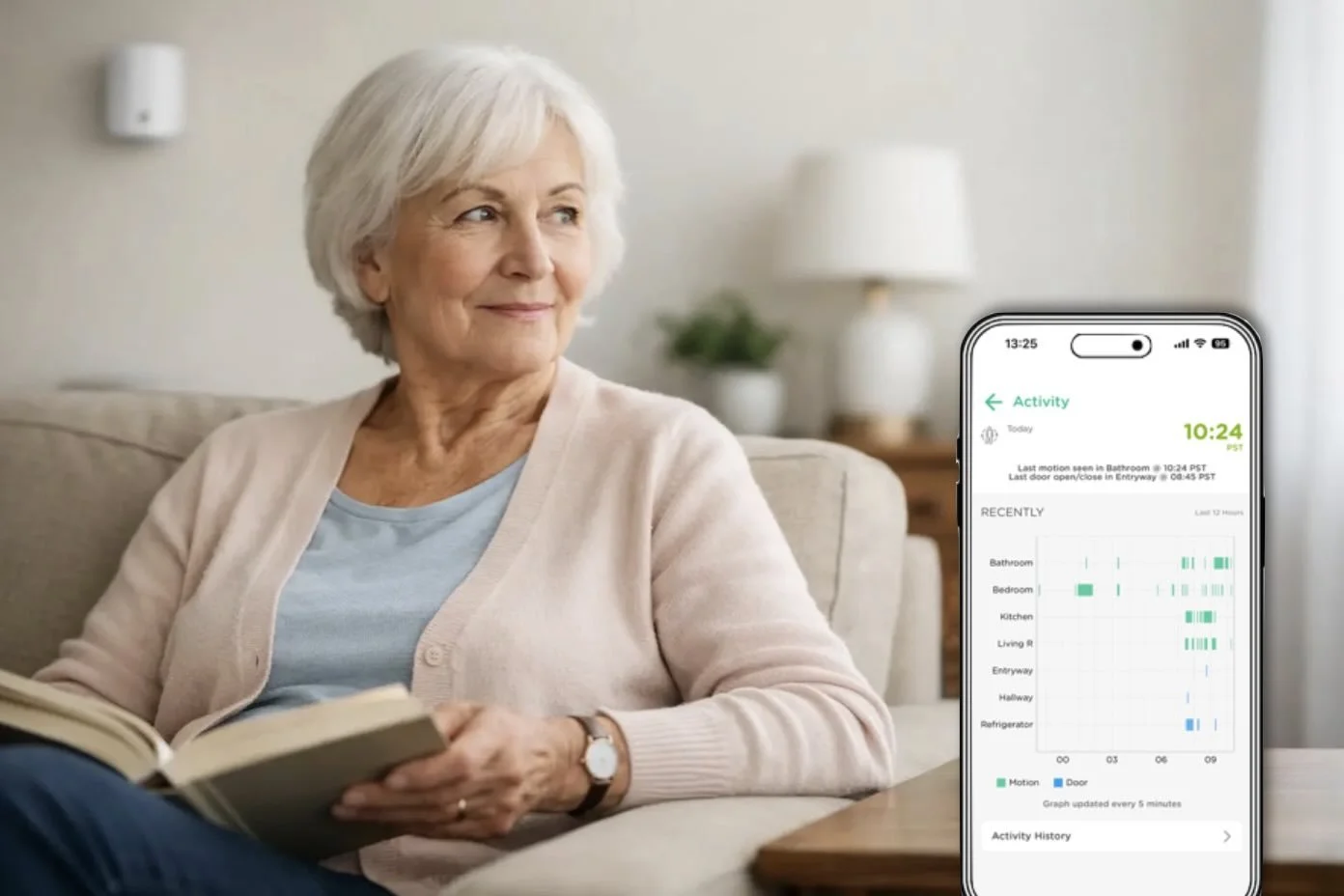
Passive monitoring for seniors is a way to keep track of daily wellbeing without asking an older adult to wear a device, press a button, or live under a camera. Instead, small in-home sensors detect activity patterns such as movement between rooms, nighttime bathroom visits, time spent in bed, or whether a normal morning routine happened.
That information becomes useful when it is translated into something simple. Families do not need a stream of raw data. They need to know whether Dad got up later than usual, whether Mom is moving less than she did last week, or whether there was an unexpected gap in activity that could signal a fall, illness, or growing mobility issue.
The word passive is what makes this approach different. It works quietly in the background. For many seniors, that matters as much as the technology itself. It allows support without making daily life feel medical, monitored, or diminished.
Why families are looking for something better than check-in calls
Most family caregivers do not start by looking for monitoring technology. They start with phone calls, texts, neighbors, and instinct. That works for a while, until life gets fuller and the worry gets louder.
An adult child may live two states away. Another may be juggling work meetings, school pickup, and medication questions between tasks. Even local caregivers run into the same basic problem: you cannot be in two places at once, and you cannot always tell from one conversation whether something is off.
A parent can say, "I’m fine," and still be sleeping poorly, skipping meals, moving less, or struggling more in the bathroom at night. Those changes are easy to miss in the early stages, especially when they happen gradually. That is where passive monitoring becomes helpful. It can reveal a pattern before it becomes a crisis.
This is not about replacing human care. It is about reducing the blind spots between visits, calls, and appointments.
How passive monitoring for seniors supports independence
Many older adults want help on one condition: they do not want to feel watched. That is a reasonable boundary. Cameras in private spaces can feel intrusive. Wearables are easy to forget, remove, or refuse. Systems that depend on a senior remembering to use them often fail at the exact moment they are needed.
Passive monitoring for seniors supports independence because it asks very little from the person being monitored. There is no daily task to manage. No charging routine. No need to explain every movement to family members.
That low-friction design has a real emotional benefit. It respects dignity. A parent can continue living at home in a familiar routine while family members gain reassurance that someone will be alerted if that routine changes in a meaningful way.
For families, this often shifts the conversation. Instead of saying, "We need to keep an eye on you," they can say, "We want to make sure you can stay in your own home safely." Those are not the same message, and seniors can feel the difference.
What these systems can detect and why it matters
The most useful monitoring systems do not just report motion. They look for changes in routine over time. That is what turns ordinary household activity into a clearer picture of wellbeing.
For example, if a parent usually gets out of bed around 7:00 a.m. and moves into the kitchen soon after, a delayed start might matter. If bathroom visits suddenly increase overnight, that may point to a urinary issue, medication side effect, or worsening sleep. If overall movement drops across several days, it could suggest pain, fatigue, illness, or depression.
None of these changes automatically mean something is wrong. Context matters. A quiet Sunday is different from a full day with no kitchen activity. The goal is not to overreact to every variation. The goal is to notice when a change is unusual for that person.
That is where smart alerts make a difference. Families do not need dozens of notifications a day. They need timely, relevant insight when behavior falls outside the normal pattern. Done well, passive monitoring can help caregivers respond earlier, ask better questions, and avoid both missed warning signs and constant unnecessary worry.
Privacy is not a side issue
When families consider monitoring, privacy usually decides whether the idea moves forward or stops right there. That is especially true when a loved one values independence and wants support without feeling surveilled.
A privacy-respecting system should avoid cameras and microphones in the home. For many families, that line is clear. Safety should not come at the cost of dignity. There is a big difference between knowing someone got out of bed and walked to the kitchen and watching them do it.
This is one reason passive monitoring is gaining attention. It offers visibility into wellbeing without turning the home into a place of observation. That balance matters for trust. If a senior feels that monitoring is discreet, limited, and intended to protect independence, they are often more open to it.
Families should still ask practical questions. What data is being collected? Who sees it? Are alerts easy to understand? Is the system designed to show patterns, or does it flood users with too much detail? A good solution should make caregiving lighter, not create another dashboard to manage.
When passive monitoring makes the biggest difference
Not every family needs the same level of oversight. Passive monitoring tends to be especially helpful in the gray zone between full independence and hands-on daily care.
That might mean a parent who has had a recent fall, is recovering from surgery, or is starting to show mobility changes. It may be useful for someone with Parkinson’s disease, mild cognitive decline, disrupted sleep, or increasing bathroom frequency at night. It can also help long-distance caregivers who simply want to know whether a loved one’s normal routine is still intact.
In these situations, the value is often not dramatic at first. It is quieter than that. A daughter sleeps better because she knows she will be notified if something unusual happens overnight. A son notices that his father is spending more time in bed each week and raises it with a doctor before things get worse. A family catches subtle decline early enough to add support at home instead of waiting for an emergency.
Sometimes the benefit is reassurance that nothing is wrong. That matters too. Caregiver stress builds in uncertainty. Reliable, ongoing insight can lower that burden.
What to look for in a monitoring system
If you are comparing options, the question is not just what the system tracks. It is whether the information will actually help your family care better.
Look for a system that is easy for both the senior and the caregiver. Installation should be simple. Alerts should be clear. Daily summaries should tell a story you can understand in seconds, not force you to interpret sensor data on your own.
It also helps to choose a system built around behavior changes, not just emergency events. A fall matters, of course. But many health concerns start with smaller signals - less movement, more restlessness, unusual nighttime activity, or a missed routine. Those are the patterns that often give families a chance to act earlier.
This is where companies like StackCare have resonated with families. The appeal is not just passive sensors. It is the way those signals are translated into simple updates and smart alerts that fit real caregiving life.
No system is perfect, and no technology replaces conversation, visits, or medical care. But the right one can reduce guesswork and make it easier to support a loved one without taking over their life.
A more humane kind of oversight
For many families, the real question is not whether a parent needs support. It is how to offer that support without making home feel smaller, more clinical, or less their own.
Passive monitoring works best when it respects both sides of caregiving. It gives families more confidence and gives seniors more room to remain themselves. That balance is hard to find, which is why it matters so much when you do.
If you are carrying the quiet weight of wondering whether your loved one is truly okay between calls, a better answer may not be more checking. It may be a calmer, more respectful way to notice when something changes.