
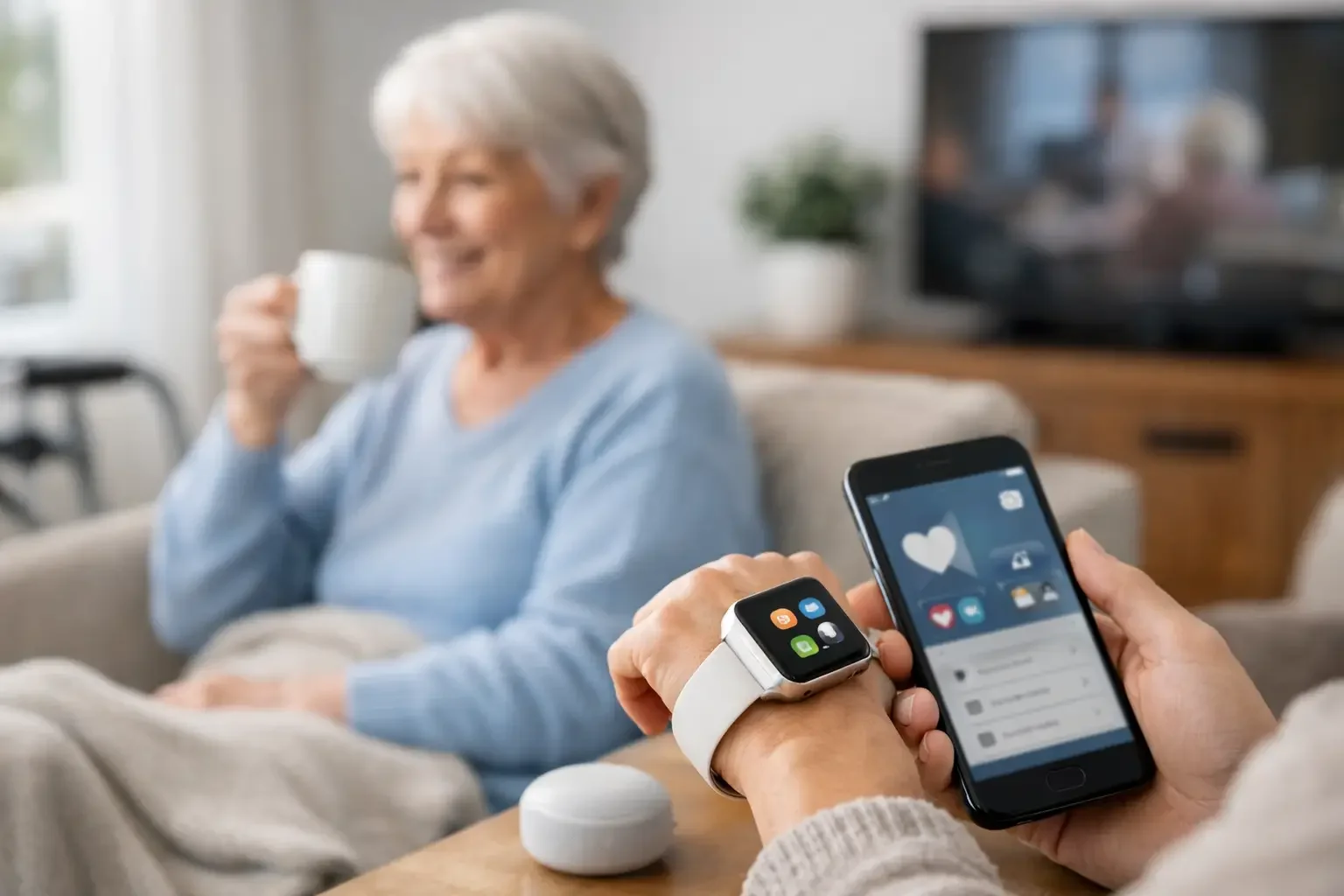
For most families, the challenge is finding a way to stay informed without making home feel like a hospital. A good routine-tracking approach should support independence, protect privacy, and give caregivers useful information they can actually act on. It should also fit real life. If you are juggling work, kids, and your own household, you do not need more raw data to interpret. You need clarity.
What tracking senior routines actually means
When people hear the phrase routine tracking, they sometimes picture a detailed schedule with every meal, medication, and movement logged by hand. In practice, it is much simpler than that. Tracking routines means noticing patterns in the parts of daily life that tend to stay fairly consistent, such as wake-up time, kitchen activity, bathroom visits, time spent resting, and general movement through the home.
Those patterns matter because older adults often show subtle changes before a health issue becomes obvious. A parent who usually starts moving around by 7:00 a.m. but suddenly stays in bed until 10:00 a.m. for several days may be tired, sick, depressed, or recovering from poor sleep. A sharp increase in nighttime bathroom trips can point to medication changes, a urinary issue, or worsening sleep quality. Less time in the kitchen might mean skipped meals. None of these signals tell the whole story on their own, but together they can reveal that something is off.
How to track senior routines without creating tension
The best system begins with a conversation, not a device. Many older adults are open to support when it is framed around staying independent, not being watched. That distinction matters.
Instead of saying, “We need to monitor you,” try explaining that you want an easy way to notice if anything unusual happens at home. Focus on the goal: helping them stay in their own space longer, with fewer disruptive check-ins and less pressure to answer every call or text right away. If privacy is a concern, say so directly. Many seniors reject cameras and wearables because they feel intrusive, stigmatizing, or hard to manage. They are often much more comfortable with passive options that do not record conversations or video.
It also helps to be honest about your perspective as a caregiver. If you live far away, or if you cannot call multiple times a day, that does not mean you care less. It means you need a practical way to stay connected to changes that matter. Most parents understand that.
The simplest ways to track senior routines
There are a few common approaches, and each has trade-offs.
Manual tracking works for some families, especially when a loved one is still fairly independent and willing to share updates. This can be as simple as a morning text, a shared paper calendar, or a note of meals, medications, and appointments. The problem is consistency. Manual systems depend on memory, motivation, and follow-through from either the senior or the caregiver. They can also become frustrating if updates are missed, which often creates more worry, not less.
Wearables can track movement, sleep, and in some cases falls. They can be helpful, but only if the person actually wears them, keeps them charged, and remembers what they are for. That sounds manageable until you are supporting someone with mild cognitive decline, arthritis, or a strong dislike of having something on their wrist.
Cameras give a lot of visibility, but they often create the most resistance. Many families quickly realize that seeing everything is not the same as understanding what matters. Reviewing footage takes time, and the privacy trade-off is significant.
Passive in-home monitoring is often the most balanced option. Instead of asking a senior to do anything differently, discreet sensors track motion patterns in key parts of the home and use those patterns to build a picture of daily routine. The value is not just in collecting activity. It is in identifying meaningful changes and turning them into simple alerts or summaries that a caregiver can understand at a glance.
How to track senior routines in a way that is actually useful
Useful tracking is not about measuring everything. It is about paying attention to a few routine anchors that tend to reflect overall well-being.
Start with morning activity
Morning movement is one of the clearest signals in the day. Did your loved one get out of bed around their usual time? Did they go into the kitchen? Are they moving through the home normally? A missed or delayed start does not always mean trouble, but it is often the first sign that something deserves a closer look.
Watch for changes in mobility
A gradual reduction in movement can be easy to miss during occasional visits or phone calls. Over time, though, it may point to pain, fatigue, balance issues, depression, or recovery problems after illness or injury. This is where pattern-based monitoring is more helpful than one-time observation. You are not asking, “Did she move today?” You are asking, “Is she moving less than she usually does?”
Notice nighttime disruptions
Changes overnight can reveal a lot. Frequent bathroom visits, pacing, restlessness, or long periods with no motion after an unusual time may all be worth noting. Nighttime changes can relate to medications, sleep problems, hydration, infections, or cognitive decline. Families often feel relief simply knowing whether nights are quiet and normal or starting to look different.
Look for kitchen and bathroom patterns
These spaces often tell the most practical story about daily functioning. Regular kitchen activity may suggest normal eating habits. Bathroom use, especially when it changes suddenly, can point to health concerns. Again, context matters. One odd day is not always meaningful. A pattern over several days often is.
What good alerts should and should not do
One of the biggest mistakes in senior monitoring is assuming more notifications are better. They are not. Constant pings train caregivers to ignore what should matter most.
Good alerts should flag unusual changes, not every movement. They should help you notice exceptions to a loved one’s normal routine, such as no morning activity, a major drop in movement, or unusually high nighttime bathroom use. The point is to reduce mental load, not add another feed to check.
This is why families often prefer systems that interpret patterns for them instead of showing a stream of raw sensor events. If your parent opened the bathroom door six times overnight, that fact alone may not help much. Knowing that this is twice their usual nighttime activity is far more useful.
A system like StackCare is built around that idea. It uses passive sensors and behavioral insights to identify routine changes, then sends clear summaries and alerts to caregivers without relying on cameras, microphones, or wearables.
Privacy is not a side issue
For many families, privacy is the deciding factor. A senior may agree they need support but still feel strongly that their home should remain private. That is a reasonable boundary, not resistance for the sake of it.
The best routine tracking respects that boundary. It should not require recording personal moments or asking a loved one to constantly interact with technology. It should preserve dignity while still helping family members feel less in the dark.
This matters for the relationship, too. When monitoring feels respectful, it is less likely to turn into conflict. Your parent is more likely to see it as a support system rather than proof that others no longer trust them to live independently.
When routine changes need follow-up
Tracking is only valuable if it leads to thoughtful action. That does not mean reacting to every small variation. Seniors, like everyone else, have off days. They sleep late, skip a meal, or spend an afternoon resting.
What deserves follow-up is a clear shift in pattern, especially if it lasts more than a day or comes with other changes. If you notice reduced movement and less kitchen activity together, it may be worth calling. If nighttime bathroom use rises sharply over several nights, ask about sleep, hydration, or discomfort. If there is no morning activity at all, a prompt check-in is appropriate.
Approach these conversations gently. Instead of saying, “Something is wrong,” try, “I noticed your routine seems a little different. How have you been feeling?” That keeps the tone supportive and reduces the chance your loved one will become defensive.
Choosing the right approach for your family
If you are deciding how to track senior routines, start with the realities of your situation. A local family with daily in-person contact may need something different from a long-distance caregiver supporting a parent with mobility issues. A senior who enjoys texting may be fine with simple check-ins. Someone with memory challenges or strong privacy concerns may do better with passive monitoring that asks nothing of them.
The right solution is usually the one that gives you enough visibility to act early, without creating friction, overwhelm, or a sense of surveillance. That balance is what helps routine tracking work over time.
Caring for an older parent from near or far often means living with unanswered questions. The goal is not to erase every worry. It is to replace guesswork with a clearer picture of daily life, so you can step in when it matters and step back when everything is on track.