
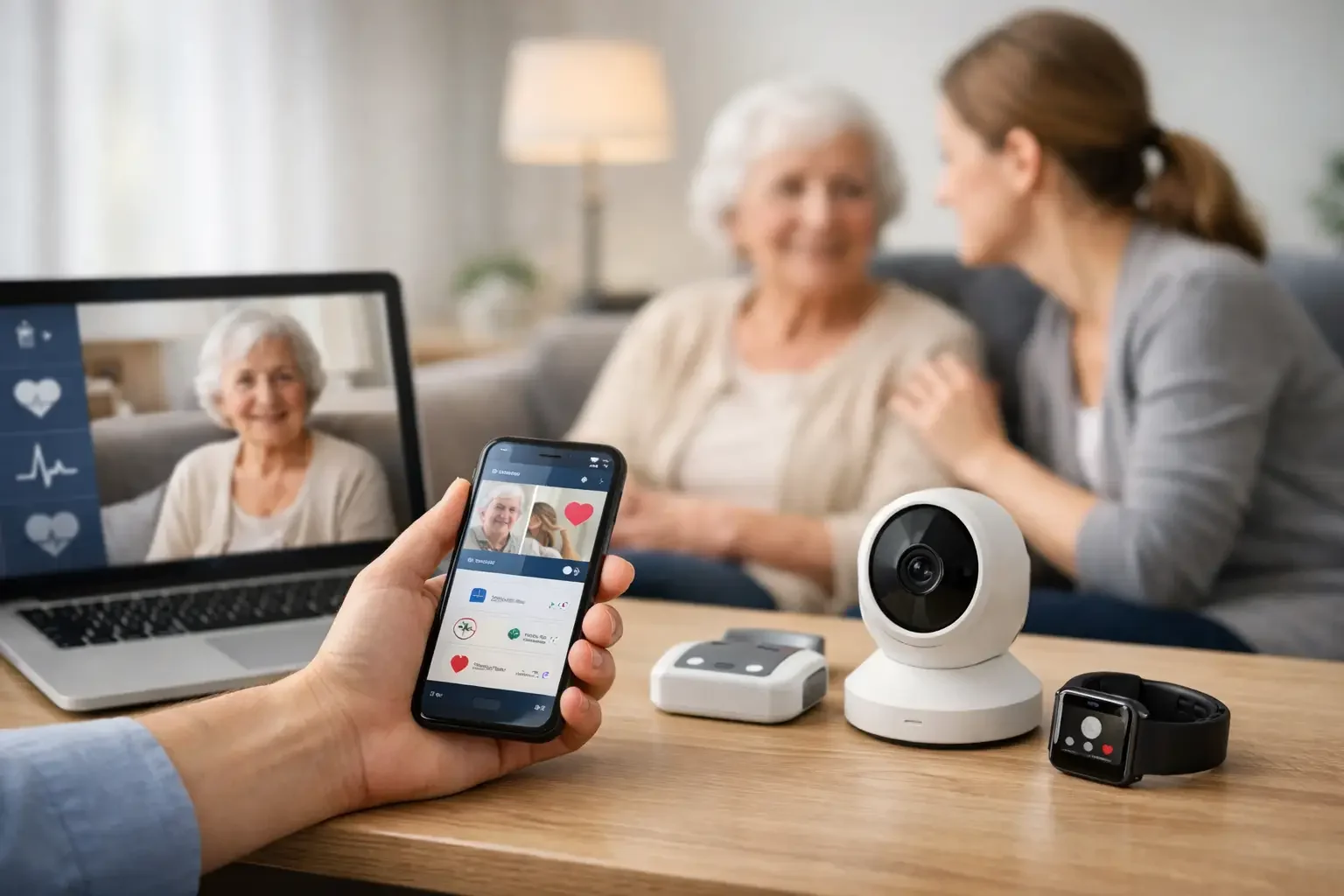
The challenge is that not all monitoring tools solve the same problem. Some are built for emergencies. Some are built for medical data. Some are really just consumer smart home devices repackaged for seniors. If you are trying to support someone who wants to stay independent, the best choice usually comes down to one question: what kind of information will actually help you care well from a distance?
What long distance caregiving monitoring tools should actually do
At the most basic level, these tools should reduce uncertainty. They should help you notice when something changes, without forcing your parent or relative to wear a device, learn a new app, or feel watched inside their own home.
That sounds simple, but it rules out a surprising number of products. A tool is only useful if it fits real life. If your mom forgets to charge a smartwatch, if your dad refuses a camera in the living room, or if an alert system only helps after a fall has already happened, then the technology may create a false sense of security rather than real support.
The strongest options tend to do three things well. They show whether normal daily activity is happening, they surface unusual changes quickly, and they deliver that information in a way a busy family caregiver can actually use.
The main types of long distance caregiving monitoring tools
Emergency alert systems
These are often the first tools families consider. A wearable pendant or wrist button can help a senior call for help after a fall or urgent event. For some households, that is an important layer of safety.
The trade-off is that these systems usually depend on the person remembering to wear the device and being able to press it. That can be a problem for people with memory issues, limited mobility, or reluctance to wear something every day. They are often reactive rather than preventive.
Cameras and video check-ins
Cameras give direct visual confirmation, which some families find reassuring at first. If you are worried about a parent after surgery or during a short-term recovery, they may seem like the fastest way to check in.
But the privacy concerns are real. Many older adults do not want cameras in private spaces, and many family caregivers do not actually want to spend their day reviewing footage. Cameras can show you what is happening in a moment. They are less helpful at turning daily behavior into clear, usable insight.
Wearables and health trackers
Smartwatches and medical wearables can track heart rate, steps, sleep, and sometimes location. These tools may work well for older adults who are comfortable with technology and open to charging and wearing devices consistently.
Still, adoption is the sticking point. If the device ends up on a nightstand instead of a wrist, the data stops being useful. For long-distance caregiving, consistency matters more than feature count.
Medication management tools
Automatic pill dispensers and medication reminder systems can help if missed doses are a major concern. They are especially useful when medication timing is central to a loved one’s condition or recovery.
These systems are valuable, but they only tell one part of the story. A parent can take medication on time and still be showing signs of decline in sleep, mobility, bathroom patterns, or overall routine.
In-home activity monitoring
This category is often the best fit for families who want visibility without intrusion. Instead of recording conversations or requiring a wearable, these systems use discreet sensors to track movement and routine throughout the home. The goal is not surveillance. It is pattern awareness.
That distinction matters. If your dad is getting up later than usual, spending more time in the bathroom, or moving much less than normal, those changes can point to illness, a mobility problem, poor sleep, or a developing issue before there is an emergency. For many caregivers, this is the missing middle between constant phone calls and crisis response.
What to look for when comparing tools
The first thing to ask is whether the tool matches your loved one’s personality. A highly independent parent may reject anything that feels obvious or invasive. In that case, passive monitoring is often easier to accept than cameras or wearables.
The second question is whether the alerts are meaningful. More data is not always better. Family caregivers usually do not need a dashboard full of charts. They need to know whether Mom got out of bed this morning, whether Dad’s nightly bathroom activity suddenly increased, or whether something about the home routine changed enough to deserve a call.
Ease of use matters just as much. If alerts are confusing, if setup is complicated, or if you need to interpret raw sensor data yourself, the tool may become one more task on an already crowded list. Good monitoring should lower stress, not add homework.
Privacy should be part of the evaluation from the start. Many families are trying to balance safety with dignity. A system that respects the senior’s space often leads to better long-term adoption, fewer arguments, and a stronger sense of trust.
Why passive monitoring stands out for long-distance families
When you live nearby, you can notice subtle changes. Maybe the house looks less tidy. Maybe your mother seems tired. Maybe your father is moving more slowly than usual. Distance takes away those cues.
That is where passive in-home monitoring can make a real difference. It helps recreate some of that day-to-day visibility by showing whether ordinary life is staying ordinary. You are not just waiting for a fall alert. You are seeing the patterns that often come first.
This approach is especially helpful when a loved one is managing Parkinson’s disease, recovering from a hospitalization, becoming more frail, or simply aging alone. In those situations, the question is rarely just, “Did something catastrophic happen today?” More often, it is, “Has something quietly shifted this week?”
Tools built around behavioral patterns can answer that question better than one-time check-ins. Instead of asking your parent to report every detail, the home itself becomes a source of gentle, ongoing insight.
One example is StackCare, which uses discreet motion sensors and AI-powered analysis to help families understand daily routine changes without cameras, microphones, or wearables. That kind of model is appealing to caregivers who want timely alerts and plain-language summaries, while still protecting a loved one’s privacy and independence.
When one tool is not enough
There is no rule that says you must choose only one type of support. In fact, the best setup often combines a primary monitoring tool with one or two specific add-ons.
For example, a family might use passive activity monitoring for day-to-day visibility and pair it with a medication dispenser if missed pills are a concern. Someone with a history of falls may also benefit from an emergency alert device. The right mix depends on the person’s health, habits, and willingness to use the technology.
It also depends on your role as a caregiver. If you are juggling work, kids, and your own household, you probably need tools that filter information for you. If several siblings are sharing responsibilities, a system that makes it easy to align around what changed and when can prevent confusion and conflict.
How to choose without getting overwhelmed
Start with the problem that keeps you up at night. Is it falls? Missed medications? Not knowing whether your parent is following a normal routine? The answer usually points toward the right category.
Then think about what your loved one will realistically accept. The best monitoring system is not the one with the longest feature list. It is the one your family will actually use, trust, and keep in place over time.
Finally, be honest about what helps you feel supported. Some caregivers want direct visibility. Others want fewer check-in calls and more confidence that they will be notified if something changes. There is no universal right answer. The right tool is the one that gives you useful insight without creating more worry, friction, or intrusion.
Caring from far away will probably never feel easy. But the right long distance caregiving monitoring tools can make it feel less uncertain. And sometimes that steady, quiet reassurance is what helps both you and your loved one keep living your own lives with a little more peace of mind.