
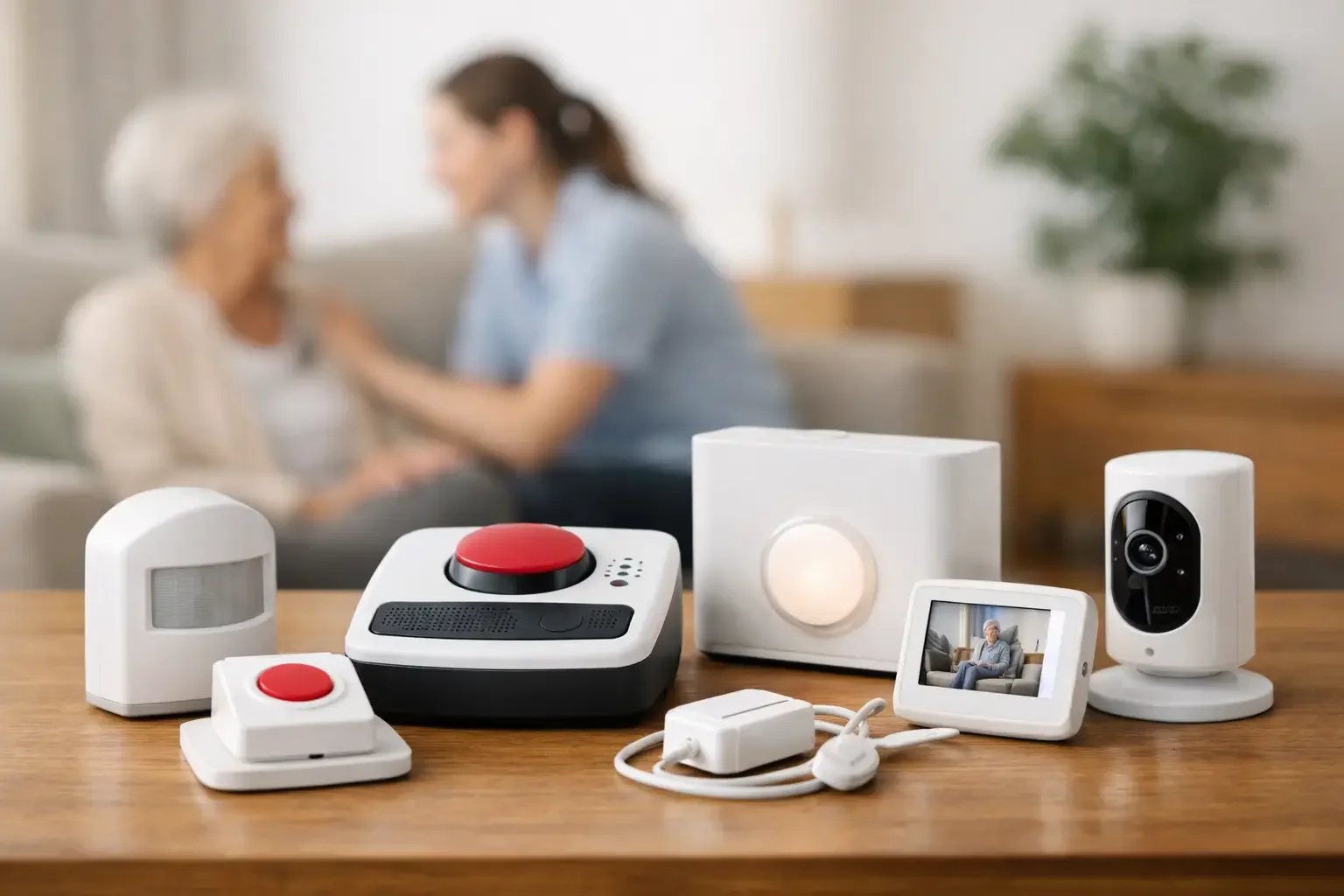
For many caregivers, the goal is not constant surveillance. It is relief. You want to know if your mom got out of bed this morning, whether your dad is moving around less than usual, or if something changed overnight, without asking them to learn another device or give up their privacy. The right system can make that possible, but not every non-wearable option works the same way.
What makes the best non wearable caregiver alert systems different
The biggest difference is how they detect risk. Some systems rely on motion sensors placed around the home. Others use wall-mounted help buttons, voice activation, bed sensors, floor mats, or smart home devices. A few combine several of these approaches.
That matters because caregiver needs are rarely one-size-fits-all. A person recovering from surgery may need a simple way to call for help from bed or the bathroom. Someone with memory issues may need passive monitoring that does not depend on remembering to push anything at all. And for long-distance families, alerts are only useful if they are clear, timely, and easy to act on.
Privacy also separates the strongest systems from the rest. Many families want oversight without cameras in bedrooms or microphones listening all day. The best solutions respect that boundary while still offering meaningful information.
The main types of non-wearable caregiver alert systems
Passive in-home monitoring
These systems use motion or occupancy sensors to track daily activity patterns. Instead of waiting for someone to press a button, they look for changes in routine, such as no kitchen activity in the morning, unusually long bathroom visits, or reduced movement throughout the day.
This category is often the best fit for seniors who live alone and value independence. It is especially helpful when the real concern is not one dramatic emergency but the slow build of small warning signs. A passive system can show that something changed before a crisis becomes obvious.
One strong example is StackCare, which uses discreet sensors and behavioral monitoring to send alerts and summaries to family caregivers without relying on wearables, cameras, or microphones. That kind of setup is often appealing to families who want visibility without making home feel medicalized.
The trade-off is that passive monitoring may not function like a traditional panic button. It can tell you something is unusual, but it may not give a senior an immediate manual way to call for help unless paired with another tool.
Wall-mounted emergency buttons
These are fixed help buttons placed in key areas like the bathroom, bedroom, or hallway. They can be a practical alternative for someone who will not wear a pendant but can still press a button during an emergency.
Their biggest strength is simplicity. There is very little to remember, and the device stays where it is needed. Bathrooms are a common choice because that is where slips and falls often happen.
The drawback is obvious - the person has to be near the button and able to press it. If they fall across the room, become confused, or lose consciousness, the system cannot do much on its own.
Voice-activated alert systems
Voice-based systems let a senior call for help without reaching for a wearable or fixed button. For someone with limited mobility, that can be a meaningful advantage.
But voice systems depend heavily on context. Background noise, soft speech, hearing issues, accents, and cognitive decline can all affect reliability. They may work well in one room and poorly in another. Families also need to be comfortable with devices that are always listening for a wake word or command, which can feel too intrusive for some households.
Bed sensors and chair sensors
These systems detect when someone gets up, does not return to bed, or remains in a chair too long. They are commonly used after a hospitalization, during rehabilitation, or when nighttime wandering is a concern.
They are useful, but narrow. A bed sensor can tell you that someone got up at 2 a.m. It cannot tell you whether they then made breakfast, took a shower, or spent the day unusually inactive. For that reason, these systems are often best as part of a larger setup rather than the only line of monitoring.
Smart home and door-based alerts
Door sensors, appliance monitoring, and smart home routines can also support caregiving. You can be notified if an exterior door opens overnight, if the medicine cabinet has not been opened, or if the kitchen activity that usually happens every morning never starts.
These tools can be very useful for specific concerns like wandering or missed meals. Still, they often require more setup and interpretation. Families may end up piecing together multiple alerts rather than receiving one clear picture of how their loved one is doing.
How to choose the best non wearable caregiver alert systems for your family
The best choice starts with one honest question: what are you actually worried about?
If you are most concerned about falls in the bathroom, wall buttons or motion-based fall-risk detection near high-risk areas may be enough. If the deeper issue is uncertainty - not knowing whether your parent is following a normal routine, sleeping well, or moving less over time - passive monitoring is usually the better fit.
It also helps to think about what your loved one will accept. Many seniors reject anything that feels like surveillance or a visible symbol of decline. A system that sits quietly in the background often gets less resistance than something they have to wear, charge, or talk to.
You should also look closely at how alerts are delivered. Some systems simply send raw notifications. Others interpret the information and tell you what changed in plain language. That difference matters when you are juggling work, kids, and caregiving from another city. You do not need more data. You need fewer question marks.
What features matter most in daily caregiving
Reliability comes first. If internet outages, battery issues, or missed detections are common, the system will create more anxiety instead of less. You want a setup that works consistently and does not depend on your loved one remembering steps.
Clear alerts matter almost as much. A vague message that says motion was detected is not very helpful. A useful alert gives context, such as no morning kitchen activity or unusual nighttime bathroom frequency. The more meaningful the alert, the faster you can decide whether to call, wait, or check in.
Privacy deserves real attention too. Camera-based systems may seem appealing at first, but many families and older adults quickly realize they feel too invasive. Non-wearable does not always mean privacy-friendly. Some voice systems and indoor cameras raise just as many concerns as wearables solve.
Finally, think about setup and support. A system can sound impressive on paper and still become a burden if installation is confusing or the app is hard to use. Family caregivers usually need technology that feels calm, not complicated.
Common trade-offs families should expect
There is no perfect system, only a better match for a specific situation.
A manual alert button gives immediate emergency access, but only if it is pressed. Passive monitoring catches behavior changes, but it may not replace urgent emergency response. Voice systems offer hands-free help, but not every older adult can use them reliably. Smart home tools can be powerful, but they may require too much maintenance for already stressed families.
That is why many of the best non wearable caregiver alert systems are really combinations of tools rather than a single device. A passive monitoring system paired with one or two fixed emergency buttons often covers more real-life scenarios than either option alone.
When non-wearable systems are the strongest choice
These systems tend to be the best option when a loved one lives alone, resists wearables, has mild memory issues, or wants support without feeling watched. They are also helpful for long-distance caregivers who cannot rely on daily visits to notice subtle changes.
They may be less complete for someone with advanced cognitive decline, frequent acute medical events, or a history of sudden falls without warning unless the system includes a stronger emergency response component. In those cases, families may need a more layered approach.
The right technology should reduce tension in the family, not create more of it. It should help a senior stay independent while giving caregivers a clearer sense of what is happening at home.
If you are weighing options right now, trust the reality you are living with. The best system is not the one with the longest feature list. It is the one your loved one will actually live with, and the one that helps you worry a little less when the phone is quiet.