
What Is a Non Invasive Senior Monitoring System?

You may not need another phone call that starts with, “Have you heard from Mom today?” What many families need is a clearer picture of how an older parent is doing at home without asking them to wear a device, press a button, or live under a camera. That is where a non invasive senior monitoring system can make a real difference.

For families supporting an older adult who lives alone, the hard part is rarely love or intention. It is the gap between wanting to help and actually knowing what is happening day to day. A parent may sound fine on the phone, but be sleeping poorly, moving less, skipping meals, or getting up far more often at night. Small changes like these often show up before a crisis, yet they are easy to miss when you are juggling work, kids, and your own household.

What a non invasive senior monitoring system actually does

A non invasive senior monitoring system uses passive in-home sensors to understand daily patterns without recording private moments. Instead of video footage or audio, it tracks activity such as motion in key areas of the home, overnight movement, bathroom visits, and whether a normal routine appears to be changing.

The point is not constant surveillance. The point is meaningful visibility. If your father usually starts his day in the kitchen by 8:00 a.m. and that pattern suddenly stops, the system can flag it. If your mother is spending far more time restless at night, that may also stand out. Rather than making you interpret raw information on your own, better systems translate these changes into alerts and simple updates you can actually use.

This matters because caregiving decisions are often made in uncertainty. Families are left wondering whether they are overreacting, underreacting, or missing something important. A system that notices deviations from routine can reduce that uncertainty without taking away independence.

Why families are moving away from cameras and wearables

When people first look for ways to keep an aging parent safe, they often consider emergency pendants, smartwatches, or cameras. Each can help in specific situations, but each also comes with trade-offs.

Wearables depend on compliance. A parent has to remember to put the device on, keep it charged, and wear it consistently. That sounds simple until real life gets involved. Devices get left on a nightstand, taken off for a shower, or rejected because they feel medical or stigmatizing.

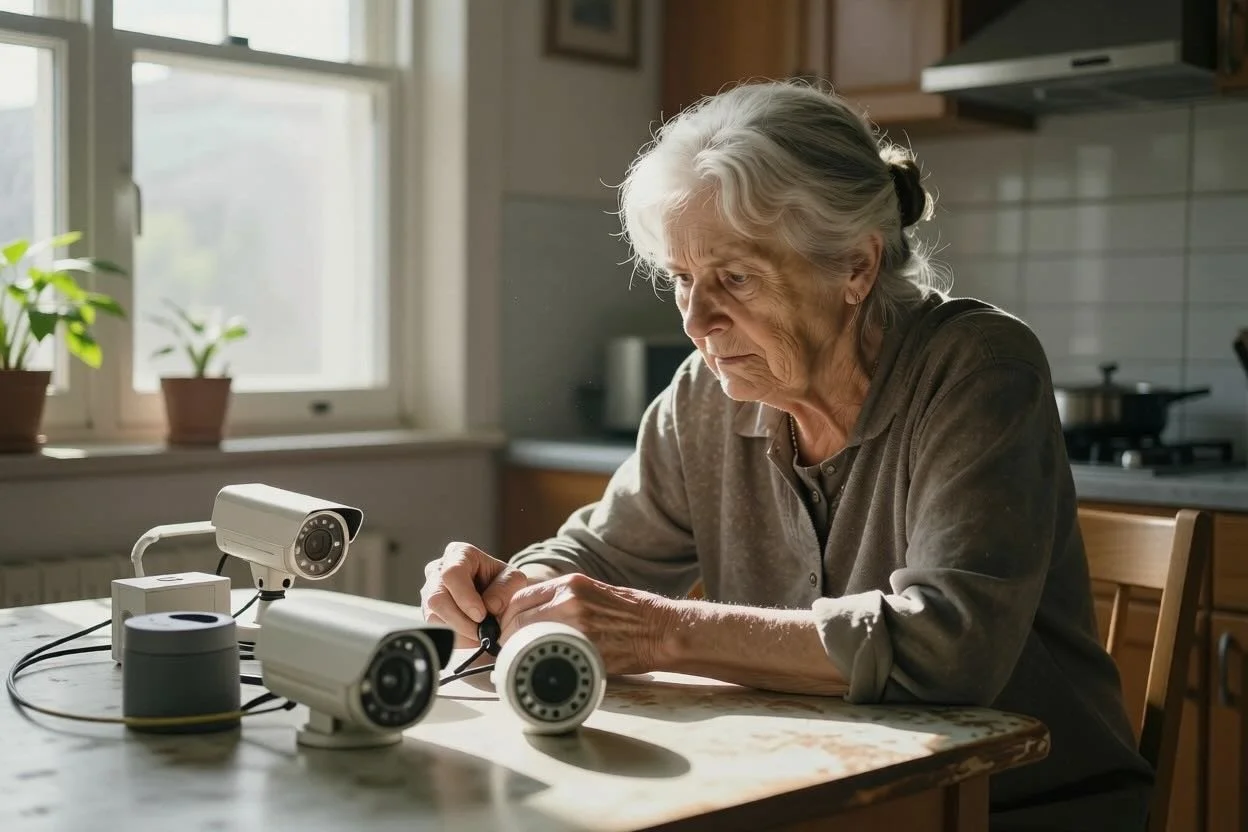
Cameras create a different problem. They may offer visual confirmation, but many older adults find them intrusive, especially in bedrooms, bathrooms, and other private spaces. Adult children often feel uneasy too. Most people do not want to monitor a loved one by watching clips of their daily life.

A non invasive senior monitoring system fits the middle ground many families are looking for. It can provide reassurance without asking seniors to change habits and without turning the home into a place of surveillance. That balance is a big reason these systems are gaining attention.

How non-invasive monitoring supports independence

Most older adults want the same thing their families want - to stay safe while continuing to live life on their own terms. The trouble starts when safety and autonomy are treated like opposites.

In reality, the right kind of monitoring can support both. Passive sensors do not interrupt a routine. They do not ask a senior to learn a new app, wear a pendant, or check in multiple times a day. The technology works quietly in the background, which means the older adult can keep living at home with less friction and more dignity.

That dignity piece matters more than many families expect. Seniors are often open to support when it does not feel like control. A discreet monitoring approach can feel less like being watched and more like having a safety net. That shift in perception can make adoption much easier.

What changes these systems can help families notice

The value of a non invasive senior monitoring system is not just in detecting emergencies. It is often most helpful in spotting subtle changes early.

A parent who is walking less from room to room may be dealing with pain, fatigue, weakness, or depression. More bathroom activity overnight can signal medication effects, sleep issues, or other health concerns. Less kitchen activity may suggest appetite changes or difficulty preparing meals. A sudden disruption in a long-standing routine can be one of the earliest signs that something is off.

These changes do not always mean there is a serious problem. Sometimes the explanation is simple. But patterns matter, especially when they shift over days or weeks. Families are in a much stronger position when they can notice those shifts early and decide whether to call, visit, or involve a doctor.

What to look for in a non invasive senior monitoring system

Not every system delivers the same level of usefulness. Some collect data but leave families to figure out what it means. Others are better at turning patterns into clear, timely insight.

Look for a system that focuses on behavior changes, not just motion detection. Motion alone can tell you someone passed through a room. Behavior analysis can tell you whether their normal rhythm is changing. That is a much more helpful signal for real caregiving decisions.

Alerts should also be easy to understand. If you are already stretched thin, you do not need a complicated dashboard. You need concise notifications that tell you what changed and whether it may need attention.

Privacy is another major factor. Families should understand exactly what is and is not being collected. For many households, the appeal of this category is that it avoids cameras, microphones, and invasive recording. If that boundary matters to your family, it is worth confirming from the start.

Finally, consider setup and day-to-day effort. The best systems are simple enough that they do not become another project to manage. Monitoring should lower your mental load, not add to it.

Who benefits most from this kind of monitoring

This approach is especially helpful for adult children supporting a parent who lives alone, whether nearby or across the country. It can also be valuable after a hospital discharge, during recovery from illness or injury, or when a family is noticing early signs that a loved one may need more support.

It is often a strong fit for seniors with mobility changes, fall risk, Parkinson’s disease, mild cognitive decline, or general frailty. In these situations, the challenge is not always one dramatic event. It is the accumulation of small shifts in sleep, movement, and routine that tell the bigger story.

That said, it is not a perfect fit for every need. If a senior needs direct medical monitoring or hands-on personal care, passive home monitoring is only one piece of the picture. It can complement care, but it does not replace human support, medical advice, or emergency response services.

The emotional benefit is real too

Caregiver stress is not only about tasks. It is about uncertainty. It is lying awake wondering if your mom got out of bed this morning. It is trying not to overcall because you want to respect her independence, while also worrying that silence might mean something is wrong.

A thoughtful system can ease that daily strain. It gives families a way to stay connected to wellbeing without constant checking. That alone can change the tone of caregiving. Conversations become less about proving everything is fine and more about responding when support is actually needed.

For many families, that is the real promise here. Not perfect control. Not total certainty. Just a more humane way to care from a distance, with better information and more respect.

If you are trying to help someone stay safely at home, a non invasive senior monitoring system is worth considering not because it watches more, but because it helps you worry less while honoring the life your loved one still wants to live.
What Aging in Place Technology Really Does

Your dad insists he does not need help. Your mom says she is fine. But when you live an hour away - or five states away - “fine” can be hard to trust. That is where aging in place technology starts to matter. Not as a gadget category, but as a way to reduce the daily uncertainty that comes with loving someone who wants to keep living at home.

For many families, the real challenge is not deciding whether a parent should stay independent. It is figuring out how to support that independence without turning their home into a surveillance zone or adding one more thing everyone has to manage. Good technology can help, but only when it respects privacy, fits real routines, and gives caregivers useful information instead of more noise.

What aging in place technology means in real life

Aging in place technology is any tool designed to help older adults live safely and comfortably in their own homes for longer. That can include fall detection, medication reminders, emergency response systems, smart lighting, mobility supports, and in-home monitoring.

But families often picture this category the wrong way. They imagine a home full of gadgets, confusing apps, and alerts going off for every small thing. In practice, the best solutions are usually the ones that fade into the background. They work quietly, require very little effort from the older adult, and give family members a clearer sense of whether daily life is staying on track.

That last point matters. Most caregivers are not looking for more raw data. They are looking for reassurance and early warning. Is Mom getting out of bed at her usual time? Is Dad moving around less than normal? Has bathroom activity changed overnight? Those small shifts can say a lot before a health issue becomes an emergency.

The best aging in place technology solves a caregiving problem

When families begin searching for support, they often start with a device. A smartwatch. A medical alert button. A camera doorbell. A pill dispenser. Each tool can help in the right situation, but the bigger question is what problem you are actually trying to solve.

If the concern is a sudden fall, an emergency response device may be enough. If the concern is missed medication, a reminder system may be the right fit. But many families are carrying a more complicated kind of worry. They are not just afraid of one event. They are worried about the slow drift of change - the reduced movement, disrupted sleep, extra bathroom visits, skipped meals, or long periods of inactivity that can signal something is off.

That is where passive monitoring has become one of the most useful forms of aging in place technology. Instead of asking an older adult to wear a device, press a button, learn a new system, or accept a camera in the home, passive monitoring uses simple in-home sensors to observe patterns of activity. When paired with behavioral analysis, it can tell caregivers when routines change in ways that deserve attention.

This approach is especially helpful for families supporting someone who lives alone. You do not need to call three times a day to check whether everything seems normal. You are not left guessing after a missed text. And your loved one is not being asked to trade dignity for safety.

Privacy is not a side issue

Families often feel stuck between two bad options. On one side is not knowing enough. On the other is knowing too much through cameras, microphones, or constant direct monitoring.

That tension is real. Older adults may agree they need some support while still feeling strongly that their home should remain private. In many cases, they are right. A bedroom, bathroom, or living room should not have to become a place of visual surveillance just to make family members feel better.

That is why privacy matters so much in this category. Some forms of aging in place technology are more respectful by design. Motion-based systems can identify activity patterns without recording conversations, images, or personal moments. For many families, that feels like a healthier balance. The caregiver gets insight. The older adult keeps a sense of autonomy.

Privacy also affects adoption. A system only helps if the person living in the home is willing to live with it. The less intrusive it feels, the more likely it is to become part of everyday life without conflict or resistance.

What families should look for

Not all monitoring tools are equally useful. Some generate pages of information but leave the family to figure out what it means. Others focus too narrowly on emergencies and miss the slow warning signs that usually come first.

A better system translates daily activity into something meaningful. Instead of showing movement logs, it should help you understand what changed. Instead of sending constant alerts, it should flag what actually matters. If every small variation creates a notification, families stop trusting the system or start ignoring it.

It also helps to think about who must do the work. If the technology depends on your parent remembering to wear, charge, press, or respond, there is a built-in risk. Many older adults simply do not want another device on their body. Others forget. That does not mean they are unwilling to accept help. It means the help has to fit them.

The most caregiver-friendly systems are simple on both sides. They do not interrupt the senior’s day, and they do not require family members to become full-time analysts. They provide clear summaries, timely alerts, and enough context to make a confident decision about when to check in.

Why passive monitoring stands out

There is a reason passive monitoring is getting more attention from families and care organizations. It addresses one of the hardest parts of caregiving: uncertainty.

Most adult children are not trying to control a parent’s life. They are trying to avoid being caught off guard. They want to know if something changed before it turns into a crisis. They want fewer anxious calls, fewer guesswork decisions, and fewer moments of wondering whether they missed a sign.

Passive monitoring can help because it watches for patterns over time. A single late morning may mean nothing. Several days of reduced motion may mean fatigue, illness, pain, or depression. More nighttime bathroom activity might point to a medication issue, a urinary concern, or poor sleep. No technology can diagnose the cause on its own, but good systems can surface the change early enough for someone to act.

That is a meaningful shift. You move from reactive caregiving to informed caregiving. Instead of finding out after a fall, a hospitalization, or a frightening phone call, you have a better chance of noticing the lead-up.

This is also where AI can be genuinely useful. Not in a flashy way, but in a practical one. If a system can learn what is normal for one person and spot deviations automatically, the family does not need to review endless data points. They get the benefit of continuous observation without the burden of doing the interpretation themselves. That is part of what makes solutions like StackCare feel supportive rather than overwhelming.

It depends on the person and the stage of care

There is no single best aging in place technology for every family. A healthy, active 72-year-old may need very little beyond a few safety upgrades and occasional check-ins. Someone recovering from surgery may need short-term monitoring and mobility support. A parent with Parkinson’s disease, cognitive changes, or a recent fall history may need more consistent oversight.

The right setup often changes over time. What begins as reassurance may later become a way to track subtle decline. What starts as support for one concern may later help with sleep, activity, or bathroom patterns. Families do not need to solve every future problem on day one, but they do need tools that can remain useful as needs evolve.

That is why it helps to choose technology based on everyday life, not just emergencies. Ask what your loved one is likely to accept, what you as a caregiver can realistically manage, and what kind of information would actually help you make decisions. A feature is only valuable if it reduces stress, improves safety, or helps someone respond sooner.

Aging in place is not just about staying in the same house. It is about preserving routine, dignity, and a sense of self for as long as possible. The right technology supports that quietly. It does not replace family. It gives family a steadier way to show up, even from a distance.

Best Long Distance Caregiving Monitoring Tools

If you live hours away from an aging parent, you probably know the feeling. The phone rings at an odd time, and your mind goes straight to worst-case scenarios. Even on quiet days, the uncertainty can wear on you. That is why more families are looking at long distance caregiving monitoring tools - not to control a loved one’s life, but to feel confident that daily life is still unfolding the way it should.

The challenge is that not all monitoring tools solve the same problem. Some are built for emergencies. Some are built for medical data. Some are really just consumer smart home devices repackaged for seniors. If you are trying to support someone who wants to stay independent, the best choice usually comes down to one question: what kind of information will actually help you care well from a distance?

What long distance caregiving monitoring tools should actually do

At the most basic level, these tools should reduce uncertainty. They should help you notice when something changes, without forcing your parent or relative to wear a device, learn a new app, or feel watched inside their own home.

That sounds simple, but it rules out a surprising number of products. A tool is only useful if it fits real life. If your mom forgets to charge a smartwatch, if your dad refuses a camera in the living room, or if an alert system only helps after a fall has already happened, then the technology may create a false sense of security rather than real support.

The strongest options tend to do three things well. They show whether normal daily activity is happening, they surface unusual changes quickly, and they deliver that information in a way a busy family caregiver can actually use.

The main types of long distance caregiving monitoring tools

Emergency alert systems

These are often the first tools families consider. A wearable pendant or wrist button can help a senior call for help after a fall or urgent event. For some households, that is an important layer of safety.

The trade-off is that these systems usually depend on the person remembering to wear the device and being able to press it. That can be a problem for people with memory issues, limited mobility, or reluctance to wear something every day. They are often reactive rather than preventive.

Cameras and video check-ins

Cameras give direct visual confirmation, which some families find reassuring at first. If you are worried about a parent after surgery or during a short-term recovery, they may seem like the fastest way to check in.

But the privacy concerns are real. Many older adults do not want cameras in private spaces, and many family caregivers do not actually want to spend their day reviewing footage. Cameras can show you what is happening in a moment. They are less helpful at turning daily behavior into clear, usable insight.

Wearables and health trackers

Smartwatches and medical wearables can track heart rate, steps, sleep, and sometimes location. These tools may work well for older adults who are comfortable with technology and open to charging and wearing devices consistently.

Still, adoption is the sticking point. If the device ends up on a nightstand instead of a wrist, the data stops being useful. For long-distance caregiving, consistency matters more than feature count.

Medication management tools

Automatic pill dispensers and medication reminder systems can help if missed doses are a major concern. They are especially useful when medication timing is central to a loved one’s condition or recovery.

These systems are valuable, but they only tell one part of the story. A parent can take medication on time and still be showing signs of decline in sleep, mobility, bathroom patterns, or overall routine.

In-home activity monitoring

This category is often the best fit for families who want visibility without intrusion. Instead of recording conversations or requiring a wearable, these systems use discreet sensors to track movement and routine throughout the home. The goal is not surveillance. It is pattern awareness.

That distinction matters. If your dad is getting up later than usual, spending more time in the bathroom, or moving much less than normal, those changes can point to illness, a mobility problem, poor sleep, or a developing issue before there is an emergency. For many caregivers, this is the missing middle between constant phone calls and crisis response.

What to look for when comparing tools

The first thing to ask is whether the tool matches your loved one’s personality. A highly independent parent may reject anything that feels obvious or invasive. In that case, passive monitoring is often easier to accept than cameras or wearables.

The second question is whether the alerts are meaningful. More data is not always better. Family caregivers usually do not need a dashboard full of charts. They need to know whether Mom got out of bed this morning, whether Dad’s nightly bathroom activity suddenly increased, or whether something about the home routine changed enough to deserve a call.

Ease of use matters just as much. If alerts are confusing, if setup is complicated, or if you need to interpret raw sensor data yourself, the tool may become one more task on an already crowded list. Good monitoring should lower stress, not add homework.

Privacy should be part of the evaluation from the start. Many families are trying to balance safety with dignity. A system that respects the senior’s space often leads to better long-term adoption, fewer arguments, and a stronger sense of trust.

Why passive monitoring stands out for long-distance families

When you live nearby, you can notice subtle changes. Maybe the house looks less tidy. Maybe your mother seems tired. Maybe your father is moving more slowly than usual. Distance takes away those cues.

That is where passive in-home monitoring can make a real difference. It helps recreate some of that day-to-day visibility by showing whether ordinary life is staying ordinary. You are not just waiting for a fall alert. You are seeing the patterns that often come first.

This approach is especially helpful when a loved one is managing Parkinson’s disease, recovering from a hospitalization, becoming more frail, or simply aging alone. In those situations, the question is rarely just, “Did something catastrophic happen today?” More often, it is, “Has something quietly shifted this week?”

Tools built around behavioral patterns can answer that question better than one-time check-ins. Instead of asking your parent to report every detail, the home itself becomes a source of gentle, ongoing insight.

One example is StackCare, which uses discreet motion sensors and AI-powered analysis to help families understand daily routine changes without cameras, microphones, or wearables. That kind of model is appealing to caregivers who want timely alerts and plain-language summaries, while still protecting a loved one’s privacy and independence.

When one tool is not enough

There is no rule that says you must choose only one type of support. In fact, the best setup often combines a primary monitoring tool with one or two specific add-ons.

For example, a family might use passive activity monitoring for day-to-day visibility and pair it with a medication dispenser if missed pills are a concern. Someone with a history of falls may also benefit from an emergency alert device. The right mix depends on the person’s health, habits, and willingness to use the technology.

It also depends on your role as a caregiver. If you are juggling work, kids, and your own household, you probably need tools that filter information for you. If several siblings are sharing responsibilities, a system that makes it easy to align around what changed and when can prevent confusion and conflict.

How to choose without getting overwhelmed

Start with the problem that keeps you up at night. Is it falls? Missed medications? Not knowing whether your parent is following a normal routine? The answer usually points toward the right category.

Then think about what your loved one will realistically accept. The best monitoring system is not the one with the longest feature list. It is the one your family will actually use, trust, and keep in place over time.

Finally, be honest about what helps you feel supported. Some caregivers want direct visibility. Others want fewer check-in calls and more confidence that they will be notified if something changes. There is no universal right answer. The right tool is the one that gives you useful insight without creating more worry, friction, or intrusion.

Caring from far away will probably never feel easy. But the right long distance caregiving monitoring tools can make it feel less uncertain. And sometimes that steady, quiet reassurance is what helps both you and your loved one keep living your own lives with a little more peace of mind.