
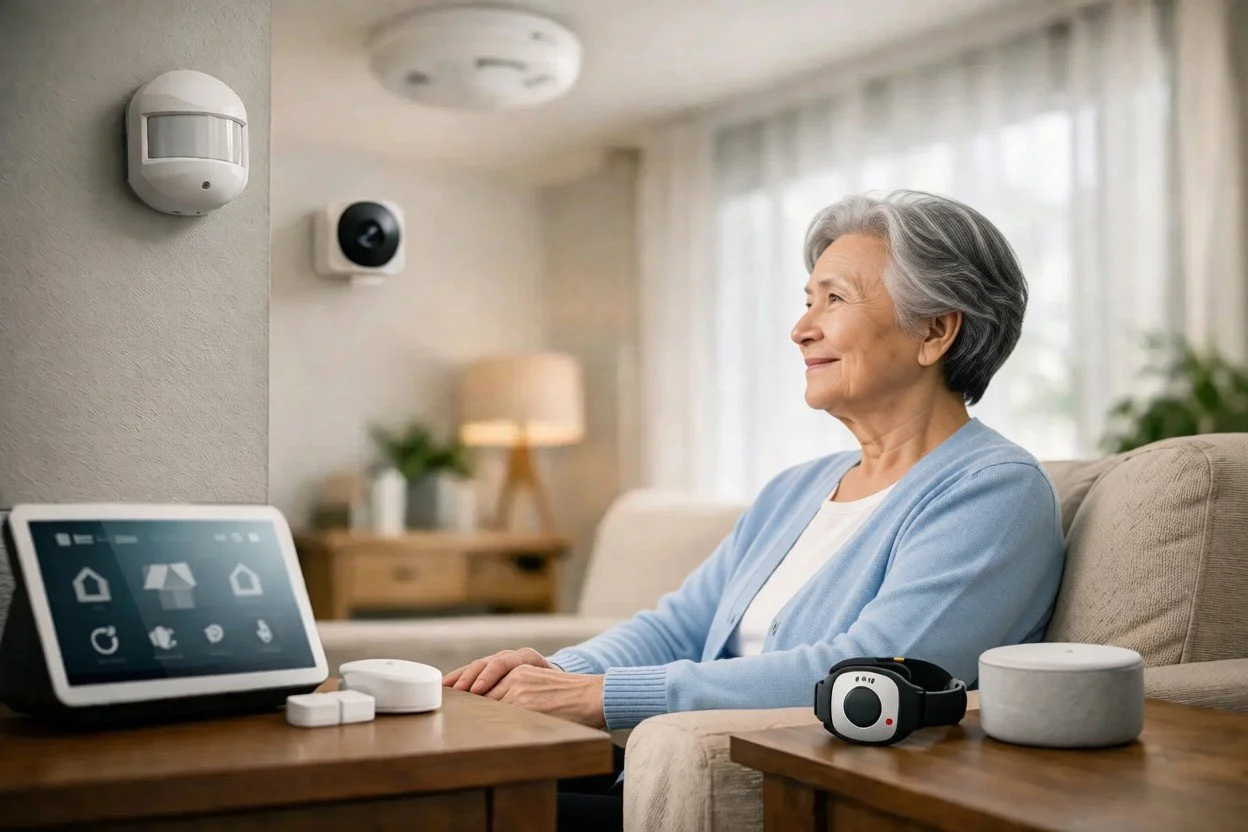
For many adult children, the problem is not a lack of care. It is a lack of visibility. You may call every day, stop by when you can, and still have no clear way to know whether your mom is sleeping well, moving around normally, or spending an unusual amount of time in the bathroom. Senior home sensors can help fill in those blind spots, but only if you choose the right kind.
What senior home sensors actually do
At their simplest, senior home sensors track activity in the home. Depending on the system, that might mean motion in key rooms, doors opening and closing, bed occupancy, temperature changes, or signs of a possible fall. The goal is not to record everything. The goal is to notice meaningful changes in daily routines.
That distinction matters. A good sensor system helps you answer practical questions: Did Dad get up this morning? Has he been less active than usual? Did she go to the kitchen today? Is there a pattern that suggests a health change, poor sleep, or increasing mobility issues?
The best systems do more than collect data. They interpret patterns over time and alert caregivers when something looks different from normal. That is often far more useful than a raw stream of activity logs you have to decode on your own.
A guide to senior home sensors by type
Not all sensors solve the same problem, and some are much better suited to aging in place than others.
Motion sensors are often the foundation. These are typically placed in places like the bedroom, bathroom, hallway, and kitchen to show whether a person is moving through their usual routine. If motion suddenly drops off, or if nighttime bathroom visits increase, that may point to a health or safety concern.
Door sensors can add context. A front door sensor may show whether someone left the house at an unusual hour or has not opened the door all day. A refrigerator door sensor can sometimes be used to confirm signs of regular eating habits, though that is more useful in some homes than others.
Bed sensors are designed to detect when someone gets into or out of bed. For families worried about nighttime wandering, frequent overnight bathroom trips, or whether a loved one has been in bed for an unusually long time, this can be reassuring. It can also be helpful after illness, surgery, or a fall.
Environmental sensors monitor things like room temperature, humidity, or water. These are less about daily routines and more about home safety. They can be useful if you are concerned about overheating, a leak, or other hazards that a senior may not notice right away.
Emergency buttons and wearables are often grouped into this category, but they work differently. They rely on the older adult remembering to wear the device and press it during an emergency. For some people, that is fine. For others, especially those with memory issues or a reluctance to wear devices, passive in-home sensors are more realistic.
Cameras are sometimes marketed as monitoring tools, but many families and seniors reject them for obvious reasons. Bedrooms, bathrooms, and private living spaces should feel private. If a system creates tension or embarrassment, it may solve one problem while creating another.
What matters most when choosing a system
Privacy should be near the top of the list. Many older adults are open to support, but not to surveillance. A sensor-based system that tracks activity without using cameras or microphones is often easier to accept because it respects dignity while still giving families useful insight.
Ease of use matters just as much. If a system requires your parent to charge a device, push a button, learn an app, or remember multiple steps, it may not work consistently. The more passive the setup, the more dependable it tends to be.
Alerts should be meaningful, not constant. Too many notifications and you will start ignoring them. Too few, and you are back to guessing. Look for a system that can distinguish between ordinary variation and a true change in routine.
Context is another overlooked factor. It is one thing to know a motion sensor was triggered at 2:14 p.m. It is more helpful to know that your mom was active later than usual, skipped her normal kitchen routine, or has shown lower daytime movement for three days in a row. Families need interpretation, not just data.
Installation also deserves attention. Some systems are simple enough to set up in an afternoon. Others require a more involved process. If your loved one lives far away, easy installation and remote caregiver access can make a big difference.
The trade-offs families should think through
There is no single best setup for every household. It depends on the person, the home, and what you are most worried about.
If your main concern is falls, motion and bed sensors may help you notice unusual inactivity, but they may not confirm exactly what happened. If wandering is the concern, door sensors become more important. If you are worried about gradual decline rather than emergencies, a system that spots behavior changes over time may be more valuable than one focused only on crisis alerts.
It also depends on your parent’s personality. Some seniors are comfortable with any technology that helps them stay home. Others will resist anything that feels like monitoring. In those cases, how you frame the conversation matters. A sensor system is often better received when presented as a way to preserve independence, not take it away.
There is also a difference between information and reassurance. Some products give you lots of information but leave you to interpret what it means. That can actually increase caregiver stress. A more supportive system highlights the changes that matter so you do not have to monitor every detail yourself.
How to talk with a parent about home sensors
This is rarely just a technology decision. It is a family conversation about autonomy, safety, and trust.
Start with what your loved one wants. Most older adults want the same thing their families want: to stay in their own home as long as possible. Position the sensors as a tool that makes that more realistic. Instead of saying, "We need to monitor you," try saying, "We want to worry less and help you stay independent."
Be clear about what the system does and does not do. If there are no cameras, say so. If no one is listening to conversations, say that too. Privacy assurances should never be vague. Seniors are more likely to agree when they understand that the goal is to notice routine changes, not watch their every move.
It helps to make the benefit concrete. You might explain that if they are recovering from surgery, the system can show whether they are getting back to normal movement. If they live alone, it can let family know if something seems off before it becomes a crisis.
When senior home sensors are especially helpful
These systems can be useful for almost any older adult living alone, but they are especially valuable when caregiving is already stretching a family thin. Long-distance caregivers often use them to replace uncertainty with visibility. Families supporting someone with mobility issues may use them to spot changes before a fall or health setback. After hospitalization, sensors can provide reassurance that routines are returning.
They can also help in quieter, less dramatic ways. A parent who starts sleeping later, moving less, or making more frequent bathroom trips may not mention it. Those changes can point to medication issues, pain, infection, poor sleep, or growing frailty. Early visibility gives families a chance to check in sooner.
That is where systems built around behavioral patterns stand out. Rather than asking caregivers to piece together isolated signals, they help connect the dots. StackCare, for example, is designed around passive in-home sensing and smart alerts so families can notice changes without relying on cameras, wearables, or constant check-ins.
Choosing with peace of mind in mind
The right sensor system should make life feel lighter, not more complicated. It should help your parent remain at home with dignity and give you a clearer sense of how they are really doing between visits and phone calls.
If you are comparing options, look past flashy features and ask a simpler question: will this help me understand whether my loved one is following their normal routine, and will it tell me when something changes? That is the heart of a good caregiving tool.
You do not need perfect information to be a good caregiver. You just need a better way to notice when ordinary life starts looking a little less ordinary.