
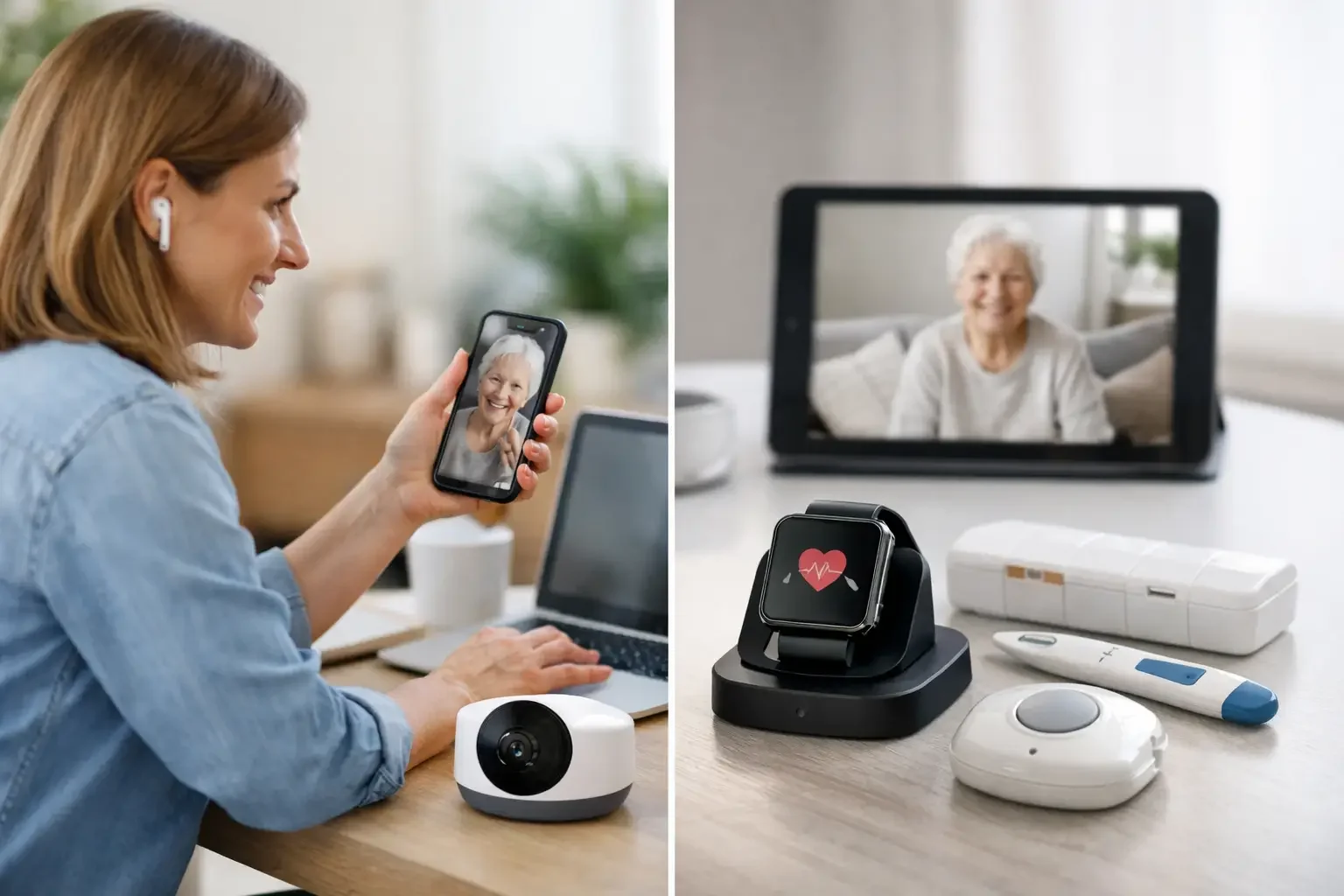
For many adult children, the hardest part is not a single emergency. It is the constant question in the background: Is everything still okay when I cannot be there? A weekly phone call may miss gradual changes. A camera may feel too invasive. A wearable may end up in a drawer. The right technology fills that gap with useful visibility, while still protecting an older adult's independence and dignity.
What long distance caregiving technology should actually do
A lot of products promise peace of mind. Fewer deliver it in a way that works for real families.
Good long distance caregiving technology should make life simpler, not add another dashboard to monitor. It should help you notice meaningful changes in your loved one's routine, such as sleeping later than usual, moving less during the day, or making more frequent trips to the bathroom at night. Those details may sound small, but they are often the earliest signs that something is changing.
Just as important, the technology should respect the person being cared for. Many older adults want support, but they do not want to feel watched. That is a reasonable concern. Families often assume they need cameras to stay informed, then realize very quickly that video in private spaces creates tension, discomfort, and sometimes outright resistance.
The best systems are designed around a simpler question: how can you understand wellbeing without turning someone's home into a surveillance zone?
The most useful types of long distance caregiving technology
Not every tool solves the same problem. Some are best for communication, some for emergencies, and some for everyday oversight.
Video calling and messaging tools help families stay connected, especially when distance makes regular visits hard. They are valuable for emotional support, but they depend on your loved one answering the call, remembering to charge a device, and being willing to talk. They tell you how someone seems in the moment, not necessarily what has been changing over time.
Medical alert buttons can be lifesaving in a crisis, especially after a fall. But they only work if the person wears the device consistently and presses the button when something is wrong. That is a big if. Many older adults forget, refuse, or are unable to use them during an emergency.
Smart home devices can also help, particularly for reminders, lights, and routine tasks. They are useful, but most were not built specifically for caregiving. They may offer convenience without giving families a clear picture of daily wellbeing.
Passive in-home monitoring is often the most practical middle ground for long-distance caregivers. Instead of relying on cameras, microphones, or wearables, these systems use discreet sensors to track motion patterns and daily activity. Over time, they learn what is typical and can flag changes that may need attention. For families, that means fewer guesses and fewer unnecessary check-in calls. For older adults, it means support that does not interrupt normal life.
Why passive monitoring often works better than cameras or wearables
Families usually start with the most familiar idea. They think, maybe I should put in a camera. That instinct makes sense. When you are worried, more visibility sounds better.
But raw visibility is not the same as useful insight. Cameras can show you everything and still leave you unsure what matters. They also raise a serious privacy issue. Most seniors do not want to feel observed in their own home, especially in spaces like the bedroom, bathroom, or kitchen where daily life should remain personal.
Wearables have the opposite problem. They are less intrusive in theory, but they require constant participation. They need to be worn, charged, and remembered. If your parent already resists using new technology, a wearable may fail for reasons that have nothing to do with health.
Passive monitoring asks less of everyone. It works in the background. Instead of flooding families with data, smarter systems turn activity patterns into simple alerts and summaries. That matters because caregivers do not need more information for its own sake. They need information they can act on.
For example, if your mother normally gets up by 7 a.m. and there is no morning activity, that can trigger a prompt to check in. If your father has been steadily moving less around the house over several days, that may suggest fatigue, pain, illness, or recovery challenges. If nighttime bathroom activity increases, that could be worth discussing with a doctor. None of this requires a camera. It requires context.
What to look for when choosing a solution
The best caregiving technology is not always the one with the longest feature list. It is the one your family will actually use.
Start with ease of use. If setup is complicated or the app feels cluttered, the system is more likely to become one more thing you are supposed to manage. Caregivers already juggle work, children, appointments, and constant mental load. Technology should reduce that pressure, not expand it.
Next, consider what kind of information you will receive. Constant notifications can create more anxiety, not less. Look for alerts that are tied to meaningful changes in routine, along with simple summaries that help you understand trends over time. A good system should answer questions like: Is she active today? Did he sleep normally? Is something different from usual?
Privacy should be nonnegotiable. If your loved one is hesitant, this is often the deciding factor. Many families find that non-camera monitoring opens the door to a much more comfortable conversation. It feels less like surveillance and more like support.
Reliability matters too. A caregiving tool is only useful if it works consistently when you need it. That includes stable monitoring, timely alerts, and a clear way to understand what is happening without having to interpret raw sensor data yourself.
This is one reason some families choose platforms like StackCare. The value is not just that activity is tracked. It is that changes in daily routines are translated into understandable alerts and summaries, so caregivers can spend less time guessing and more time making good decisions.
When technology helps most
Long-distance caregiving technology is especially helpful during periods of uncertainty.
Maybe a parent insists on living alone after a hospitalization, and you want to know whether they are getting back to normal. Maybe your loved one has early mobility issues, Parkinson's disease, or a recent injury, and you are trying to catch subtle signs that more support is needed. Maybe nothing specific has happened yet, but the distance itself makes every unanswered call feel heavier than it should.
In these moments, the goal is not to control daily life from afar. It is to spot changes early enough to respond thoughtfully.
That response might be simple. You call and check in. You ask a neighbor to stop by. You schedule a doctor visit. You decide it is time to add home care support a few mornings a week. Technology does not make those decisions for you, but it gives you a stronger foundation for making them.
The trade-offs families should understand
No technology removes the emotional weight of caregiving. If someone you love is aging, your concern will not disappear because you have an app on your phone.
It also helps to be realistic about what these tools can and cannot do. Monitoring can identify patterns and flag unusual activity, but it does not replace medical advice, hands-on care, or human connection. A system may tell you that something is different. It still takes family judgment to decide what that change means.
There is also an adjustment period. Some seniors are immediately open to support. Others hear the word monitoring and feel defensive. How you introduce it matters. The conversation tends to go better when the focus is independence, not limitation. You are not taking control away. You are trying to make it easier for them to stay safely in their own home.
That is often the quiet promise behind the best caregiving technology. Not constant oversight. Not panic-driven surveillance. Just a steadier way to stay connected to what matters.
When you live far away, you may never eliminate every worry. But you can replace some of the uncertainty with clearer signals, better timing, and more respectful support. Sometimes that is what helps a family breathe again - knowing they do not have to choose between privacy and peace of mind.