
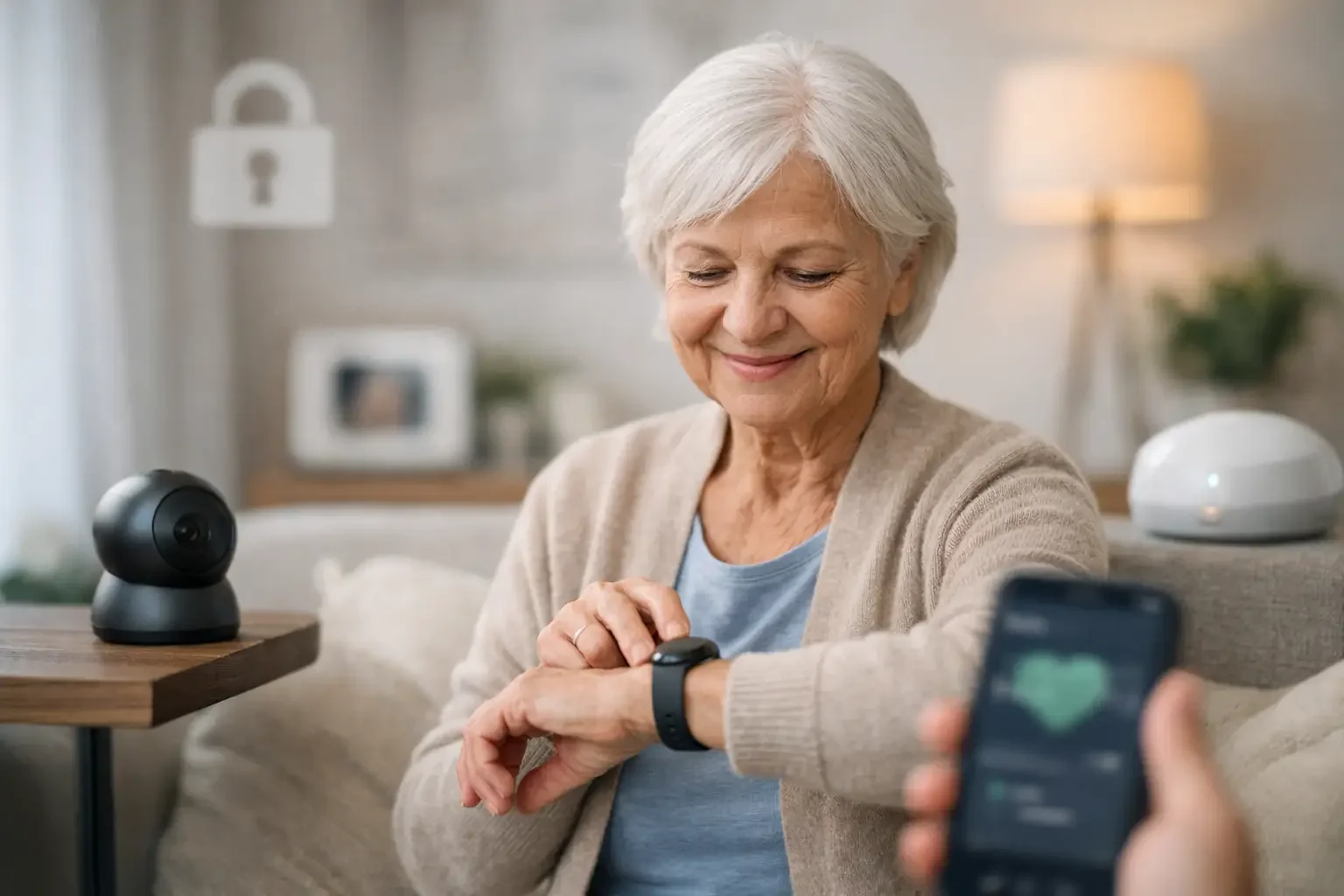
For many caregivers, this search starts after a scare. Maybe a parent stopped answering the phone for a few hours. Maybe there was a fall, a missed meal, or a growing sense that something is changing but no one can quite tell what. The hard part is that traditional solutions often force a trade-off: either you get very little information, or you get far too much intrusion.
The good news is that safety technology has changed. The strongest options now are designed around a simple idea: families need meaningful insight, not constant surveillance. And older adults deserve support that respects the fact that this is still their home.
What makes the best privacy-first senior safety solutions different
Privacy-first safety tools are built to answer real caregiving questions without collecting more personal information than necessary. Instead of recording everything, they focus on patterns, changes, and alerts that help families know when to pay attention.
That matters because most caregivers are not trying to monitor every moment. They want to know whether their dad got out of bed this morning, whether their mom is moving around less than usual, or whether a late-night bathroom pattern suddenly changed. These are useful signals. A live video feed of someone making coffee in their pajamas is usually not.
The best privacy-first senior safety solutions also recognize that older adults are more likely to accept support when it does not feel invasive. A device can be technically effective and still fail if a parent refuses to use it, turns it off, or feels embarrassed by it. In practice, privacy is not just an ethical preference. It is part of what makes a solution actually work.
The main categories of privacy-first senior safety tools
Passive in-home monitoring
This is often the strongest fit for families who want ongoing visibility without adding friction to a loved one’s day. Passive systems use discreet sensors placed around the home to detect motion and daily activity patterns. Instead of requiring the older adult to press buttons, wear a device, or interact with an app, the system quietly monitors routines in the background.
What families get is context. You can see whether normal activity happened, whether overnight rest seems disrupted, or whether a noticeable change in bathroom use or movement might need follow-up. This approach is especially helpful for seniors who live alone, for people who forget to wear medical alert devices, and for adult children managing care from a distance.
The trade-off is that passive monitoring does not usually provide a detailed medical diagnosis. It tells you that behavior changed, not always why. For most families, that is still exactly the right level of information. It helps them act sooner without crossing the line into surveillance.
Medical alert systems without cameras
Traditional medical alert systems can still play an important role, particularly for seniors with fall risk who are comfortable wearing a pendant or wrist device. These systems are privacy-preserving compared with cameras because they are usually activated by the user or triggered by fall detection, rather than constantly recording the home.
But there is a catch. They depend heavily on compliance. If your parent forgets to wear the device, leaves it on the charger, or cannot press the button during an emergency, the protection becomes less reliable. That does not make them a bad option. It just means they work best for older adults who are willing and able to use them consistently.
Smart home safety devices
Some families piece together privacy-conscious safety support using tools like door sensors, smart locks, stove shutoff devices, water leak detectors, and automated lighting. These can reduce specific risks without collecting sensitive personal footage or audio.
This approach can be useful when there is a clear, narrow concern, such as wandering, kitchen safety, or nighttime falls. The downside is that separate devices can create a patchwork of notifications that families then have to interpret on their own. If what you need is broad peace of mind rather than one fix for one problem, a more integrated solution is often easier to live with.
How to evaluate privacy without guessing
Many products claim to respect privacy, but families should look past the marketing language. The real question is simple: what information is actually being collected, and who has access to it?
If a system uses cameras or microphones in private living spaces, it is not truly privacy-first, even if the company says the footage is secure. Security matters, but it is separate from privacy. A locked recording is still a recording.
A better model is one that limits data collection from the start. If the system only captures motion patterns or changes in routine, there is less sensitive information to worry about in the first place. That reduces both emotional discomfort and practical risk.
It also helps to ask how the information is delivered. Overwhelmed caregivers do not need a stream of raw sensor activity. They need clear alerts and summaries that tell them what changed and whether it looks urgent. Good design protects privacy and lowers caregiver stress at the same time.
Best privacy-first senior safety solutions for common caregiving situations
When a parent lives alone and values independence
Passive in-home monitoring is often the best fit here. It offers quiet oversight without making the older adult feel managed. Families can stay informed about routines while the parent continues living normally, without cameras in the kitchen or constant check-in calls.
This can be a major emotional relief on both sides. Adult children feel less uncertainty, and parents avoid the feeling that every private moment is subject to review.
When there is a known fall risk
A wearable alert system may still deserve a place in the plan, especially if the senior is comfortable using it. But many families find that wearables work better when paired with passive monitoring rather than used alone. One supports emergency response, while the other helps spot quieter changes before they turn into emergencies.
That combination can be especially useful after a hospitalization, during physical recovery, or when mobility is gradually declining.
When the concern is subtle changes, not obvious crises
This is where behavior-based monitoring stands out. Small shifts in sleep, bathroom activity, movement, or time spent out of bed can reveal that something is off before there is a dramatic event. Families often notice these changes too late when they rely only on occasional calls or visits.
A solution like StackCare is built around this kind of insight. It uses discreet in-home sensors and behavioral analytics to identify changes in routine and send simple alerts to family caregivers, without cameras, microphones, or wearables. For many families, that balance is exactly what they have been looking for.
What families often get wrong when choosing a solution
One common mistake is choosing based only on emergency scenarios. Falls matter, of course. But many caregiving problems develop gradually. Reduced activity, restless nights, unusual bathroom patterns, or missed parts of a daily routine can all signal trouble earlier than a crisis button ever will.
Another mistake is assuming that more data is always better. It usually is not. More footage, more dashboards, and more notifications can leave caregivers feeling responsible for constant interpretation. The best solutions reduce mental load. They do not create another job.
It is also worth being honest about your loved one’s preferences. A system that looks good on paper but feels intrusive in practice may create resistance and family conflict. Privacy-first design is often what makes a parent willing to say yes.
How to choose with confidence
Start with the real problem you are trying to solve. If you are worried about day-to-day wellbeing and want to notice changes early, choose a system that tracks routine patterns passively. If the biggest concern is emergency response during a fall, make sure that need is covered too. In many homes, the answer is not one device but one simple system that fits the person.
Then think about the lived experience. Will your loved one need to remember to wear something? Charge something? Press a button? Will they feel watched? Will you be expected to sort through a lot of data yourself? These questions matter just as much as feature lists.
The best privacy-first senior safety solutions are not the ones that collect the most information. They are the ones that give families enough insight to act, while letting older adults keep the privacy and dignity that make home still feel like home.
If you are carrying that quiet worry every day, the right technology should lighten it - not add another burden. The most helpful solution is often the one that watches less, notices more, and helps everyone breathe a little easier.