
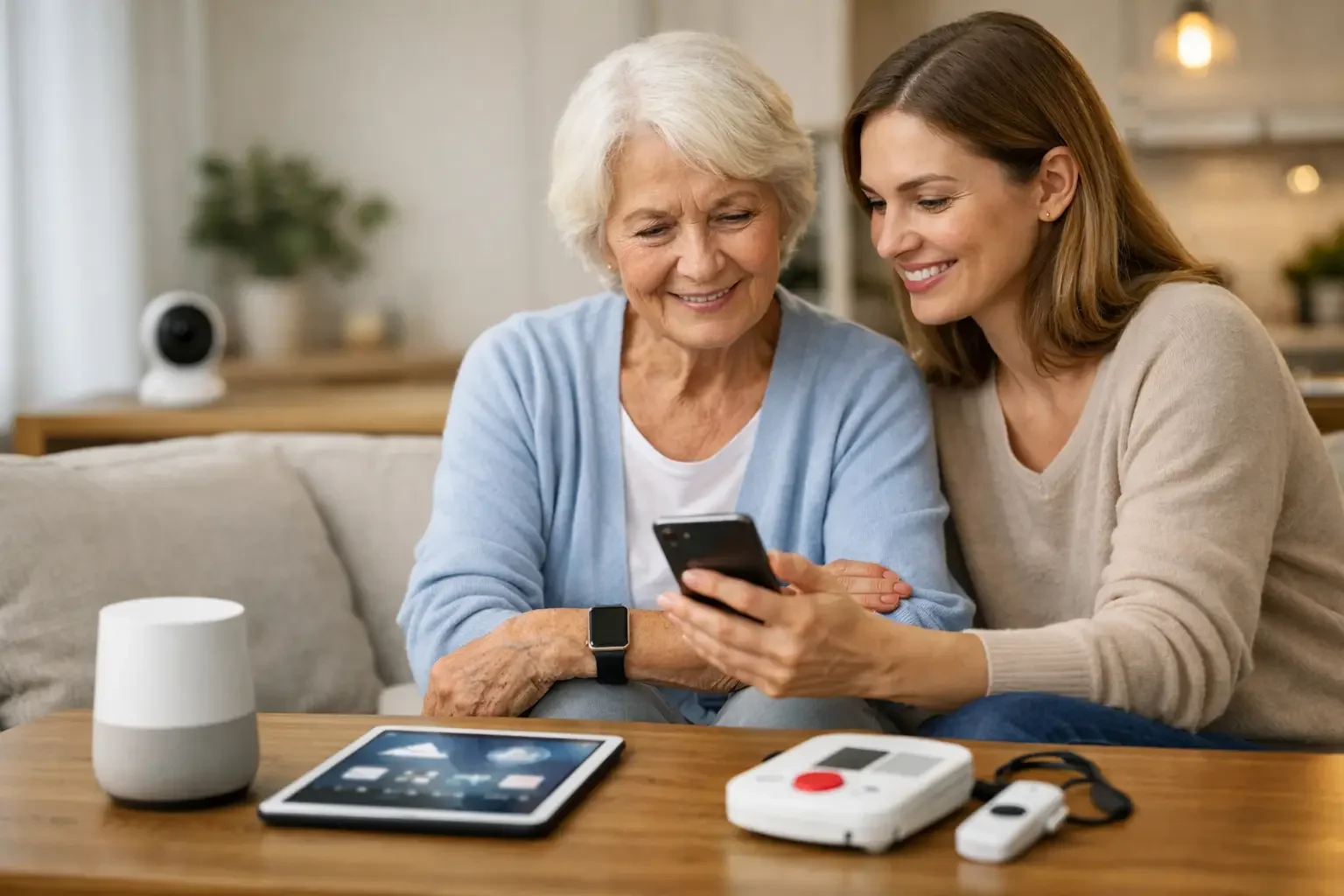
For many families, the goal is simple: help an older loved one stay independent without leaving them unsupported. The hard part is figuring out which tools actually make that possible. Some technology is genuinely helpful. Some adds more noise than reassurance. And some creates privacy concerns that make seniors feel watched instead of respected.
What aging in place technology really means
Aging in place technology is any tool that helps an older adult live safely and comfortably in their own home for longer. That can include fall detection, medication reminders, smart lighting, remote health devices, and in-home monitoring systems that flag changes in routine.
The category is broad, which is why families often feel overwhelmed at the start. A daughter caring for a parent with Parkinson's may need visibility into nighttime bathroom trips and movement patterns. A son supporting a parent after a hospital discharge may care more about whether she is getting up, eating, and returning to bed normally. Another family may simply want to know that Dad is active each morning without calling him three times before work.
Good technology meets a specific need. It does not try to turn the home into a hospital, and it does not force an older adult to learn complicated new habits just to be monitored.
The best aging in place technology guide starts with the real problem
Before comparing devices, pause and ask a more useful question: what are we worried about day to day?
Sometimes the concern is urgent safety, such as falls, wandering, or missed medications. Sometimes it is less obvious but just as important - changes in sleep, reduced movement, unusual bathroom activity, or long stretches of inactivity that may signal illness or a recovery setback. These are often the moments family caregivers lose the most peace of mind, especially when they live across town or across the country.
If you start with the product instead of the problem, it is easy to end up with technology that looks impressive but does not reduce uncertainty. A smartwatch is not helpful if your parent forgets to wear it. A camera may provide visibility, but many older adults will not accept one in private spaces. A complicated app may offer charts and data, yet still leave you wondering whether anything is actually wrong.
The right setup depends on the person, the home, and the kind of support your family can realistically provide.
The main categories families should know
Emergency response devices are familiar for a reason. Medical alert systems can be useful for seniors who are at higher fall risk and are willing to press a button or wear a pendant. The trade-off is that these systems often depend on the person taking action during a stressful moment, and many older adults stop wearing them over time.
Smart home safety tools can also help. Motion-activated lighting, smart locks, stove shut-off devices, and video doorbells can reduce everyday risks. These work best when they solve a practical issue in the home rather than adding another layer of maintenance.
Medication support tools are another common option. Automatic dispensers and reminder systems can help with routine and adherence, especially after a health event or when schedules become harder to manage. Still, reminders do not guarantee the medication was actually taken, and families may need additional confirmation if that is a major concern.
Remote health devices, such as blood pressure cuffs, pulse oximeters, and glucose monitors, can be valuable when a clinician has recommended regular tracking. But they are not always ideal for broad peace of mind. They require active participation, and they usually measure only one piece of the overall picture.
Then there is passive in-home monitoring. This category is increasingly important because it answers a different question: how is your loved one actually doing in daily life? Instead of waiting for a button press or asking family members to interpret raw activity data, these systems use discreet sensors to observe patterns like sleep, movement, bathroom use, and time spent in key areas of the home. When routines change in a meaningful way, caregivers can be alerted.
For many families, this is the difference between checking in and truly knowing when something may be off.
Privacy matters more than most families expect
One of the biggest mistakes in any aging in place technology guide is treating privacy as secondary. For older adults, privacy is not a feature request. It is tied to dignity, trust, and whether they will accept support at all.
That is why cameras and microphones create tension in so many homes. Families may see them as practical, but seniors often experience them as invasive. Even when everyone agrees at first, that comfort can fade quickly. Nobody wants to feel watched while making coffee, getting dressed, or moving through their own home.
Privacy-first technology tends to work better over time because it preserves independence instead of challenging it. Passive sensor systems are a good example. They can provide meaningful insight without capturing conversations or video. That allows families to stay informed while giving seniors room to live normally.
If your loved one resists monitoring, the issue may not be the idea of support. It may be the method.
What to look for when choosing a solution
A good system should make life easier for both the older adult and the caregiver. That sounds obvious, but many tools fail this basic test.
Look for technology that is simple to use or, better yet, does not require your loved one to do much at all. Passive systems are often easier to sustain because there is nothing to charge, wear, press, or remember. Reliability also matters. If alerts are constant, vague, or easy to ignore, families stop trusting them. What you want are meaningful notifications tied to real changes in behavior.
It also helps to think about what kind of information is most useful. Most caregivers do not need a stream of raw data. They need clear updates that answer practical questions. Did Mom get out of bed this morning? Is Dad moving less than usual? Has there been unusual overnight activity? Is recovery staying on track?
This is where smarter monitoring stands apart from basic motion sensing. Behavioral analytics can turn daily activity into patterns, then flag deviations that may deserve attention. Instead of making families do the interpretation, the system does more of that work for them.
That approach can be especially helpful for adult children who are juggling work, kids, and caregiving from a distance. They are not trying to become care analysts. They just want to know when to relax and when to reach out.
Matching technology to the stage of care
The best choice often depends on what season your family is in.
If your parent is doing well overall but lives alone, a light-touch setup may be enough. Smart lighting, a few home safety upgrades, and passive routine monitoring can provide reassurance without making the home feel medicalized.
If there has been a recent hospitalization, fall, or noticeable decline, you may need more visibility. This is when alerts about reduced movement, missed routines, or overnight changes become more important. The goal is to catch subtle signs early, before they become a crisis.
If your loved one is living with a condition like Parkinson's or mobility limitations, patterns matter even more. A single day may not mean much. A gradual shift over two weeks might. Technology that recognizes trends can help families act sooner and have more informed conversations with doctors or care teams.
And if caregiving stress is the main issue, focus on tools that reduce uncertainty rather than adding tasks. The right system should lower the emotional load, not create another dashboard to manage.
A final word for families carrying a lot
Most caregivers are not looking for perfect control. They are looking for fewer unknowns. They want to support independence, respect privacy, and still know when something has changed enough to matter.
That is why the strongest aging in place technology guide is not really about gadgets. It is about choosing support that fits real life - the kind that helps an older adult stay at home with dignity and helps family members breathe a little easier. If a tool can do both, it is worth serious attention. Solutions like StackCare are built around that balance, offering quiet visibility without turning home into a place of surveillance.