
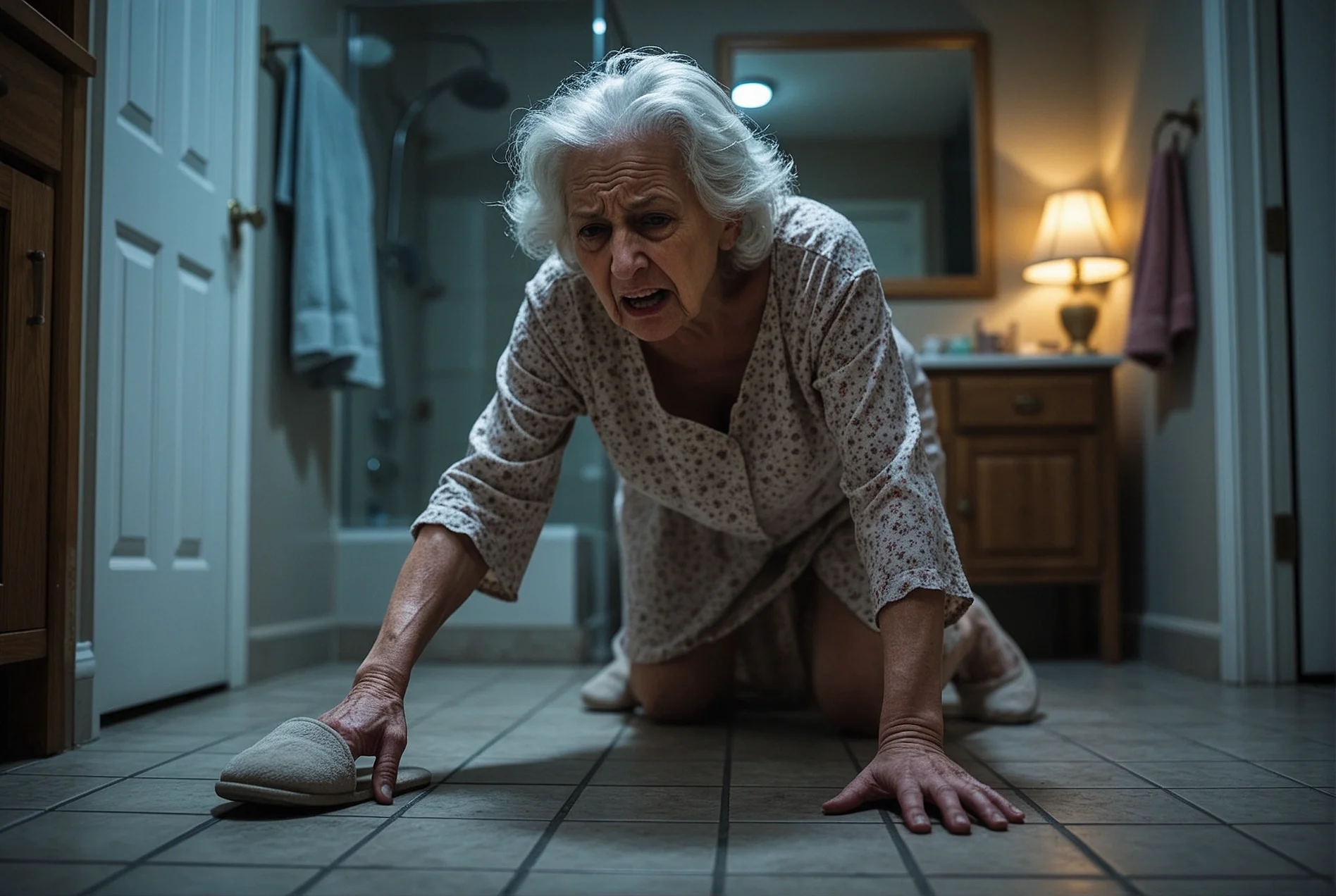
That is why many families start looking for a fall detection alternative for seniors instead of relying on a device that only responds after the emergency. Traditional fall detection can help in some situations, but it has real limits. If your parent forgets to wear the device, takes it off to charge it, or the fall is not detected correctly, that protection can disappear fast.
Why families look beyond standard fall detection
Most fall detection tools are built around a single moment. They are designed to recognize a sudden drop or impact and then trigger an alert. That sounds reassuring, and sometimes it is. But caregiving rarely comes down to one dramatic event.
What adult children usually worry about is the pattern behind the event. Is Mom getting out of bed later than usual? Is Dad moving around the house less this week? Did someone go into the bathroom three times overnight when that is not normal for them? These changes often tell you more about risk than a wearable alert button ever could.
There is also the human side of it. Many seniors do not like wearables. Some find them uncomfortable. Some feel embarrassed by them. Others simply forget them on the nightstand or leave them charging in another room. A safety tool only works when it fits naturally into daily life.
That is why the conversation has shifted. Families are no longer asking only, "How will I know if my parent falls?" They are also asking, "How will I know if something starts changing before a fall happens?"
What makes a good fall detection alternative for seniors?
A strong fall detection alternative for seniors does not just wait for impact. It helps families spot meaningful changes in routine, mobility, and activity level without creating more work or invading privacy.
In practice, that usually means passive in-home monitoring. Instead of asking an older adult to press a button, wear a pendant, or remember another device, passive systems use discreet sensors placed around the home. These sensors can show whether someone is getting up, moving between rooms, sleeping normally, or spending an unusual amount of time in one place.
That information matters because falls are often connected to broader changes. A person who is moving less may be getting weaker. A person who is waking frequently at night may be at higher risk when walking in the dark. A person who suddenly stops following their usual routine may need help for a reason that has nothing to do with a fall, but is still urgent.
The best alternatives also respect dignity. For many families, cameras feel like too much. Audio monitoring can feel even worse. Older adults who want to remain independent often accept support more readily when it does not feel like surveillance.
The trade-offs: wearables vs passive home monitoring
Wearable fall detectors are not useless. For some seniors, especially those who are comfortable with technology and willing to wear a device consistently, they can be a valuable layer of protection. If someone lives alone, has a history of falls, and reliably keeps the device on, it may help in an emergency.
But there are trade-offs. Wearables depend on compliance. They need charging. They can be forgotten, misplaced, or intentionally removed. They also tend to focus on one event rather than the warning signs leading up to it.
Passive home monitoring works differently. It does not ask the senior to do anything. It can monitor day and night, whether the person remembers it or not. And instead of giving families a stream of raw data to interpret, stronger systems look for deviations from normal behavior and surface the changes that actually matter.
That said, passive monitoring has its own boundaries. It may tell you that your parent has not left the bedroom, has not followed their normal morning routine, or is spending an unusual amount of time in the bathroom. It may not always label the event as a "fall" with certainty. What it gives you instead is broader awareness - often sooner, and often in a way that reflects real life better than a one-time alert.
Why earlier signals matter more than families expect
When families first start searching for safety technology, they often focus on the worst-case scenario. That is understandable. The fear is usually specific: What if Dad falls and no one knows? What if Mom cannot get up?
But the day-to-day caregiving burden often comes from uncertainty, not just crisis. You may be managing your own job, your kids, and a parent who says they are "fine" every time you call. You are not looking for more information to sort through. You are looking for confidence that you will know when something changes.
Earlier signals help because they turn vague worry into something actionable. A change in walking patterns, overnight activity, or time spent in bed can point to weakness, illness, medication issues, dehydration, or increasing fall risk. In many cases, that gives families a chance to step in before the situation becomes an emergency.
This is especially important for seniors recovering from surgery, living with Parkinson’s disease, managing balance issues, or aging in place after a previous fall. In those situations, the goal is not only emergency response. The goal is reducing the chance that the emergency happens at all.
Privacy is not a small detail
For older adults, safety and independence are deeply connected. The more a solution feels controlling or invasive, the more likely it is to be rejected.
That is one reason many families prefer sensor-based monitoring over cameras or microphones. Motion sensors can provide meaningful insight into daily habits without recording private moments. You can know that your mother got out of bed, moved to the kitchen, and returned to the bedroom without watching her do any of it.
This matters emotionally, not just practically. A parent who feels respected is often more open to support. That can make the difference between a solution that lasts and one that gets unplugged after a week.
What to look for when choosing an alternative
If you are comparing options, pay attention to how the system handles real caregiving life. Does it simply send activity data, or does it identify changes from normal patterns? Does it notify you quickly when something seems off? Does it work without requiring your parent to remember a device? And does it preserve privacy in a way your family can feel good about?
It is also worth considering who the product is really designed for. Some systems are built for clinicians or facility staff and can feel overwhelming for families. Others are made for adult children who need simple alerts and clear summaries, not a complicated dashboard.
A useful fall detection alternative for seniors should reduce mental load, not add to it. If it leaves you staring at charts trying to decide whether something is wrong, it is not solving the real problem.
A smarter way to support aging at home
For many families, the most helpful technology is not the one that reacts after a fall. It is the one that helps them notice when life at home is changing.
That is where passive monitoring stands apart. Systems like StackCare use discreet in-home sensors and behavioral insights to show whether a loved one is following normal routines, moving less, sleeping differently, or showing other patterns that may signal concern. The result is not constant surveillance. It is a quieter kind of reassurance - knowing you will hear about meaningful changes without having to check in all day or ask your parent to wear something they may not want.
If you are caring for an older adult who lives alone, it helps to think bigger than fall detection. The right support does more than catch a single event. It gives you a clearer picture of how your loved one is really doing, while letting them keep the independence that matters so much.