
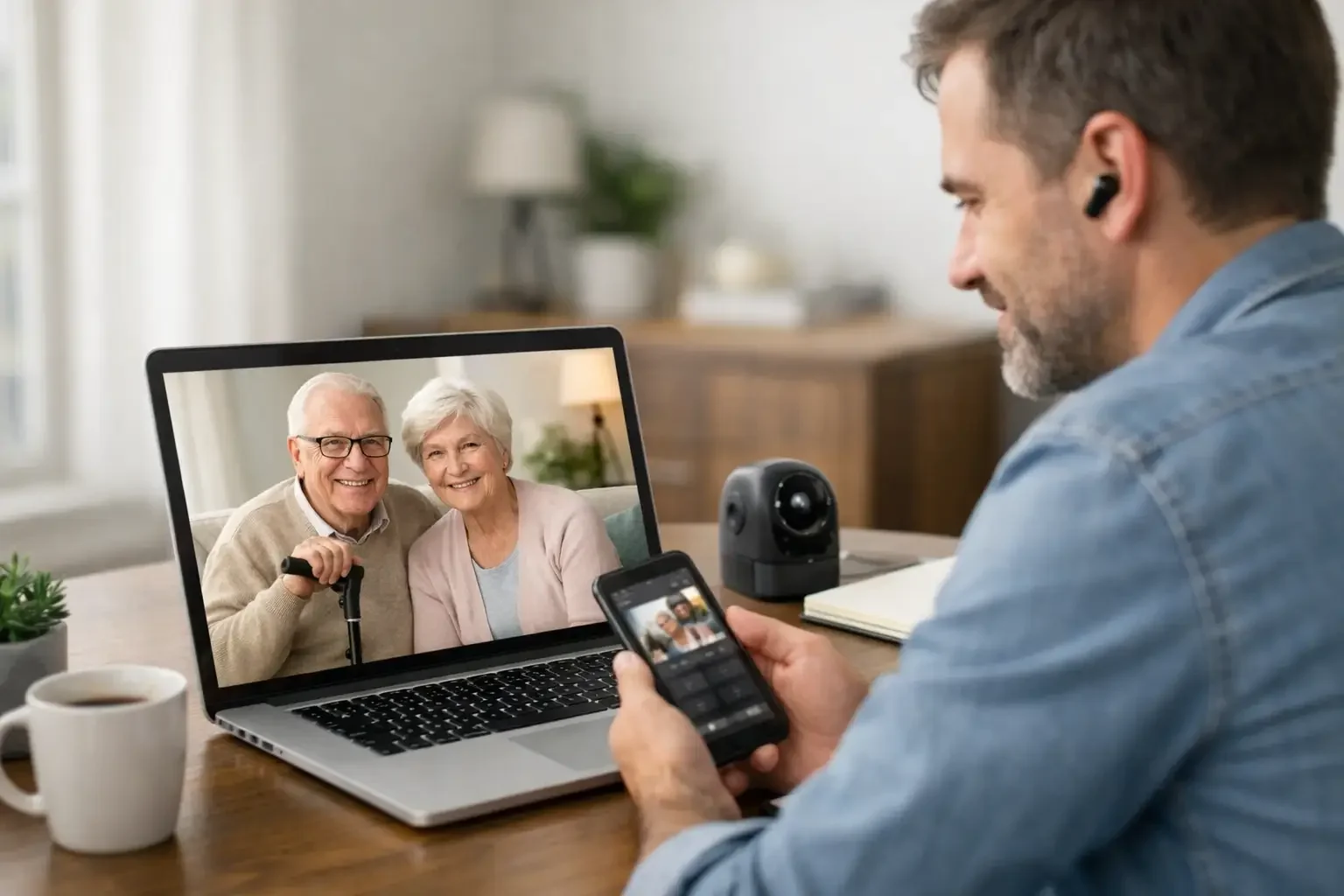
That question gets heavier when a parent lives alone, insists they are fine, or wants help on their terms. You may be juggling work, kids, travel, and your own household while trying to notice small warning signs from miles away. The goal is not to control your parent’s life. It is to stay aware of changes early enough to help, without turning their home into a place that feels watched.
What remote monitoring should actually do
The best approach gives you visibility without asking your parent to give up privacy or independence. That means remote monitoring should help you answer simple, meaningful questions. Are they getting up as usual? Moving around the home normally? Sleeping more than usual? Going to the bathroom much more often at night? Did their daily routine suddenly change?
Those are often the first signs that something is off. A fall is one concern, but it is not the only one. Changes in movement can point to illness, medication issues, mobility decline, poor sleep, dehydration, or cognitive changes. If you only rely on phone calls, you usually hear what your parent chooses to share, and many older adults minimize problems because they do not want to worry anyone.
That is why the strongest remote monitoring plans are built around patterns, not just emergencies. A true safety net helps you notice the small shifts before they become a crisis.
How to monitor aging parents remotely without being intrusive
There is no single right setup for every family. The right choice depends on your parent’s health, personality, home layout, and how much support they already receive. Still, most options fall into a few broad categories.
Phone check-ins are the most familiar. They can be comforting and personal, especially when they happen on a predictable schedule. But they have limits. Your parent can miss a call, sound fine while struggling, or tell you what they think you want to hear. Daily calls are useful, but they are not a full monitoring plan.
Wearable alert devices can help in emergencies, especially for someone with a known fall risk. The trade-off is simple: they only work if your parent is willing to wear them consistently. Many people forget, take them off to sleep or shower, or stop using them because they feel stigmatized.
Cameras may offer the most direct view, but they also create the most resistance. For many families, and for many older adults, cameras feel like surveillance. They may be acceptable at a front door or entryway, but inside the home they often cross a line. If your parent values dignity and autonomy, camera-based monitoring can damage trust.
Smart home devices and medication reminders can fill in part of the picture. They can help with routines, but they typically do not tell you how your parent is functioning overall. A pill dispenser may show whether medication was accessed, not whether your parent is moving less, sleeping poorly, or getting up repeatedly overnight.
Passive in-home monitoring often offers the best balance for independent older adults. Instead of requiring your parent to press buttons, charge devices, or accept cameras, passive systems use discreet sensors to track daily activity patterns in the home. You receive alerts when something changes in a meaningful way. That could be no morning activity, less movement than usual, extended bathroom visits, or unusual nighttime wandering.
For many families, this is the first solution that feels both practical and respectful.
What to look for in a remote monitoring system
If you are comparing options, focus less on flashy features and more on whether the system reduces uncertainty. The most helpful systems do not bury you in raw data. They interpret what is happening and point out what deserves your attention.
Look for alerts that are specific enough to act on. “No activity detected by 10:00 AM” is useful. “Activity score changed” is not. Good monitoring should save you from guessing.
Privacy matters just as much. Many families want visibility, but not at the cost of making a parent feel exposed in their own home. Systems that avoid cameras, microphones, and wearables are often easier to accept because they support safety without removing dignity.
Ease of use also matters more than people expect. If a platform is complicated, you will stop checking it. If your parent has to remember to charge, wear, tap, or reset something, consistency usually falls apart. The best tools fit into life quietly.
This is where solutions like StackCare stand out for many caregivers. Instead of asking families to interpret streams of sensor data, the system looks at behavior patterns over time and sends simple alerts and summaries to your phone. That makes it easier to notice when a loved one is sleeping later than usual, moving less, or showing unusual bathroom activity, all without cameras or constant check-in calls.
Start with a conversation, not a device
Even the best technology can fail if your parent feels ambushed by it. If you are wondering how to monitor aging parents remotely, start by talking about your concern in a way that protects their sense of control.
That usually means avoiding language that sounds parental or corrective. Instead of saying, “You need to be monitored,” try explaining what you are trying to solve. You worry when they do not answer the phone. You want to know if something changes quickly. You want to support them staying at home, not push them out of it.
Framing matters. Most older adults do not object to safety. They object to losing privacy, choice, and independence. When you lead with those values, the conversation changes. You are not asking to take over. You are asking to build a backup plan that helps everyone breathe a little easier.
It also helps to be honest about your own limits. If you live far away or cannot call six times a day, say that. Many parents are more open to support when they understand it reduces stress on the family without requiring them to change their routine.
Build a simple plan around the technology
Remote monitoring works best when it is part of a larger caregiving plan. Once you have a system in place, decide who gets alerts, who responds first, and what different changes mean. If your dad has no morning activity, do you call him first, text a neighbor, or contact a local relative? If your mom’s nighttime bathroom trips increase for several days, who follows up about hydration, medication, or a possible infection?
This does not need to become a formal care operation. It just needs enough structure to prevent panic and confusion. The point of monitoring is not more information for its own sake. It is faster, calmer decision-making.
It is also worth reviewing what “normal” looks like for your parent. A person recovering from surgery, living with Parkinson’s, or managing arthritis will have different patterns from someone who is generally active. Changes only mean something in context. Good monitoring helps you spot deviations from their baseline, not someone else’s.
The emotional side of remote caregiving
Families often assume they need either constant contact or total trust. In reality, most caregivers live in the uncomfortable middle. You do not want to hover, but you also know that one phone call a day is not enough. That tension can create guilt, especially for long-distance caregivers.
A thoughtful remote monitoring setup can ease some of that burden because it replaces guesswork with clearer signals. You are no longer left wondering whether your parent is ignoring your call because they are busy, asleep, frustrated, or in trouble. You have more context. That does not remove the emotional weight of caregiving, but it can make it more manageable.
And for many older adults, the right kind of monitoring feels less intrusive than family members calling repeatedly to check whether they got out of bed, ate breakfast, or made it to the bathroom safely. Quiet support is often easier on everyone.
There is no perfect way to care from a distance. But if you are trying to figure out how to monitor aging parents remotely, the best answer is usually the one that gives you meaningful visibility while protecting the life they still want to lead. The right system should not make home feel smaller. It should make staying there feel safer.