
How to Monitor an Elderly Parent Living Alone

Your phone buzzes late at night, and for a second your stomach drops. When an older parent lives alone, even small unknowns can feel heavy. Did they get out of bed this morning? Are they eating normally? Did they make it safely back from the bathroom? If you are trying to figure out how to monitor elderly parent living alone, the goal is not to control their day. It is to notice when something changes before a small problem becomes a crisis.

That distinction matters. Most families are not looking for constant surveillance. They are looking for reassurance, early warning, and a way to support independence without turning a parent’s home into a monitored facility. The best approach balances safety, dignity, and practicality.

What monitoring should actually help you do

When caregivers first start looking for solutions, it is easy to focus on worst-case scenarios like falls or medical emergencies. Those risks are real, but day-to-day monitoring is often more about patterns than single events. A parent who usually wakes up by 7:00 a.m. but suddenly stays in bed much longer may need attention. A person who normally moves around the kitchen at lunchtime but stops preparing meals may be getting weaker, more confused, or more depressed.

Good monitoring helps you answer a few quiet but meaningful questions. Is your parent following a normal routine? Are they moving through the home as expected? Has anything changed in their sleep, bathroom use, or general activity? Those clues can tell you a lot about wellbeing, even before your parent says anything is wrong.

That is especially important for long-distance caregivers and busy adult children. You may not be able to stop by every day, and daily phone calls do not always reveal the full picture. Some parents say they are fine because they do not want to worry anyone. Others simply do not notice gradual decline in themselves.

How to monitor an elderly parent living alone without being intrusive

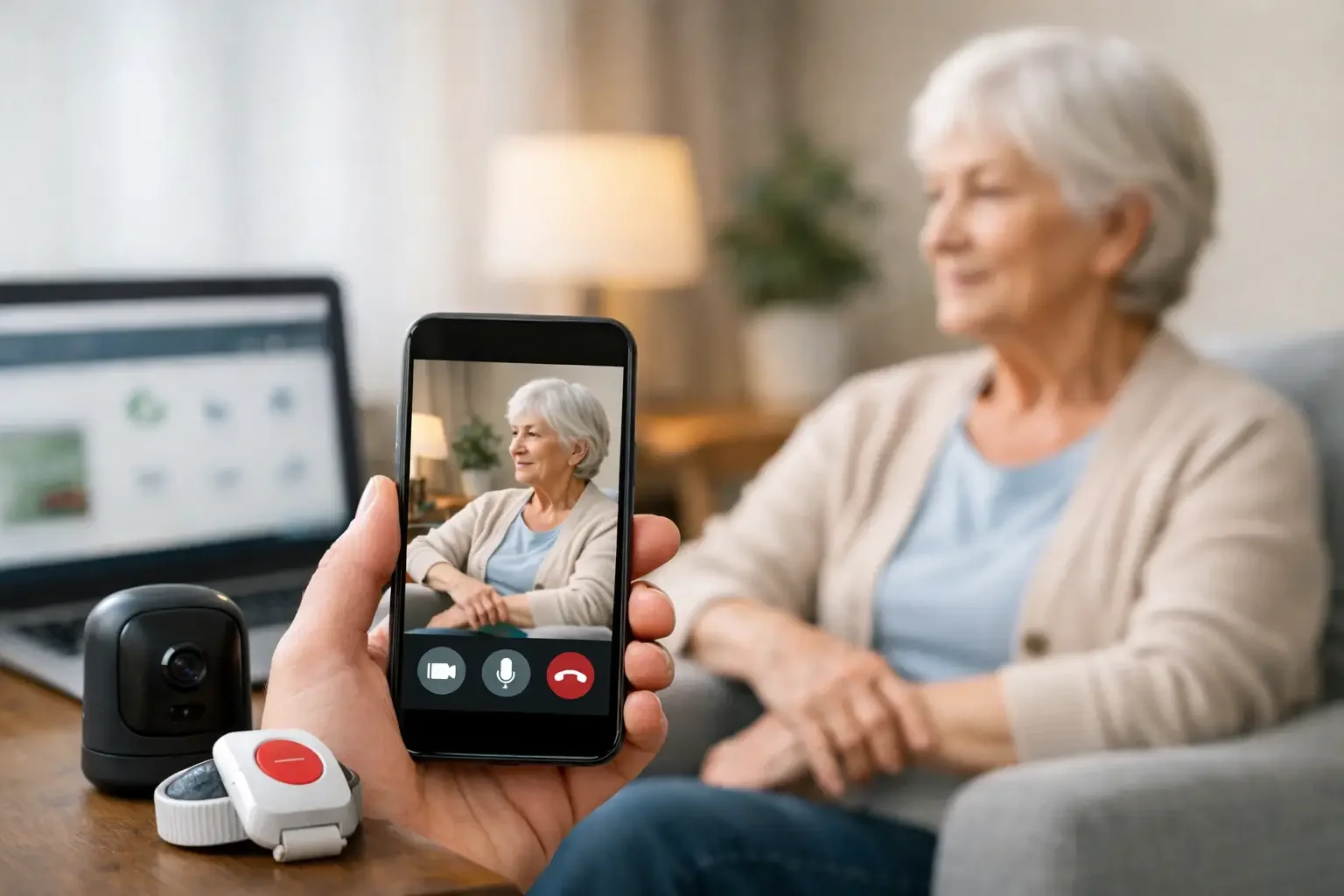
The biggest mistake families make is assuming more surveillance automatically means more safety. In reality, cameras in bedrooms or living spaces can feel deeply uncomfortable. [Wearable alert buttons](https://stack.care/blog/2023/10/9/the-advantages-of-passive-monitoring-over-wearable-technology-in-senior-care) can help in some cases, but many older adults forget to charge them, forget to wear them, or stop using them altogether.

A better starting point is to ask what information you truly need. In most cases, you do not need video footage of every room. You need to know whether your parent is up and moving, whether their routine looks normal, and whether something unusual is happening.

That is why passive in-home monitoring has become appealing for families who want visibility without invading privacy. Motion sensors placed around the home can track activity patterns without recording conversations or images. Instead of forcing a caregiver to interpret raw data, smarter systems analyze daily behavior and flag meaningful changes. That could be a missed morning routine, reduced movement during the day, more frequent nighttime bathroom trips, or no kitchen activity around mealtimes.

For many families, this feels like the right middle ground. It respects privacy while still giving you information you can act on.

Start with the risks that fit your parent

There is no single right setup because every parent is different. An active 72-year-old who still drives and gardens has different needs than an 88-year-old recovering from a fall. Before choosing any tool, think about the specific risks you are trying to manage.

If your parent has mobility issues, the biggest concern may be whether they are getting around the house safely and consistently. If they have early cognitive decline, routine changes may matter more than emergencies. If they live with Parkinson’s disease or are recovering from surgery, bathroom activity, nighttime movement, and time spent out of bed may become especially useful signals.

This is where families sometimes overbuy technology. A complicated dashboard with too many metrics can create more stress, not less. The most helpful systems do not drown you in information. They tell you when something seems off.

Build a monitoring plan around daily life

Technology works best when it supports a simple caregiving plan. Think in terms of layers.

The first layer is personal contact. Regular calls, texts, or visits still matter because they preserve connection and let you hear how your parent is feeling. The second layer is practical support, like medication management, meal help, transportation, or home care if needed. The third layer is passive monitoring that fills in the gaps between those interactions.

That layered approach is often more sustainable than expecting one solution to do everything. A daily call may tell you your mom sounds cheerful. Passive monitoring may tell you she was up much more than usual overnight and barely entered the kitchen the next day. Together, those details give a fuller picture.

If you have siblings or other relatives involved, decide ahead of time who gets alerts, who follows up, and what should trigger a phone call or visit. Monitoring is only useful if someone knows what to do with the information.

Talk to your parent before you install anything

This conversation can be harder than choosing the technology. Many older adults hear the word monitoring and assume they are losing independence. That fear is understandable.

It helps to frame the conversation around support rather than supervision. You are not trying to watch them. You are trying to worry less, respond faster if something changes, and help them stay in their own home longer. For parents who value privacy, be direct about what is not being collected. No cameras. No microphones. No one listening in.

It also helps to acknowledge the emotional truth. You may be balancing work, kids, and caregiving from miles away. You want to be responsible without calling five times a day. Many parents respond better when they understand that monitoring reduces stress for everyone, not just the caregiver.

What features matter most

If you are comparing options, focus less on flashy claims and more on whether the system fits real life. Reliability matters more than novelty. The most useful monitoring tools usually do a few things well.

They detect activity passively, work around the clock, and turn household movement into clear insights. They should make it easy to see if a parent is following their usual routine and send alerts when behavior changes in a meaningful way. Privacy is also critical. For many families, that means avoiding cameras and devices that need to be worn.

Another feature that matters is simplicity. If the system requires you to constantly review charts or manage settings, it may not reduce your stress. A good setup should feel like support, not another part-time job. That is one reason some families choose solutions like StackCare, which turns in-home activity into [summaries and notifications](https://stack.care/inside-the-app) that are easier to understand at a glance.

Know the trade-offs

Every monitoring method has limits. Cameras show details, but many families find them too invasive. Wearables can call for help, but only if they are worn. Smart speakers may offer convenience, but they are not designed to give a reliable picture of daily wellbeing. Passive motion monitoring is private and easy to live with, but it does not diagnose medical conditions or replace human care.

That is why the right question is not which system does everything. It is which system gives you the clearest, most useful view of your parent’s safety and routine with the least burden on them.

In some families, the answer is a combination. A parent may have passive home monitoring for routine awareness and a medical alert device for emergencies outside the house. In others, monitoring may be the bridge that helps a parent remain independent now while giving the family more confidence about when extra support is needed later.

When monitoring becomes especially valuable

Some caregiving seasons make uncertainty harder to manage. The first few months after a hospital stay. The period after a fall scare. The slow changes that come with memory loss. The moment when you realize your parent says they are fine, but you are not fully convinced.

In those periods, monitoring is not about suspicion. It is about seeing what is changing when nobody is there to notice in person. A shift in sleep, bathroom use, or movement around the home can be the first sign that more help is needed.

Families often tell themselves they will wait until something obvious happens. But many problems become obvious only after they have already become serious. Earlier visibility gives you more options and usually leads to calmer decisions.

he best monitoring setup should help your parent feel supported, not watched, and help you feel informed, not overwhelmed. If it can do both, it is doing something valuable: making it a little easier to care well from wherever you are.

How StackCare Helps Home Care Agencies Prove the Case for 24/7 Care - Two Real-Life Case Studies

How StackCare Provides Insights to Hidden Dangers in Dementia and Proves the Need for 24/7 Care

As Dementia progresses, it is often difficult for families to fully understand the depth of their loved one’s decline. They frequently cling to moments of clarity, downplaying the signs of cognitive deterioration. For home care agencies, helping families recognize the need for 24/7 care can be a delicate but essential conversation. That’s where StackCare comes in, providing real-time data that shines a light on hidden risks— offering families trust in information and professionals the ability to present clear, objective evidence of what happens when no one is watching.

Turning Data into Action

At StackCare, we’ve seen firsthand how our system has been a game-changer for our home care agency partners. By using real-time monitoring and data analytics, we help agencies demonstrate true insight to families that their loved one’s condition may be more severe than it appears. Following, we share two powerful case studies that highlight how using StackCare not only led to improved patient safety but also significantly boosted agency revenue.


Case Study 1: Uncovering Hidden Risks — How StackCare Proved Mom Was No Longer Safe Living Alone

The Challenge: Nighttime Wandering and Hidden Dangers

A home care agency in Washington State was working with a family who believed their mother, diagnosed with Alzheimer’s, was managing well with limited daytime care. At night, they assumed she was sleeping peacefully. However, after installing the StackCare monitoring system, a very different story emerged.

The system revealed that their mom was wandering throughout the night, often opening the door to the garden between midnight and 5 AM. Although the family was unaware, she was clearly at high risk of falling or wandering off—potentially exposing herself to dangerous situations, getting lost, or being severely injured.

The Evidence: Uncovering the Truth with Data

StackCare provided irrefutable evidence of her nighttime movements, which included:

  • Nighttime Wandering: Frequent nighttime trips to the garden, creating potential risks for injury.

  • Increased Fall Risk: Her restless movements and unfamiliar surroundings increased the likelihood of falls.

  • Restlessness: Constant pacing indicated poor sleep, further deteriorating her overall health.

This data provided the family with a clear, unbiased view of their mother’s condition. Before StackCare, they believed she was resting at night. After seeing the data, they realized the real hidden risks.

The Turning Point: Moving to 24/7 Care

With this newfound insight, the family made the difficult but necessary decision to transition their mother to 24/7 care. The objective data showed that her Alzheimer’s had progressed to the point where she could no longer live safely without constant supervision. Thanks to StackCare, the home care agency facilitated the transition with compassion, ensuring the family was supported through the entire process.

Impact of StackCare for the Family:

  • Peace Of Mind: Understanding their mother's true health situation and that risks were now being minimized or eradicated.

  • Confidence And Trust: Recognizing that their home care provider was sharing data and that they could see for themselves how their mother was doing 24/7.

  • Emotional Relief: Family was happy that their mother could remain in her own home as it was important to them not to have to deal with a move to a residential facility.

Impact of StackCare for the Agency:

  • Increase in Care Hours: From 24 hours per week to 168 hours per week (24/7).

  • Revenue Impact: Significant monthly revenue increase (500%).

  • ROI: The agency absorbed the StackCare cost as it was clearly generating significant return on investment.

  • Loyalty and Trust: The family became strong advocates for the agency with word of mouth recommendations and testimonials.


Case Study 2: A Safe Haven at Home — How StackCare Helped a Couple with Dementia Avoid Memory Care

Background: Facing a Tough Decision

In the San Francisco Bay Area, a couple in their late 80s—both battling different forms of early dementia—faced a crossroads. Their adult children were torn between moving them into a memory care facility or continuing to support their independence at home. That’s when a local home care agency stepped in, installing StackCare to understand their day-to-day activities.

Data Unveiling the Severity of Cognitive Decline

StackCare data revealed that both parents' cognitive decline was more advanced than anyone had realized. Restless nights, confused movements, and occasional wandering showed that their safety was at high risk without 24/7 care.

Outcome: A Balanced Approach to Care

The agency used StackCare data to help the family make an informed decision. By bringing in 24/7 care, they ensured that the couple could remain safely in their home. As care costs escalated, the family opted to slightly reduce care hours (to 21 hours per day) while relying on StackCare to monitor risky behaviors during the brief gaps.

This strategy achieved two critical outcomes:

  • Cost Savings: The family avoided the high cost of memory care, which would have disrupted their parents' established routine and brought a heavy emotional toll.

  • Peace of Mind: Even during short gaps in caregiving, StackCare provided real- time monitoring, ensuring their safety.

Financial Relief for the Family:

Thanks to StackCare, the family was able to balance the care budget while keeping their parents in the comfort and emotional security of their home. The combination of 24/7 monitoring and slightly reduced care hours saved them a significant amount each month in comparison to a residential memory care facility.

Financial Impact of StackCare for the Agency:

Keeping dual clients in their home vs versus losing them to a residential facility—147 hours per week vs 0 hours. In addition there were ongoing soft benefits of family trust and loyalty which contribute to long-term business success.


Conclusion: Empowering Families and Agencies Through Technology

StackCare empowers home care agencies to make data-driven decisions, helping families transition to the appropriate level of care. In both case studies, objective data —whether revealing nighttime wandering or unnoticed patterns of restlessness— enabled families to face difficult truths and make the necessary decisions to ensure their loved ones’ safety.

For agencies, StackCare not only improves client outcomes but also drives revenue growth. By increasing care hours for even a small number of clients, agencies can dramatically boost monthly revenue and realize substantial return on their investment. StackCare is more than a monitoring system—it’s a tool that builds trust, enhances care, and strengthens your business.

If you’re navigating similar challenges, consider how StackCare can provide transparency and reassurance, keeping your clients safe and comfortable in their own homes for as long as possible.


CONTACT US TODAY VIA info@stack.care to learn how our system can enhance the services you provide and help keep seniors safe, healthy, and independent.

8 Ways in Which StackCare Can Help Prevent Hospitalization

In early January, my youthful and energetic 83 year old mom was admitted to the hospital. Despite the wonderful medical care she received, she developed complications, and we tragically lost her just 10 days later. Watching her decline was one of the most painful experiences of my life, and it has reinforced something I’ve always known: hospitalization can frequently become a turning point for seniors, and it’s something we should strive to avoid whenever possible.

Hospitalization can lead to long-term consequences, even when the original illness is treated successfully. For many seniors, a stay in the hospital can result in physical or cognitive decline, making it harder for them to return to independent living. In fact, one-third of patients over 70 experience hospitalization-associated disability; meaning they struggle to complete basic activities of daily living (ADLs) after their stay1.

One of the most effective ways to prevent hospitalization is through early detection of health issues. By identifying potential concerns before they become critical, families and caregivers have the chance to intervene early, often avoiding the need for emergency care. This is where StackCare plays a vital role, helping detect small changes in behavior or health that could signal developing bigger issues down the line.

How StackCare Can Help Prevent Hospitalizations

While no system can prevent every health crisis, there are many instances where early detection and intervention can make a significant difference. Here are some of the ways StackCare helps reduce the risk of hospitalization:

  • Falls and Lie Time: Half of seniors who remain on the floor for more than one hour after a fall will die within six months due to complications2. Extended lie time can lead to complications such as pneumonia, dehydration, or hypothermia, which significantly increase the risk of death.
  • Falls at Night: 63% of falls for people aged 75 and over occur in the bathroom between midnight and 6 a.m., when they are most vulnerable and less likely to receive immediate help3. StackCare alerts caregivers when the system detects lack of activity or bathroom overstays, both of which may indicate a potential fall; timely response and assistance goes a long way to reducing dangerous outcomes.
  • UTIs and Constipation: Urinary tract infections (UTIs) account for 15.5% of hospitalizations and 6.2% of deaths due to infectious diseases among patients over 65, with dehydration or constipation often being the underlying causes4. StackCare monitors activity levels, bathroom patterns, and refrigerator use for hydration and meals, helping caregivers spot early signs of both issues before they escalate into serious health problems.
  • Cognitive Decline and Falls: 70% of seniors with cognitive decline experience restlessness, agitation, and repetitive movements, which increase their risk of falling5. StackCare tracks these movements, especially at night, alerting family members and caregivers to potentially dangerous behavior that could lead to falls.
  • Poor Sleep and Fall Risk: Half of older adults suffer from poor sleep, which increases their risk of falls by 40%6. StackCare monitors sleep patterns, identifying disturbances that could signal a heightened fall risk and allowing caregivers to intervene the next day before a fall occurs.
  • Malnutrition and Dehydration: Over 3.5 million older adults admitted to the hospital each year arrive malnourished, and 93% of those who are malnourished live at home7. StackCare’s tracking of movement and activity levels can help detect changes that may indicate poor nutrition or dehydration, giving caregivers the opportunity to address the issue early.
  • Nighttime Wandering: Nearly 50% of seniors who wander at night experience a fall, fracture, or other injury8. Nighttime wandering is common among seniors with Alzheimer’s, Parkinson’s, or Lewy body dementia. StackCare alerts caregivers if a senior is wandering and exiting the home at unusual times, reducing the risk of injury.
  • Extreme Temperatures: 63% of older adults with hyperthermia (heat stroke) are at risk of dying, and hypothermia can be equally life-threatening, especially in the elderly population due to their compromised thermoregulation abilities9. StackCare’s environment monitoring helps detect dangerous temperature changes in the home, allowing for prompt action to prevent harm.

Why Early Detection Matters

Sometimes, it’s the smallest changes—like a slight decrease in movement or subtle sleep disturbances—that indicate an underlying health issue. StackCare’s system catches these early warning signs, giving families and caregivers the chance to intervene before the problem escalates. By staying proactive and addressing health concerns early, we can help seniors avoid the hospital and allow them to remain in the comfort of their own homes.

Conclusion

Watching my mom’s health decline during her hospital stay only deepened my commitment to helping families and caregivers avoid such situations. Hospital stays can be hard on older adults and often lead to physical and cognitive decline. The best way to protect our seniors is through early detection and intervention.

If you’re a home care provider looking to offer more proactive care for your senior clients, StackCare can make the difference in avoiding a hospital stay.


CONTACT US TODAY VIA info@stack.care to learn how our system can enhance the services you provide and help keep seniors safe, healthy, and independent.


References:

1Gill, T. M., Gahbauer, E. A., Han, L., & Allore, H. G. (2011). Trajectories of disability in the last year of life. JAMA, 305(3), 286–293. https://doi.org/10.1001/jama.2010.2013

2Long lie. (n.d.). Physio-pedia. https://www.physio-pedia.com/Long_Lie

3Ku, Y. S., Yu, J. N., & Li, X. (2024). Preventing the fall-related "long lie" event: Geriatric insights and emergency care protocols. Journal of Emergency Health Care, 26(2), 147-158. https://doi.org/10.1038/jemc.10254614

4Vieira, E. R., Palmer, R. C., & Chaves, P. H. M. (2016). Prevention of falls in older people living in the community. BMJ, 353, i1419. https://doi.org/10.1136/bmj.i1419

5Kim, M. S., Kim, K. J., & Oh, S. S. (2021). Falls in older adults: Risk factors and prevention strategies. Journal of Aging and Health, 23(4), 377-389. https://doi.org/ 10.1161/jah8085397

6Chen, P.-J., Huang, C.-L., Weng, S.-F., Wu, M.-P., Ho, C.-H., Hsu, Y.-W., & Wang, J.-J. (2017). Association between sleep quality and falls: A nationwide population-based study. International Journal of General Medicine, 10, 487–494. https://doi.org/10.2147/ IJGM.S147131Malnutrition on the rise in older adults: How to spot it and what to do. (2023, September 25). Yahoo News. https://www.yahoo.com/news/malnutrition-rise- older-adults-spot-153138173.html

7Silva, T. B., Nunes, L. M., & Oliveira, C. L. (2021). Health and wellness interventions in seniors: Assessing the impact of fall prevention programs. Journal of Geriatric Health, 35(3), 405-414. https://doi.org/10.1080/jgh8543604

8Chen, L., & Lu, Y. (2018). Effects of community-based exercise interventions on balance and fall-related outcomes in older adults: A systematic review. Journal of Geriatric Medicine, 34(7), 123–132. https://doi.org/10.1016/j.jgm.2018.03.005

9Kenny, G. P., Yardley, J., Brown, C., Vivian, J., & Coon, E. A. (2010). Heat stress in older individuals and patients with common chronic diseases. CMAJ : Canadian Medical Association Journal, 182(10), 1053–1060. https://doi.org/10.1503/cmaj.081050